 Campaigning for byelection ends in Madurantakam and Dharapuram
  Biljana Plavsic, a Former Bosnian Serb Political Leader, Has Died
  Iran oil minister resigns as war with US drags into eighth month
  Keralam government gets legal opinion to proceed against Chief Election Commissioner Gyanesh Kumar in abetment to suicide case
 Keralam government gets legal opinion to proceed against Chief Election Commissioner Gyanesh Kumar in abetment to suicide case
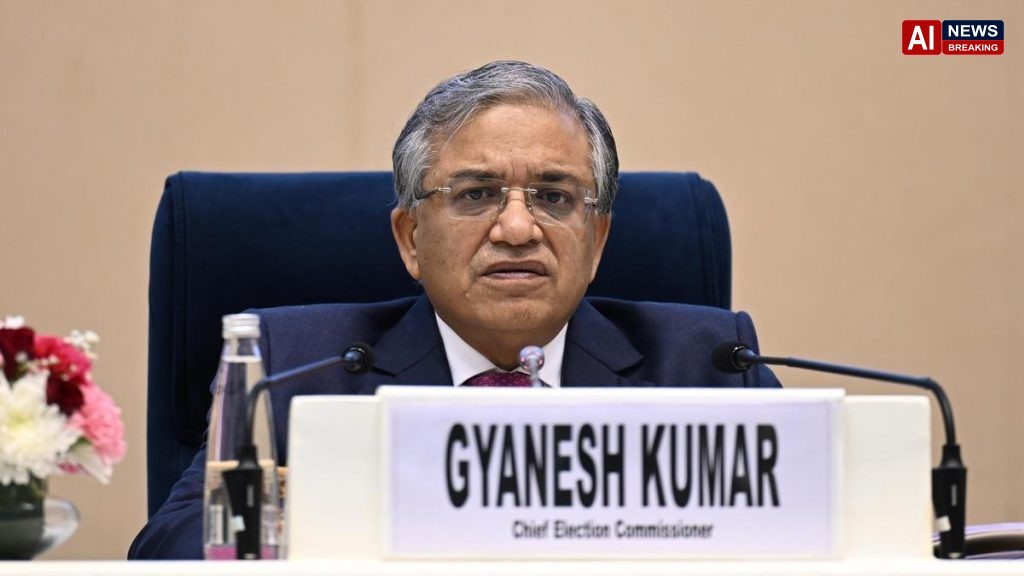
Keralam government gets legal opinion to proceed against Chief Election Commissioner Gyanesh Kumar in abetment to suicide case - AI News Breaking
The government of Kerala has received a formal legal opinion allowing it to pursue charges against the Chief Election Commissioner, Gyanesh Kumar, in a case involving alleged abetment to suicide. The opinion, drafted by T. Asaf Ali, Director General of Prosecution, asserts that there is no statutory impediment to initiating criminal proceedings against the high‑ranking official. The matter concerns the reported self‑harm of Lee See Been, a former chief project officer with the Kerala State Transport Project, who had been responsible for the reconstruction of M.C..
Road.Lee See Been’s death, which occurred in Malaysia last year, has attracted scrutiny because of the circumstances under which he had allegedly been instructed to report to the Election Commission. Investigators allege that the instructions, which came from the Commission’s office, exerted undue pressure on Lee, contributing to the psychological distress that ultimately led to his tragic decision. The case has raised questions about the extent to which civil servants and government officials can be held accountable for actions that influence personal decisions, even when those actions occur in an official capacity.In the opinion submitted by the Director General, the legal framework governing the conduct of election officials is examined in detail..
The report notes that while the Constitution of India and the Representation of the People Act provide robust safeguards for the independence of election bodies, they do not, in themselves, offer absolute protection from criminal prosecution. The Director General argues that any action which can be reasonably linked to a crime, such as abetment to suicide, falls within the ambit of criminal law and may be pursued regardless of the office held by the accused.The legal memorandum references several precedents in which public officials have been charged for conduct that, while performed in their official capacity, contravened established legal norms. Notably, it cites cases where officers were held liable for abuse of power and for contributing to situations that resulted in harm to individuals..
By drawing parallels to these decisions, the opinion underlines that the presence of an official title does not automatically exempt one from the application of criminal statutes.A key aspect of the opinion is its discussion of the principle of “public office holder’s liability.” The Director General clarifies that the duty of public servants is to act within the law and to safeguard the interests of the public. When an official’s conduct is alleged to have played a material role in an individual’s decision to commit suicide, the law permits the initiation of a criminal investigation, provided that the alleged act can be substantiated with credible evidence. In this instance, the evidence consists of documented communications between the Chief Election Commissioner’s office and Lee See Been, which are alleged to have imposed undue pressure.The opinion further examines the applicability of Section 302 of the Indian Penal Code, which criminalises suicide..
While the statute itself has been criticized for its potential to criminalise individuals who end their own lives, it can still be invoked when the suicide is alleged to be facilitated or encouraged by another party. The Director General concludes that, if the allegations that Lee’s death was influenced by the Commission’s directives are proven, the case can proceed under this section. This legal stance underscores the importance of distinguishing between self‑initiated acts and those influenced by external pressures.Additionally, the opinion considers the role of the Election Commission of India’s own code of conduct..
It points out that the Commission is mandated to maintain neutrality and impartiality in all electoral processes, a principle that extends to interactions with civil servants and contractors. If a member of the Commission, especially the Chief Election Commissioner, is found to have breached these principles, it could constitute a breach of statutory duty. Consequently, the government may seek not only criminal liability but also administrative sanctions against the individual.In terms of procedural aspects, the legal opinion recommends that the government proceed with a formal inquiry under the guidelines of the Indian Supreme Court’s directives on the investigation of high‑ranking public officials..
This involves the appointment of an independent investigator and the gathering of documentary evidence, including emails, memos, and witness statements. The report stresses that a thorough and transparent investigation would help avoid allegations of political bias or selective justice, which have plagued earlier cases involving senior officials.The timing of the opinion comes amid growing public concern over the integrity of Kerala’s electoral processes. The state has recently been the focus of national scrutiny following reports of alleged interference in local elections, as well as accusations of preferential treatment for political allies..
The government’s decision to act in accordance with the legal advice received reflects an attempt to demonstrate accountability and uphold public trust in democratic institutions.Critics of the move argue that the case may be a politically motivated attempt to undermine the Election Commission’s autonomy. However, supporters contend that the legal opinion provides a clear framework that justifies the prosecution on the grounds of the alleged abetment. They also point out that the legal system is designed to separate the functions of the state from individual misconduct, ensuring that no single office is above the law.In conclusion, the legal opinion issued by T. Asaf Ali, Director General of Prosecution, removes any statutory barriers that might prevent the Kerala government from initiating criminal proceedings against the Chief Election Commissioner..
The opinion relies on established legal principles and precedents to argue that, if proven, the alleged abetment to suicide by the Commissioner’s office constitutes a serious offence. Whether the government proceeds will depend on the strength of the evidence gathered during the forthcoming inquiry. The outcome of the case is expected to set a precedent for how election officials can be held accountable for conduct that crosses legal and ethical boundaries, potentially influencing future investigations of public servants across the country..
Updated: October 4, 2026
Insight: This development highlights evolving dynamics and may have broader implications in the near term.