 BA Flight to Chicago drops 27,000 feet, returns to London
  Telangana Congress calls for SIT to probe Hyderabad voter roll purge allegations
  Supreme Court rejects appeal over school’s ban on ‘Let’s Go Brandon’ sweatshirts
  Why Saudi Arabia’s Last War in Yemen Turned Into a Quagmire
  Telangana government faces citizens’ ire over KBR flyover fiasco
 Supreme Court rejects appeal over school’s ban on ‘Let’s Go Brandon’ sweatshirts
**
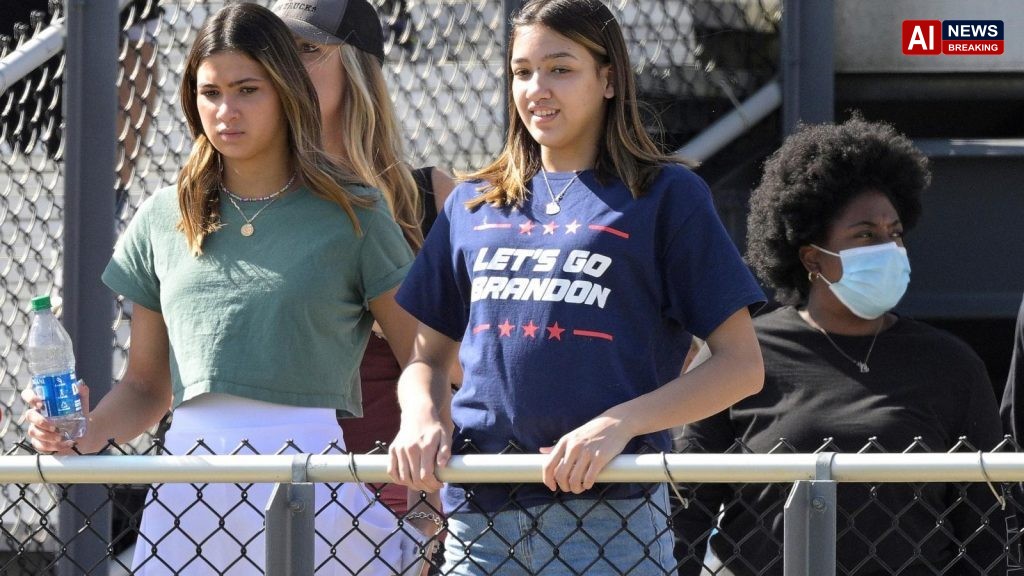
Supreme Court rejects appeal over school's ban on 'Let’s Go Brandon' sweatshirts - AI News Breaking
The United States Supreme Court has declined to hear an appeal filed by a Michigan mother who challenged a public‑school district’s prohibition on sweatshirts bearing the phrase “Let’s Go Brandon.” The decision leaves in place a lower‑court ruling that upheld the district’s policy, which was enacted after several students were reported wearing the slogan during school hours. By refusing the petition for certiorari, the Court effectively affirmed the lower courts’ conclusion that the school’s ban did not violate the First Amendment rights of the student who sought to wear the garment.The case began in the spring of 2023 when a 14‑year‑old student in the Saginaw Intermediate School District was photographed wearing a grey sweatshirt emblazoned with the contentious phrase, a euphemistic reference to a profane chant aimed at President Joe Biden. The school’s administration, citing concerns that the slogan could be disruptive and could create a hostile environment for other students, ordered the student to remove the sweatshirt and, subsequently, issued a district‑wide directive banning any apparel containing the expression..
The student’s mother, a resident of Midland County, filed a lawsuit in federal court arguing that the ban constituted an unlawful restriction on her child’s freedom of speech.A federal district judge dismissed the complaint, holding that the school district’s policy was a permissible content‑neutral regulation of student speech, consistent with the standards set out in the landmark 1969 decision Tinker v. Des Moines Independent Community School District. The judge noted that while the phrase itself is not obscene or harassing in the legal sense, the context in which it was displayed—within a public school setting—could reasonably be expected to cause a material and substantial disruption to the educational process..
The mother appealed the decision to the Sixth Circuit Court of Appeals, which affirmed the district court’s ruling by a narrow margin, emphasizing the school’s duty to maintain an environment conducive to learning.In a brief filing to the nation’s highest court, the mother’s counsel argued that the ban was a form of viewpoint discrimination, asserting that the phrase, while politically charged, constituted protected expression under the First Amendment. The petition highlighted that the Supreme Court’s recent decisions, such as Mahanoy Area School District v. B.L., have signaled a heightened scrutiny of school policies that limit student speech outside the school’s physical premises..
However, the Court’s order of denial, issued without comment, signals that the justices did not see a compelling reason to revisit the Sixth Circuit’s interpretation of existing precedent.Legal scholars have pointed out that the Supreme Court’s refusal to grant certiorari does not constitute an endorsement of the lower courts’ reasoning, but it does underscore a reluctance to expand the scope of student speech protections in cases where schools can demonstrate a plausible threat to order and discipline. “The Court’s inaction suggests that, at least for now, the balance continues to tilt in favor of school administrators when they can point to a concrete risk of disruption,” said Professor Elena Ramirez of the University of Michigan Law School. “The decision leaves the district’s policy intact, but it also leaves open the possibility that future cases with different factual settings could prompt a re‑examination of the principles at stake.”The Saginaw district’s policy, which was revised in the wake of the incident, now explicitly bars any apparel bearing slogans that reference political figures in a manner that could be interpreted as derogatory or inflammatory..
The district’s superintendent, Mark Ellison, defended the rule, stating that the primary concern is the welfare of all students, many of whom come from diverse backgrounds and may feel threatened by the presence of polarising political language in a learning environment. “Our aim is not to suppress political discourse,” Ellison said in a press release, “but to ensure that the school remains a place where every child can focus on education without being subjected to hostility or distraction.”Civil‑rights advocates, however, contend that the ban may set a concerning precedent for broader censorship of political speech in schools. The American Civil Liberties Union of Michigan filed an amicus brief in support of the mother, warning that the decision could embolden other districts to adopt sweeping prohibitions on expressions that merely reflect partisan sentiment..
“When schools begin to police the content of speech based on its political orientation, the line between maintaining order and stifling dissent becomes dangerously blurred,” the brief argued.In the wake of the Supreme Court’s denial, the mother has indicated that she will continue to pursue the matter through state‑level channels, including filing a complaint with the Michigan Department of Education. She maintains that her child’s right to express a political viewpoint, even one that is controversial, should not be curtailed by an administrative edict that lacks a clear, evidence‑based justification. “I’m not trying to cause a stir,” she told reporters, “I just want my child to be able to wear what he believes in without being told it’s unacceptable.”The case also revives a broader national conversation about the role of schools in mediating political speech..
Since the 2020 election, a surge in politically charged apparel and social‑media memes has prompted districts across the country to reevaluate dress‑code policies. Some schools have responded by tightening guidelines, while others have opted for more permissive approaches, emphasizing education over punishment. The divergent responses reflect an ongoing tension between protecting free expression and preserving an environment free from intimidation.As the legal landscape continues to evolve, the Supreme Court’s choice to let the lower‑court rulings stand may signal a temporary equilibrium rather than a final word on the issue..
Until the Court revisits the question in a case presenting a different factual matrix—perhaps involving speech that occurs off‑campus but still impacts school life—districts are likely to retain broad discretion in regulating student apparel. For now, the Saginaw Intermediate School District’s ban on “Let’s Go Brandon” sweatshirts remains enforceable, and any further challenges will have to navigate the complex interplay of precedent, policy, and the ever‑shifting boundaries of protected speech in America’s classrooms..
Updated: October 5, 2026