Karnataka SIR: Teaching on the back burner
 Trump administration offers mixed messages on limits to Ukraine’s Starshield access
 US Treasury proposes a rule to crack down on high-tech investments in China, other adversaries
 Calley Means, a key MAHA advocate, resigns as a top RFK Jr. adviser
 Spotify Tightens Family Plan Controls with QR Code Verification
Kenya Records Ebola Case for First Time
** Kenya’s health ministry has confirmed the nation’s first Ebola virus disease case—a 32‑year‑old man infected with the Sudan strain after arriving from the Democratic Republic of Congo. The patient is in isolation at Kenyatta National Hospital while authorities implement extensive contact tracing, border screenings, and coordinated international aid to contain the outbreak.
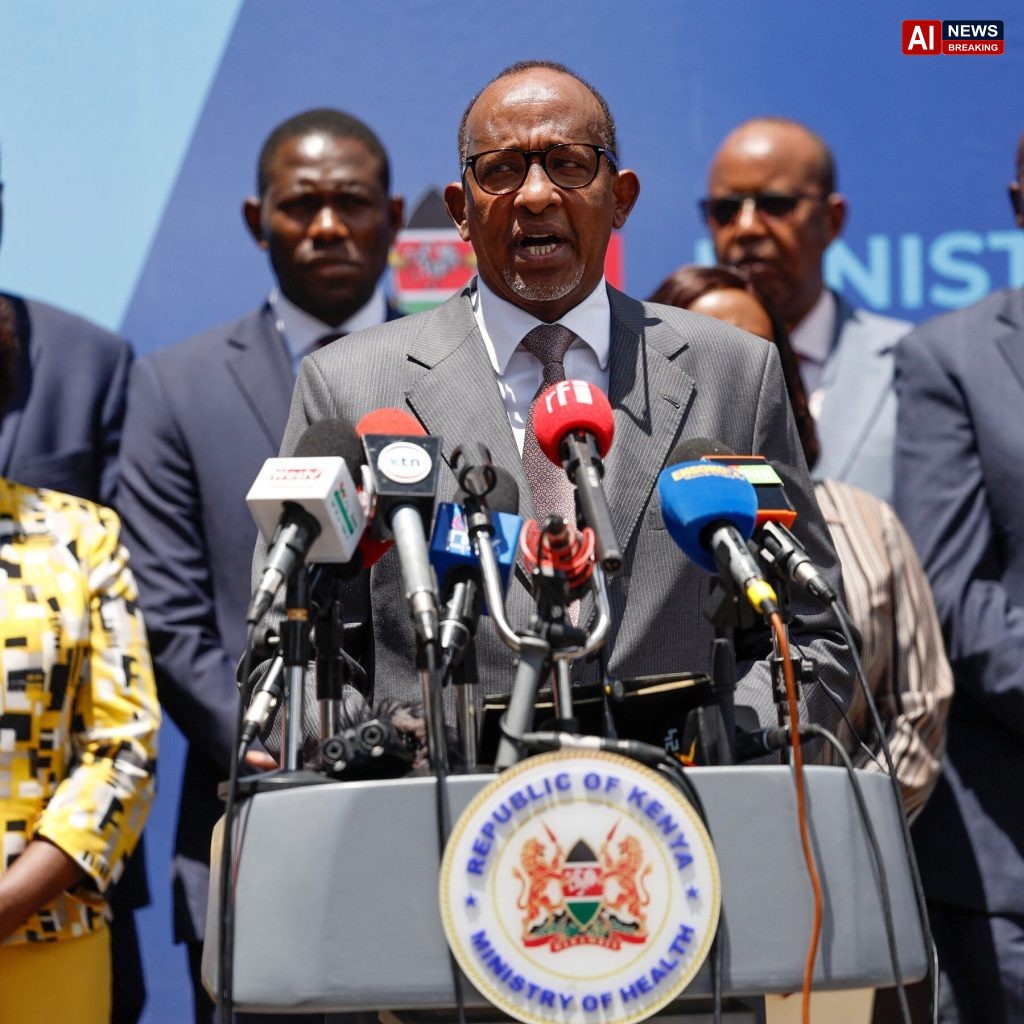
Kenya Records Ebola Case for First Time - AI News Breaking
Kenya’s health ministry confirmed on Tuesday that the country has recorded its first case of Ebola virus disease, a development that has prompted a swift response from national and international health agencies. The patient, a 32‑year‑old male who arrived in Nairobi from the Democratic Republic of Congo (DRC) a week ago, tested positive for the Sudan‑strain of the virus after presenting with fever, vomiting and diarrhoea at a private clinic in the city’s Eastleigh district. The ministry said the diagnosis was confirmed by the Kenya Medical Research Institute (KEMRI) in partnership with the World Health Organization (WHO), which dispatched a rapid response team to assist with case management and contact tracing.The man, whose identity has been withheld to protect his privacy, was admitted to the Kenyatta National Hospital’s isolation unit shortly after the positive result was received..
According to the hospital’s infectious disease specialist, Dr. Miriam Njeri, the patient is receiving the standard supportive care recommended for Ebola, including fluid replacement, electrolyte management and monitoring for organ failure. “At this stage the clinical picture is consistent with early‑stage Ebola, and we are closely monitoring his condition,” Dr..
She added that no experimental antiviral treatments have been administered, as the Sudan strain has limited therapeutic options compared to the more common Zaire strain.The ministry’s emergency operations centre activated its incident management system within hours of the confirmation, coordinating with the Ministry of Interior, the National Police Service and the Kenya Red Cross Society to implement containment measures. All passengers who travelled on the same flight from Kinshasa to Nairobi were placed under mandatory observation, and a total of 27 close contacts—including family members, health‑care workers and fellow passengers—have been identified. Those contacts are being monitored daily for symptoms and are required to report any fever or other relevant signs to health officials, with the possibility of prophylactic isolation if needed.International partners have pledged technical and logistical support..
The WHO’s regional office in Nairobi dispatched a team of epidemiologists to oversee contact tracing and to ensure that infection‑prevention and control (IPC) protocols are strictly adhered to in health‑care facilities across the country. The United Nations Children’s Fund (UNICEF) and the United Nations Office for the Coordination of Humanitarian Affairs (OCHA) have also mobilised resources to support community awareness campaigns, emphasizing the importance of early reporting and safe burial practices. The United States Centers for Disease Control and Prevention (CDC) offered laboratory assistance, with specimens being sent to its BSL‑4 facility in Atlanta for confirmatory testing.Health officials warned that the detection of the Sudan strain poses distinct challenges..
Unlike the Zaire strain, which has an approved vaccine and several investigational therapeutics, the Sudan strain currently lacks a licensed vaccine and has limited treatment options. “We are working closely with global partners to explore the possibility of accessing experimental therapeutics under compassionate use protocols,” said Dr. James Muriuki, director of Kenya’s Centre for Disease Prevention and Control (CDC Kenya)..
He stressed that any such measures would be subject to rigorous ethical review and would only be considered if the patient’s condition deteriorated.The Kenyan government has also announced a series of border health measures aimed at preventing further importation of the virus. All points of entry—including airports, seaports and land border crossings—are now required to screen travellers from the DRC and other Ebola‑affected countries for fever and recent exposure. Travelers presenting with symptoms will be referred to designated isolation facilities for further assessment..
The ministry’s spokesperson, Grace Mwangi, indicated that these protocols are consistent with International Health Regulations (IHR) and are being implemented in coordination with the African Centres for Disease Control and Prevention (Africa CDC).Public reaction to the announcement has been mixed, with some communities expressing fear and calling for heightened security at health facilities, while others have urged calm and compliance with official guidance. Social media platforms have seen a surge in misinformation, prompting the ministry to launch a dedicated hotline and a series of radio broadcasts in Kiswahili and local languages to dispel rumors. “Accurate information is essential to prevent panic and to ensure that people seek care promptly if they develop symptoms,” Mwangi said.Economists have noted that the outbreak, although limited in scope, could have broader implications for Kenya’s tourism and trade sectors, which have already been recovering from the disruptions caused by the COVID‑19 pandemic..
The Kenya Tourism Board issued a statement reassuring potential visitors that the country’s health infrastructure is prepared to handle the situation and that no restrictions on travel are currently in place. Nonetheless, airlines operating routes to the DRC have announced temporary suspensions of flights pending further risk assessments.In the weeks ahead, the health ministry plans to conduct a comprehensive review of its Ebola preparedness plan, which was last updated in 2020 after the West African epidemic. Lessons learned from the current case will inform revisions to surveillance systems, stockpiles of personal protective equipment and training programmes for frontline workers..
Njeri emphasized that early detection and rapid response are key to containing the virus, noting that the patient’s isolation and the swift initiation of contact tracing have already reduced the risk of secondary transmission.As of the latest update, the patient remains in stable condition, and no secondary cases have been reported. Authorities continue to urge anyone who has recently travelled from the DRC or who experiences symptoms such as fever, vomiting, diarrhoea or unexplained bleeding to seek medical attention immediately. The situation is being monitored closely, and regular briefings will be provided by the ministry as new information becomes available..
Updated: October 6, 2026
Kenya’s first Sudan‑strain Ebola case exposes a glaring gap in regional vaccine readiness, forcing policymakers to gamble on experimental drugs while the continent scrambles to reinforce its pandemic‑era surveillance net.
If containment falters, the incident could cripple Kenya’s fragile tourism rebound and ignite a wave of travel bans, underscoring how swiftly a single imported infection can destabilize both public health and economic recovery.