 1 killed, 4 injured after man opens indiscriminate fire from car in Paris
 Open to alliance with parties that agree with SAD’s ideology: Sukhbir Singh Badal
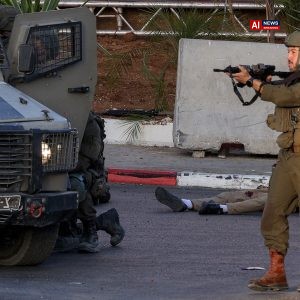
 Palestinian Gunmen Open Fire on Israelis in the West Bank, Officials Say
 Russians across
 Jagan to move Supreme Court again over ‘obstruction’ of YSRCP nominees in Andhra local body polls
Ukraine Faces Drone Operator Shortage and Parts Supply Limits.
**
Ukraine Faces Drone Operator Shortage and Parts Supply Limits. - AI News Breaking
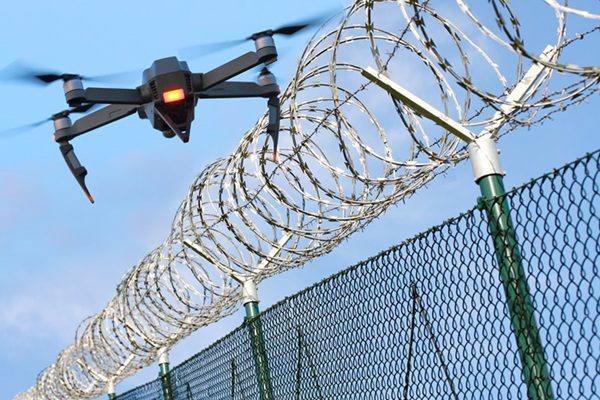
Ukraine’s long‑range drone programme, once hailed as a decisive edge in the war against Russia, is now facing a growing set of constraints as the conflict enters its fifth year. Early in the invasion, Ukrainian forces leveraged a fleet of domestically produced and modified commercial drones to strike deep into Russian‑held territory, disrupting supply lines, gathering intelligence and, at times, delivering precision strikes on high‑value targets. The rapid development of systems such as the “Spectator” and the “Hrim‑2” missiles, built on the same platforms, earned Kyiv praise from Western analysts who saw the drones as a force multiplier that could offset conventional disadvantages..
Over the past twelve months, however, a shortage of trained operators and maintenance crews has begun to blunt that advantage, prompting questions about the sustainability of Ukraine’s aerial warfare model.The shortage is rooted in a confluence of factors, foremost among them the attrition of personnel after years of intense combat. The Ukrainian armed forces have lost thousands of soldiers, and the pool of experienced drone pilots—many of whom were recruited from the commercial sector or civilian hobbyists—has been depleted. Training new operators now competes with the urgent need to replace infantry units on the frontlines, stretching the military’s human resources thin..
According to a senior defence official who asked to remain anonymous, the rate of new pilot certification has fallen by roughly a third since 2022, as training schools struggle to keep up with both the demand for pilots and the logistical challenges of delivering curricula amid ongoing hostilities.Compounding the manpower issue, the supply chain for spare parts and specialized equipment has become increasingly fragile. Ukraine’s drone fleet relies heavily on imported components, particularly high‑performance batteries and avionics sourced from Western allies. Sanctions on Russia have limited the ability of Russian manufacturers to provide parts, but the same restrictions have also constrained the flow of dual‑use technology that could be repurposed for Ukrainian use..
Recent reports indicate that up to 40 percent of the “Spectator” drones currently in service are grounded awaiting battery replacements, a delay that reduces sortie rates and limits the capacity for sustained surveillance missions over contested areas.The operational impact of these constraints is evident in recent battlefield developments. Intelligence gathered by Ukrainian drones during the spring offensive around Bakhmut was less comprehensive than in previous months, according to statements from the General Staff. This shortfall forced commanders to rely more heavily on ground‑based reconnaissance teams, which are more vulnerable to artillery fire and electronic warfare..
In the north, where Russian forces have fortified positions along the Donbas front, the reduced aerial coverage has impeded Kyiv’s ability to locate artillery batteries before they can fire, leading to an uptick in civilian casualties in nearby settlements.Despite these challenges, Kyiv has pursued several mitigations to preserve its drone capability. One approach has been the decentralisation of control, handing smaller units the authority to launch and manage their own unmanned aerial systems without waiting for higher‑level approval. This has accelerated response times and allowed local commanders to conduct rapid reconnaissance in support of infantry manoeuvres..
At the same time, the Ministry of Defence has accelerated the conversion of commercial off‑the‑shelf drones into combat‑ready platforms, a process that shortens production cycles but often results in lower endurance and payload capacity.International partners have also stepped in to address the shortfall. The United Kingdom, the United States and several NATO members have increased deliveries of ready‑made drones and offered technical assistance for in‑theater maintenance. In June, a joint US‑European task force supplied a batch of “Switchblade” loitering munitions, which can be operated by a smaller number of personnel and require less extensive logistical support than larger UAVs..
While these contributions have partially offset the shortfall, analysts caution that reliance on foreign systems may create new dependencies and limit Ukraine’s ability to tailor drones to the specific terrain and threat environment of the eastern front.The broader strategic picture suggests that the erosion of Ukraine’s drone edge could influence the trajectory of the conflict. Drones have been a key element of Kyiv’s asymmetric strategy, enabling strikes deep behind enemy lines while conserving limited ground forces. If the ability to conduct such operations wanes, Russian forces may find it easier to consolidate supply routes and reinforce defensive positions, potentially prolonging the stalemate that has characterised much of the past year..
Moreover, the psychological impact of frequent drone strikes on both Russian troops and the civilian population—a factor that has been cited by Ukrainian officials as a means of eroding morale—may diminish as sorties become less frequent.Nevertheless, the Ukrainian military remains resilient and adaptable. Recent training initiatives have sought to fast‑track former civilian drone hobbyists, offering condensed courses that focus on basic flight control, target identification and electronic counter‑measure avoidance. Early assessments indicate that while these pilots lack the depth of experience of earlier cohorts, they can still execute short‑range surveillance missions effectively..
In addition, research and development units within the Ukrainian defence industry are experimenting with autonomous swarm technologies that could reduce the need for human operators by allowing a single controller to manage multiple drones simultaneously.The political dimension cannot be ignored. Western aid packages, while generous, are increasingly scrutinised for their cost‑effectiveness, and there is growing pressure to demonstrate tangible results on the battlefield. The drone programme, once a flagship of Ukrainian innovation, now faces the risk of being viewed as an under‑delivered promise if sortie rates continue to decline..
Ukrainian officials have responded by highlighting incremental successes—such as the recent neutralisation of a Russian ammunition depot in the Kherson region using a loitering munition—as evidence that the programme remains viable despite staffing constraints.Looking ahead, the sustainability of Ukraine’s drone operations will likely hinge on three interlinked factors: the replenishment of skilled personnel, the securing of a reliable supply chain for critical components, and the ability to integrate foreign technology without sacrificing operational independence. The government has announced plans to establish a dedicated drone academy in the western city of Lviv, aiming to graduate 500 new pilots by 2028. Simultaneously, efforts are underway to develop domestic battery production capacity, a move intended to reduce reliance on external sources and mitigate the risk of future shortages.In the meantime, the battlefield continues to adapt to the evolving capabilities of both sides..
Russian forces have intensified electronic warfare measures, targeting the frequencies used by Ukrainian UAVs and deploying anti‑drone systems along key corridors. These counter‑measures, combined with the personnel shortfall, are forcing Kyiv to prioritise missions and allocate drone assets more sparingly. While the war has entered its fifth year, the contest over the skies remains a pivotal component of the overall conflict, and the extent to which Ukraine can overcome its current.
Updated: October 8, 2026
Ukraine’s drone advantage is eroding as a dwindling pool of trained pilots, scarce spare parts and intensified Russian counter‑measures curb sortie rates, forcing Kyiv to trim missions and lean on foreign UAVs. To sustain its aerial edge, Ukraine is fast‑tracking civilian hobbyists, expanding overseas aid and planning a new drone academy and domestic battery production.
Insight: Ukraine’s dwindling drone workforce means the once‑swift strike capability is now a strategic liability, forcing Kyiv to re‑prioritise sorties and rely more on foreign tech that may dilute operational autonomy.
The pivot to smaller, swarm‑friendly platforms could salvage the aerial edge, but only if training bottlenecks and