 Shikhar Mohan in India A squad for last two four-dayers against New Zealand A
 Belagavi police arrest two MES leaders.
 Arms Race Intensifies in Korea as the North Is Emboldened by Russia Alliance
 Trying to establish ‘facts’ about incident ‘apparently’ involving Indians on yacht off Yemen coast: India
“State Government Sets 12-Month Deadline to Complete e-HRMS Digitalisation, 93 Records Already Migrated”
**
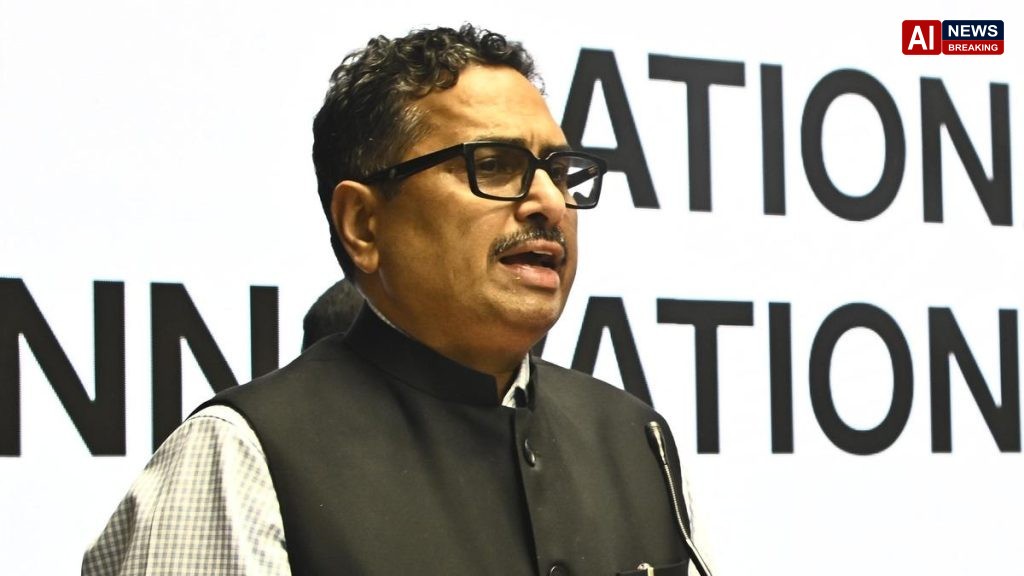
State plans - AI News Breaking
state government sets 12month:
The state government has announced that it will complete the digitalisation of its e‑Human Resource Management System (e‑HRMS) within the next twelve months, a move it says will boost transparency and efficiency across its public service.
Officials said that 93 percent of employee records have already been transferred to the new platform, with the remaining data to be uploaded by the end of the fiscal year.The e‑HRMS project, launched three years ago, aims to replace a patchwork of legacy databases and paper files with a single, cloud‑based system that tracks recruitment, payroll, leave, performance appraisals and retirement benefits for all state employees. “Our objective is to create a single source of truth for the entire workforce,” said the chief ary in a press briefing on Tuesday..
“When every record is stored in a secure, searchable format, we can respond more quickly to citizen queries, reduce duplication, and eliminate opportunities for corruption.”The government’s decision follows a series of high‑profile scandals involving irregularities in recruitment and the misallocation of funds for staff welfare. Critics have long argued that the opacity of the existing system enables patronage and nepotism, while supporters contend that a modern HR platform is essential for a merit‑based civil service.
By digitising personnel files, the administration hopes to make data on promotions, transfers and salary increments accessible to oversight bodies and, eventually, the public.According to the Department of Personnel and Training, the digital migration has already covered 12,500 of the 13,500 active staff members, including senior officials, teachers, healthcare workers and police personnel..
The remaining 1,000 records are largely those of contract workers and temporary staff whose employment histories are stored in disparate local offices. The department has set up a task force comprising IT experts, auditors and legal advisors to verify the completeness of the data and to ensure compliance with the Right to Information Act.Technical challenges have been a recurring theme throughout the project. “Integrating data from multiple legacy systems, some of which were never designed to communicate with each other, required extensive data cleaning and standardisation,” explained the e‑HRMS project lead, a senior IT officer from the state’s Information Technology Department..
“We also had to address concerns about data security, especially given the sensitivity of personal identifiers and financial information.” To this end, the platform employs end‑to‑end encryption, multi‑factor authentication and regular penetration testing by third‑party cybersecurity firms.The rollout has also required significant training for staff at all levels. More than 5,000 civil servants attended workshops on using the new interface, while a dedicated help‑desk was established to field queries and troubleshoot issues. “Initially there was some resistance, particularly among older employees who were accustomed to manual processes,” the project lead admitted..
“But as they see the reduction in paperwork and the speed of approvals, acceptance has grown.” The state has allocated an additional ₹120 million for ongoing capacity building and for the development of mobile applications that will allow employees to request leave, view pay slips and update personal details from their smartphones.
Transparency advocates have welcomed the initiative but caution that digitisation alone will not eradicate entrenched malpractices. “A digital system is only as good as the governance framework that surrounds it,” said Dr Anita Rao, a senior fellow at the Centre for Policy Research. “If the data entered is inaccurate or incomplete, the system merely replicates the existing flaws in a more sophisticated format.” She called for regular audits, independent oversight and the publication of key HR metrics on a public portal to allow civil society and journalists to scrutinise trends in recruitment, attrition and salary growth.In response, the chief ary outlined a roadmap for publishing anonymised aggregates on the state’s open data portal by the end of the year..
“We will release statistics on vacancy rates, promotion timelines and gender representation, while safeguarding personal privacy,” she said. “This will enable stakeholders to track progress and hold us accountable.” The plan also includes a mechanism for employees to flag discrepancies in their records, with a guaranteed response time of fifteen days.The e‑HRMS project aligns with broader digital transformation efforts across Indian states, many of which are adopting cloud‑based solutions for governance. The central government’s e‑Governance Master Plan, launched in 2022, encourages state administrations to integrate human resource functions with other digital services such as e‑procurement and e‑budgeting..
Financial analysts note that the shift could yield cost savings of up to 15 percent in administrative overheads, as manual reconciliation and physical storage requirements diminish.Nevertheless, concerns about data sovereignty and reliance on external cloud providers persist. The state’s IT department has opted for a hybrid cloud model, storing critical data on government‑owned servers while leveraging commercial platforms for scalability. “We are mindful of the need to retain control over sensitive information,” the project lead affirmed..
“Our architecture ensures that the core payroll and personnel data remain within the state’s jurisdiction, with redundancy measures to prevent service disruptions.”As the final phase of data migration proceeds, officials anticipate that the fully operational e‑HRMS will be live for all employees by March 2027. The government has pledged to monitor the system’s performance through quarterly reviews and to adjust policies based on feedback from users and external auditors. If successful, the digital platform could set a benchmark for other states seeking to modernise their public sector workforce management and to reinforce the principles of transparency and accountability that underpin democratic governance..
State officials pledge a fully digital e‑HRMS by March 2027, having already migrated 93 % of employee data to a cloud‑based platform that promises faster, more transparent personnel management. Critics caution that the system’s success will hinge on accurate data entry, rigorous audits, and the public release of key HR metrics to prevent the replication of past malpractices.
By digitizing the civil service, the state signals a shift from opaque patronage to a data‑driven meritocracy—yet the real test will be whether oversight bodies actively audit the “single source of truth” or if the platform merely codifies existing biases. The promised 15 % cost saving hinges on sustained