 Tao Tokyo Spring 2027
 Karnataka SIR: Teaching on the back burner
 Trump administration offers mixed messages on limits to Ukraine’s Starshield access
 US Treasury proposes a rule to crack down on high-tech investments in China, other adversaries
 Calley Means, a key MAHA advocate, resigns as a top RFK Jr. adviser
MEA says U.S. green card suspension measures do not advance shared India-U.S. ambitions
**
MEA says U.S. green card suspension measures do not advance shared India-U.S. ambitions - AI News Breaking
says green card suspension:
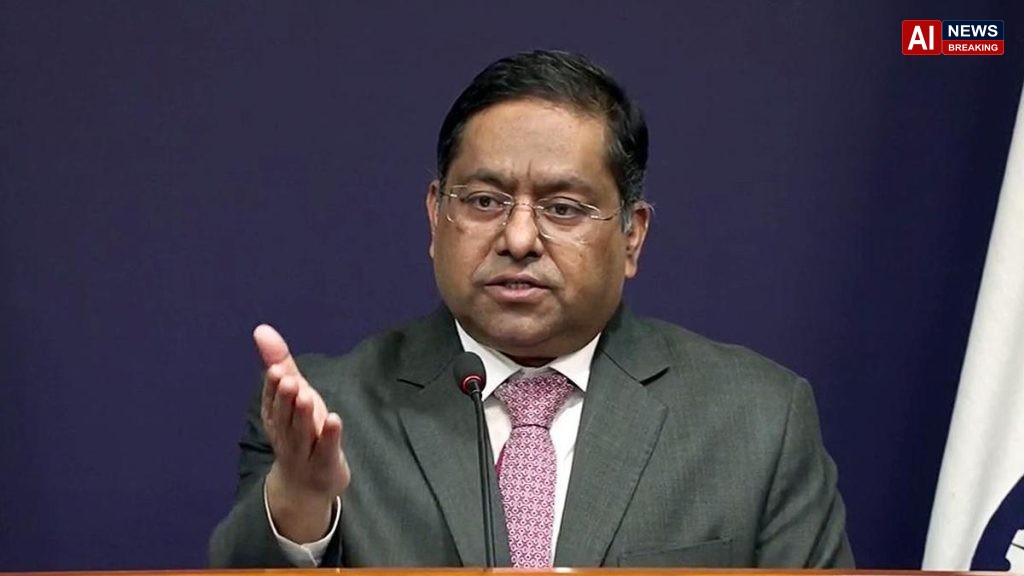
The Ministry of External Affairs (MEA) has criticised recent United States immigration measures that temporarily suspend the issuance of green cards to Indian nationals, arguing that the steps do not further the shared strategic and economic ambitions of New Delhi and Washington. In a formal statement released on Tuesday, the MEA said the policy, announced by the U.S. Department of State in late August, “fails to recognise the deep‑rooted partnership between the two democracies and undermines the very objectives it purports to achieve.” The ministry’s response came after U.S..
Vance described the Indian government’s reaction as “unwarranted characterisations”, a phrasing that the MEA called “misleading and counter‑productive”.The suspension, which affects a subset of employment‑based green‑card applications from India, was introduced as a “temporary administrative measure” to address a backlog that the United States claims has grown to more than two million pending cases across all nationalities. The Department of State’s announcement cited “resource constraints” and “the need to maintain the integrity of the immigration system” as the primary reasons for the pause. Critics in both countries have warned that the move could exacerbate talent shortages in sectors such as information technology, biotechnology and renewable energy, where Indian professionals constitute a sizeable proportion of the workforce in the United States.India’s foreign ministry noted that the decision was taken without prior consultation with New Delhi, a breach of the “consultative framework” that underpins the bilateral relationship..
“The United States has repeatedly affirmed its commitment to a robust Indo‑U.S. partnership, yet it proceeds with unilateral actions that jeopardise the interests of Indian citizens and the broader bilateral agenda,” the statement read. It added that the suspension could have “serious repercussions for the families of applicants, many of whom have already invested years of training and professional experience in the United States.”U.S..
officials have defended the measure as a necessary, short‑term adjustment. In a briefing on Capitol Hill, Vice‑President Vance said the United States “must ensure that its immigration system remains fair and functional for all” and that “the temporary nature of this suspension is evident from the fact that it will be reviewed in six months”. He also urged India to “continue to work constructively with us on improving the processing framework” and to “respect the sovereign right of the United States to manage its immigration policy”.The dispute emerges against a backdrop of heightened strategic cooperation between the two nations, including joint naval exercises, defense‑technology collaborations and a shared focus on counter‑balancing China’s influence in the Indo‑Pacific..
Both governments have repeatedly highlighted the importance of a “strong, rules‑based order” and have sought to deepen economic ties through initiatives such as the U.S.–India Trade and Investment Framework Agreement. Analysts say that the green‑card suspension, however, introduces a diplomatic friction point that could spill over into other areas of cooperation.Economic analysts in New York and Mumbai have warned that the pause could have a measurable impact on the U.S. tech sector, which relies heavily on Indian engineers and data scientists..
A recent report by the Brookings Institution estimated that the slowdown could delay the hiring of up to 30,000 skilled workers, potentially costing the U.S. economy billions of dollars in lost productivity over the next two years. Conversely, Indian industry bodies such as the Confederation of Indian Industry (CII) argue that the measure could encourage a reverse brain‑drain, with Indian professionals opting to remain in the country or seek opportunities in other markets instead of pursuing U.S..
permanent residency.In response, the MEA has called for an “immediate review” of the suspension and has offered to set up a high‑level working group to address the procedural bottlenecks that have plagued the green‑card system for years. “We remain committed to a collaborative solution that respects the legitimate concerns of both sides while safeguarding the aspirations of Indian families and the strategic interests of the United States,” the statement said. It also invited senior officials from the U.S..
Department of State and the Department of Homeland Security to a bilateral meeting in Washington later this month.The issue has already entered the public discourse in both capitals. In New York, Indian diaspora groups have organised protests outside the United Nations headquarters, demanding that the U.S. administration “honour its commitments to diversity and inclusion”..
Meanwhile, in Delhi, several opposition parties have seized on the matter to question the ruling government’s ability to negotiate effectively with foreign powers, even as they acknowledge the broader strategic alignment with Washington.Legal experts note that the suspension does not alter the statutory eligibility of applicants; it merely halts the final adjudication of cases that have already cleared the labor certification stage. However, they caution that prolonged delays could lead to a rise in “visa‑overstay” incidents and potentially strain the legal infrastructure that handles immigration appeals. The American Immigration Lawyers Association (AILA) has issued a brief urging Congress to allocate additional funding to the United States Citizenship and Immigration Services (USCIS) to clear the backlog more swiftly, warning that “policy fixes without resource investment are unlikely to yield lasting results”.As the six‑month review date approaches, both governments appear poised to engage in a series of diplomatic overtures aimed at defusing the tension..
The MEA’s statement concluded with a note of optimism, emphasizing that “the longstanding partnership between India and the United States is resilient, and constructive dialogue will ensure that any temporary setbacks do not derail our shared vision for a prosperous, secure future.” The coming weeks will reveal whether the bilateral mechanisms in place can reconcile immigration policy with the broader geopolitical and economic objectives that have defined the Indo‑U.S. relationship in recent years..
Updated: October 9, 2026
The green‑card pause reveals how immigration logistics have become a hidden flashpoint in the Indo‑U.S. strategic dance, exposing the fragility of “strategic” ties when domestic bottlenecks surface.
If the backlog isn’t solved with real resources, the diplomatic goodwill built around counter‑