 Trump administration offers mixed messages on limits to Ukraine’s Starshield access
 US Treasury proposes a rule to crack down on high-tech investments in China, other adversaries
 Calley Means, a key MAHA advocate, resigns as a top RFK Jr. adviser
 Spotify Tightens Family Plan Controls with QR Code Verification
 Use of Chief Minister C. Joseph Vijay’s deep fake videos to collect money: Rajasthan youth moves Madras High Court seeking bail
Indian-Americans Seek Greater Political Influence in US Midterms, Back Candidates Aligned With Hindu Community Concerns
Indian‑American communities are increasingly backing “Hindu‑friendly” candidates, raising millions and targeting swing districts, a move that could reshape the 2024 mid‑term battles while sparking debate over broader South‑Asian representation.
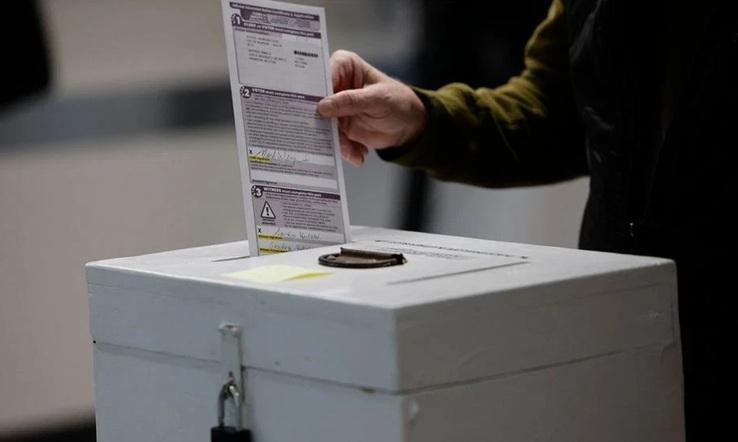
Indian-Americans Seek Greater Political Influence in US Midterms, Back Candidates Aligned With Hindu Community Concerns - AI News Breaking
indianamericans seek greater political:
Indian-Americans are mobilising in unprecedented numbers as the United States heads toward the 2024 mid‑term elections, with community groups and donors increasingly backing candidates perceived as friendly to Hindu interests. The trend reflects a growing political confidence among a demographic that has long been under‑represented in American politics, despite its outsized influence in sectors such as technology, medicine and academia. Analysts say the push could reshape local and national races, especially in swing states where a few thousand votes can tip the balance..
The surge began last year when several Hindu advocacy organisations formed a coalition to identify and support “Hindu‑friendly” legislators. The coalition, known as the Hindu American Political Alliance (HAPA), launched a database of candidates who have voiced support for issues ranging from the protection of Hindu temples to opposition to anti‑conversion laws. By the summer, HAPA had raised more than $5 million, a figure that dwarfs the typical fundraising totals of most ethnic‑interest groups in the United States..
One of the coalition’s most visible successes was the re‑election campaign of a Republican congresswoman from Arizona’s 9th district, whose public statements against the “global Hindu terror” narrative resonated with HAPA’s donors. The candidate’s victory was credited in part to a $250,000 ad buy targeting Indian‑American voters in the district’s Phoenix suburbs, where the community has grown by 40 percent over the past decade. Similar financial support has been extended to a handful of Democratic hopefuls who have opposed legislation that could restrict religious freedom for Hindu organisations..
Critics argue that the focus on Hindu‑friendly candidates risks marginalising other South Asian religious groups, particularly Sikhs and Muslims, whose concerns differ on issues such as the “U.S.‑India Strategic Partnership Act” and the proposed “International Religious Freedom Act” amendments. Some community leaders have called for a broader coalition that embraces the diversity of South Asian American faiths, warning that a narrow emphasis on Hindu priorities could fragment the otherwise cohesive political voice of the diaspora. Nevertheless, many Indian-Americans view the current strategy as a pragmatic response to a political environment where identity politics increasingly shapes voter mobilisation..
A poll conducted by the Pew Research Center in June found that 58 percent of Indian‑American respondents consider religion an important factor when evaluating political candidates, a higher proportion than among the general electorate. The same poll indicated that 62 percent of respondents felt “Hindu values” were underrepresented in American public discourse. The shift is also evident in the rise of Indian‑American candidates themselves..
In the 2022 mid‑terms, three Indian‑American legislators won seats in state legislatures, and several more are now announced as contenders for congressional primaries. Among them is a tech entrepreneur from California who campaigned on a platform that blends fiscal conservatism with a pledge to protect religious sites from “government overreach”. His candidacy has attracted both traditional Republican donors and new contributions from Hindu advocacy groups..
Political scientists note that the community’s increasing political clout mirrors patterns observed among other immigrant groups who, after establishing economic stability, turn to electoral influence to safeguard cultural interests. Maya Patel, a professor of political sociology at Columbia University, explains that “the Indian-American electorate has matured from a single‑issue voter base to a sophisticated bloc that can swing elections in tightly contested districts.” She adds that the focus on Hindu‑friendly candidates is part of a broader strategy to embed cultural considerations into mainstream policy discussions. The impact of this mobilisation could extend beyond domestic policy, affecting U.S..
Lawmakers who receive backing from Hindu‑friendly groups are more likely to support initiatives that deepen trade ties, boost defence cooperation and promote a shared vision of democratic governance. Critics, however, warn that the alignment of domestic religious advocacy with foreign policy could blur the lines of diplomatic impartiality, especially as tensions rise between India and neighbouring countries over border disputes. In the lead‑up to the mid‑terms, campaign rallies in New Jersey, Texas and Virginia have featured prominent Indian‑American speakers who stress the importance of voting for candidates who respect Hindu traditions while championing broader American values..
These events have drawn large crowds, with some venues reporting attendance figures exceeding the capacity of the local Indian‑American community. Organisers claim the turnout demonstrates a “new era” of civic engagement, driven by a desire to protect religious freedoms and influence policy outcomes. The financial dimension of the movement is also reshaping how political campaigns allocate resources..
Traditional political action committees have begun to partner with HAPA and similar organisations to tap into a donor pool that, according to campaign finance records, contributed over $12 million to federal races in the past year. This influx of capital has enabled targeted advertising on ethnic media outlets, including Hindi‑language television channels and online platforms frequented by the diaspora. Opposition groups, including several civil‑rights organisations, have called for greater transparency regarding the funding sources behind the Hindu‑friendly campaign efforts..
They argue that undisclosed donations could mask foreign influence, particularly from entities linked to the Indian government. In response, HAPA officials have emphasised that all contributions comply with Federal Election Commission regulations and that their donors are U.S. citizens or lawful permanent residents..
As the November ballot approaches, the question remains whether the concerted push for Hindu‑friendly candidates will translate into tangible legislative outcomes. Early voting data from key swing districts suggests a modest uptick in turnout among Indian‑American voters compared with the 2020 election cycle. Whether this increased participation will tip the balance in tightly contested races, or merely add another layer to the complex mosaic of American electoral politics, will be closely watched by pundits and policymakers alike..
Updated: October 11, 2026
The newfound Hindu‑centric voting bloc signals that Indian‑Americans have transitioned from a silent economic engine to a decisive political lever, forcing both parties to reckon with a constituency that can swing tight districts. Yet the singular focus on “Hindu‑friendly” candidates risks fracturing the broader South Asian diaspora and blurring the line between domestic religious advocacy and U.S.–India foreign policy, a tension that could undermine the coalition’s long‑term influence.