Tamil Nadu CM orders Chennai flood‑prevention review.
 India and Bangladesh work
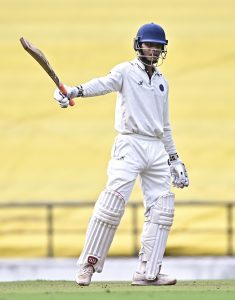
 Shikhar Mohan in India A squad for last two four-dayers against New Zealand A
 Belagavi police arrest two MES leaders.
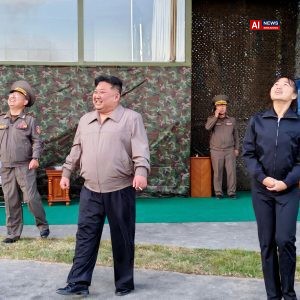
 Arms Race Intensifies in Korea as the North Is Emboldened by Russia Alliance
Security beefed up outside Parliament Street police station ahead of CJP leaders visit for fresh Jantar Mantar protest date
**
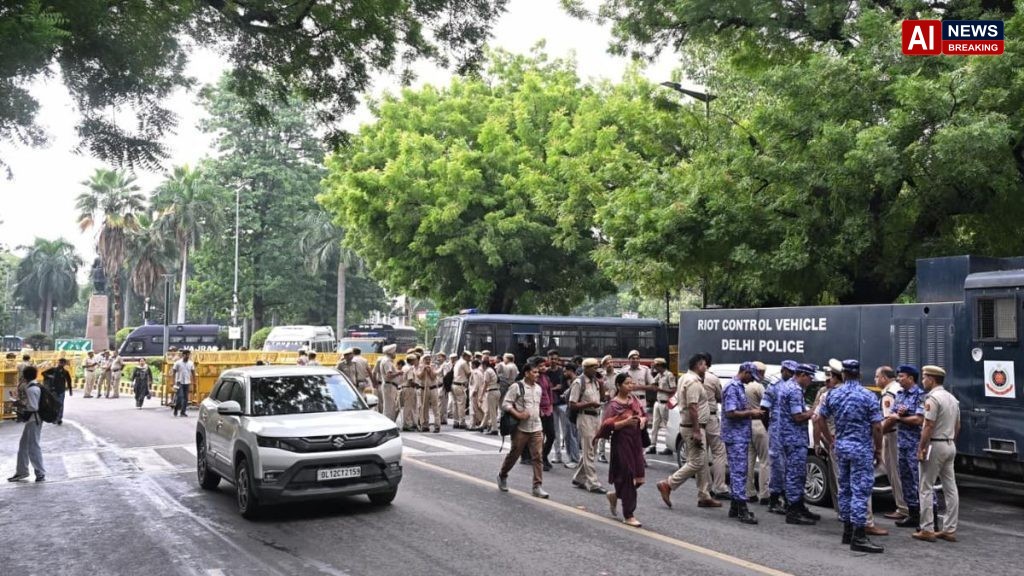
Security beefed up outside Parliament Street police station ahead of CJP leaders visit for fresh Jantar Mantar protest date - AI News Breaking
security beefed outside parliament:
Security personnel and police officers have been deployed in unprecedented numbers outside the Parliament Street police station in the capital, a move that reflects heightened tension ahead of a planned visit by senior leaders of the Confederation of Joint Parties (CJP). The reinforcement, which began early on Tuesday, includes additional riot control units, mobile police vans, and a contingent of the Delhi Police’s Special Protection Group, all positioned to monitor any activity around the precinct and to manage crowds that may gather in the vicinity. Residents and commuters have reported an increase in traffic checks, a surge of patrol vehicles, and a noticeable presence of armed guards at the entrance to the police station, which traditionally serves as the hub for filing protest permissions and registering complaints.The escalation in security comes as the CJP co‑convenor, Ashutosh Ranka, announced that the coalition intends to approach the Delhi Police for formal permission to stage a protest at Jantar Mantar later in the week..
The statement was made during a briefing at the Parliament Street police station, where Ranka and a delegation of senior party figures met with senior officers to discuss the procedural aspects of obtaining a protest licence. Ranka emphasized that the coalition “will follow the rule of law and seek all necessary clearances,” a message that appears aimed at countering accusations of unlawful assembly that have plagued recent demonstrations.Two days earlier, demonstrators from the CJP and its affiliated groups attempted to assemble at Jantar Mantar, a historic site that has become the epicentre of numerous political protests in recent years. That gathering was abruptly halted after police invoked Section 144 of the Code of Criminal Procedure, which bans the holding of public meetings in the area..
The move sparked a wave of criticism from opposition parties, who claimed that the police response was disproportionate and that the ban infringed on democratic rights. The incident also led to a series of arrests, with several activists detained on charges of unlawful assembly and obstruction of public order.In the aftermath, the Delhi Police released a statement asserting that the decision to disperse the crowd was based on intelligence inputs indicating a potential escalation of violence. The statement highlighted that the police had issued repeated warnings to the protesters to disperse and that the use of force was a “last resort” after non‑violent measures failed..
The department’s spokesperson added that any future protest would be permitted only after a thorough assessment of security arrangements, crowd management capabilities, and the potential impact on public safety.The CJP’s request for permission is therefore being scrutinised within a broader context of recent confrontations between law‑enforcement agencies and opposition groups. Analysts note that the authorities have been under pressure to balance the constitutional right to peaceful assembly with the need to maintain public order, especially in a city that has witnessed a spate of large‑scale protests over issues ranging from environmental policy to civil liberties. The heightened security presence at Parliament Street is seen by many as a pre‑emptive measure to ensure that any discussions regarding the Jantar Mantar protest are conducted without the risk of sudden outbreaks of unrest.Legal experts have weighed in on the procedural aspects of the protest licence..
According to Section 144, a notification can be issued for up to 15 days, but it can be extended if the authorities deem it necessary. The Delhi Police’s procedural guidelines require that any group seeking permission must submit a detailed plan outlining the number of participants, the route of the procession, and the measures they intend to take to minimise disruption. Ranka’s delegation is expected to furnish these details in the coming days, after which the police will evaluate the feasibility of granting the licence..
The process, while routine on paper, has often been a source of contention, with opposition parties alleging selective enforcement and bureaucratic delays.Political commentators suggest that the CJP’s approach reflects a strategic shift. Rather than staging spontaneous flash‑mob protests that have previously been met with swift police action, the coalition appears to be pursuing a more measured, legal route to assert its demand for a fresh protest date at Jantar Mantar. The demand itself stems from the belief that the earlier dispersal was unjustified and that the coalition’s grievances—chiefly concerns over alleged governmental overreach and demands for greater transparency in policy‑making—remain unaddressed..
By seeking official permission, the CJP hopes to gain a moral high ground and to present the protest as a legitimate exercise of democratic rights.The atmosphere around the Parliament Street police station has also been marked by a surge in media activity. News crews from national and regional outlets have set up temporary studios, and journalists have been granted limited access to the precinct to file reports on the unfolding negotiations. The increased press coverage has amplified public scrutiny of the police’s handling of the situation, with social media platforms buzzing with divergent viewpoints..
While some users have applauded the police for maintaining order, others have posted videos of the heightened security and questioned whether the deployment is an intimidation tactic aimed at deterring the CJP’s plans.Civil‑society organisations have called for a transparent dialogue between the police and protest organisers. The Delhi Chapter of the National Human Rights Commission issued a statement urging the authorities to “uphold the fundamental right to peaceful assembly” and to ensure that any restrictions imposed are “reasonable, proportionate, and time‑bound.” The commission also warned against the misuse of Section 144, citing previous instances where the provision had been employed to stifle dissent rather than to protect public safety. In response, a senior police official reiterated that the force’s primary mandate is to safeguard citizens and that any restrictions are “guided by intelligence and the imperative to prevent chaos.”As the deadline for the CJP’s request approaches, observers note that the outcome could set a precedent for how future protests are managed in Delhi..
If permission is granted, the coalition will have the opportunity to stage a large‑scale demonstration at Jantar Mantar with official backing, potentially drawing thousands of participants and attracting national attention. Conversely, a denial or further postponement could fuel accusations of authoritarianism and may prompt the CJP to explore alternative avenues of protest, possibly reverting to more spontaneous, unlicensed gatherings.The unfolding scenario underscores the delicate equilibrium that the Delhi administration must maintain. On one hand, there is a responsibility to protect the democratic space for citizens to voice dissent; on the other, there is an equally pressing need to prevent disruptions that could affect traffic, commerce, and the overall safety of the city’s dense population..
As security remains visible and the political stakes rise, the coming days will likely determine whether the CJP’s strategic pivot toward formal permission will be rewarded with a sanctioned protest,.
Updated: October 12, 2026
Delhi police have bolstered security around the Parliament Street station as the Confederation of Joint Parties seeks formal permission for a Jantar Mantar protest, prompting heightened traffic checks and a visible armed presence. The move reflects a tense balance between allowing lawful assembly and preventing potential unrest after a recent police‑ordered dispersal of a CJP rally.
Insight: The over‑manned police outpost signals that Delhi’s authorities are treating the CJP’s “legal‑by‑the‑book” approach as a litmus test for future dissent, forcing the coalition to prove its legitimacy under a microscope of security‑driven optics. If the state grants a licence