
 Trump administration offers mixed messages on limits to Ukraine’s Starshield access
 US Treasury proposes a rule to crack down on high-tech investments in China, other adversaries
 Calley Means, a key MAHA advocate, resigns as a top RFK Jr. adviser
 Spotify Tightens Family Plan Controls with QR Code Verification
 Use of Chief Minister C. Joseph Vijay’s deep fake videos to collect money: Rajasthan youth moves Madras High Court seeking bail
Indigenous Peoples’ Day Celebrations Rise Across U.S. Jurisdictions
**
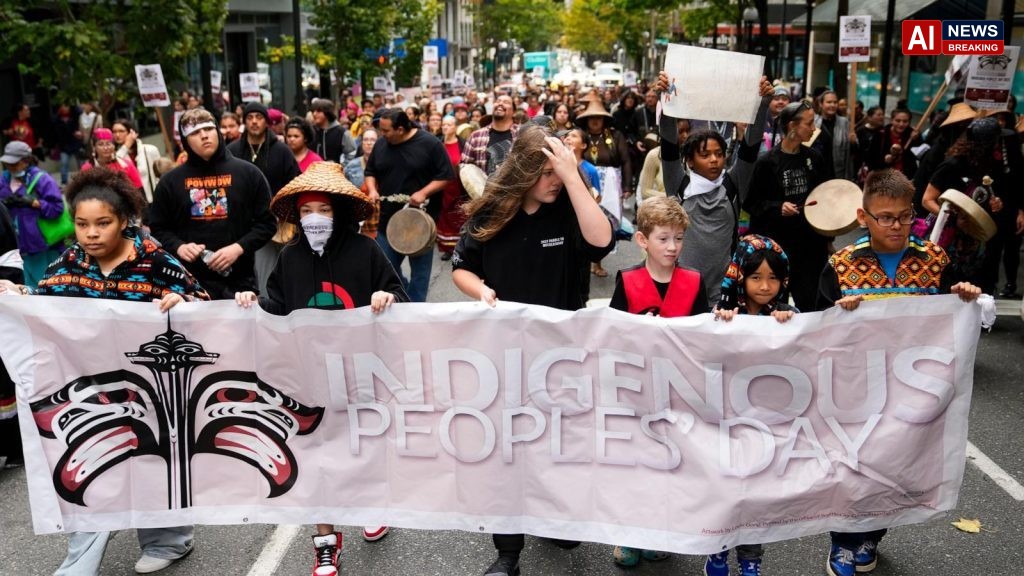
What is Indigenous Peoples Day? A day of celebration, protest and reclaiming history - AI News Breaking
indigenous peoples celebrations rise:
Indigenous Peoples’ Day, observed in many parts of the United States and increasingly around the globe, marks a concerted effort to recognise the histories, cultures and contributions of the first peoples of the Americas. Falling on the second Monday of October in most jurisdictions, the day is deliberately placed opposite Columbus Day, a federal holiday that commemorates the arrival of Christopher Columbus in the Caribbean in 1492. The juxtaposition is intentional: while Columbus Day has long been criticised for glorifying a figure linked to colonisation, dispossession and disease, Indigenous Peoples’ Day seeks to foreground narratives of survival, resistance and cultural continuity that have endured despite centuries of oppression.The origins of the observance trace back to the early 1990s, when activists and scholars in South Dakota first proposed replacing Columbus Day with a holiday that honoured Native American peoples..
In 1992, the city council of Berkeley, California, voted to make the change, becoming the first major American municipality to officially adopt Indigenous Peoples’ Day. The decision sparked a ripple effect, and over the following decades a growing number of states, counties and cities have followed suit, either by renaming the holiday, adding a parallel celebration, or creating new statutes that acknowledge Indigenous histories. By 2024, more than 150 jurisdictions across the United States recognise Indigenous Peoples’ Day in some form, reflecting a broader shift in public consciousness about the legacy of colonisation.For many Indigenous communities, the day is not merely a symbolic gesture but a living, communal occasion that incorporates traditional ceremonies, dances, music and storytelling..
Tribal leaders, elders and activists often deliver speeches that connect contemporary struggles—such as land rights, language revitalisation and environmental protection—to centuries‑old traditions. In places like the Navajo Nation, powwows are organised, featuring drums, chants and intricate regalia that convey cultural knowledge to younger generations. Similarly, in the Pacific Northwest, coastal tribes hold cedar‑bark ceremonies to honour the land and waters that have sustained them, underscoring a spiritual relationship that predates European contact by millennia.Alongside celebration, Indigenous Peoples’ Day frequently serves as a platform for protest..
Demonstrations are staged to draw attention to ongoing injustices, including the disproportionate rates of poverty, incarceration and health disparities faced by Native Americans. Activists may use the day to demand the return of stolen lands, the removal of monuments that glorify colonisers, or the implementation of policies that support tribal sovereignty. In 2023, a coalition of Indigenous groups in Oklahoma organised a march that culminated in a sit‑in at the state capitol, calling for the full ratification of treaties signed in the 19th century..
The protest highlighted how legal agreements, once negotiated under duress, remain largely unfulfilled, reinforcing the perception of Indigenous Peoples’ Day as a moment of both remembrance and political mobilisation.Educational institutions have also begun to reinterpret the day within curricula. Several school districts now incorporate lessons on pre‑colonial Indigenous societies, the impact of forced removals such as the Trail of Tears, and contemporary Native American contributions to science, art and governance. These programmes aim to move beyond the “discovery” mythos that traditionally dominated history textbooks, instead presenting a more nuanced account that recognises both the trauma inflicted by colonisation and the resilience of Indigenous peoples..
Critics argue that such curricular changes risk oversimplifying complex histories, but supporters contend that they are essential for fostering a more inclusive national narrative.The media’s role in shaping public perception of Indigenous Peoples’ Day has evolved markedly. Early coverage often framed the holiday as a fringe movement, focusing on controversy rather than content. In recent years, major outlets have produced feature stories, documentaries and opinion pieces that foreground Indigenous voices, allowing community members to articulate their own perspectives on identity, stewardship and self‑determination..
This shift reflects a broader journalistic trend toward amplifying historically marginalised viewpoints, though challenges remain in ensuring that representation does not become tokenistic or confined to a narrow set of tribal experiences.Economic implications also surface each October, as Indigenous entrepreneurs and artisans leverage the heightened visibility to promote cultural products. Markets and fairs showcase handcrafted jewellery, textiles, and food items that adhere to traditional methods, providing both income and a conduit for cultural transmission. However, concerns about cultural appropriation persist, especially when non‑Indigenous businesses co‑opt symbols such as feathered headdresses or dreamcatchers without respecting their sacred meanings..
Advocacy groups have called for clearer guidelines and stronger legal protections to safeguard intellectual property inherent to Indigenous cultures.Legal developments intersect with the day’s themes, particularly in the realm of land and resource rights. Court decisions in the past decade have affirmed tribal sovereignty over water and mineral resources in several western states, setting precedents that could reshape future negotiations. Indigenous Peoples’ Day often features panels with lawyers and scholars who dissect these rulings, explaining their implications for treaty enforcement and environmental stewardship..
The dialogue underscores a central tenet of the celebration: the recognition that Indigenous peoples maintain a unique legal status under both domestic and international law, a status that must be respected and upheld.Internationally, the concept of Indigenous Peoples’ Day resonates with similar observances worldwide, such as the United Nations’ International Day of the World’s Indigenous Peoples on August 9. While the American version centres on the legacy of European colonisation in the Americas, global counterparts highlight the shared challenges faced by Indigenous communities across continents—from the Amazon basin to the Arctic. Collaborative events, often conducted via video link, enable activists from disparate regions to exchange strategies, celebrate successes, and mourn losses together, reinforcing a transnational solidarity that transcends national borders.As the day approaches each year, the mixture of ceremony, protest and education reflects an ongoing negotiation of memory and identity..
For many Native American peoples, Indigenous Peoples’ Day is both a reminder of centuries of loss and a proclamation of enduring presence. By reclaiming a date once dominated by narratives of discovery, Indigenous communities assert agency over how their histories are told and remembered. The evolving observance, increasingly embedded in public policy, cultural life and legal discourse, signals a broader societal attempt to confront the past while charting a more inclusive future..
Updated: October 12, 2026
Indigenous Peoples’ Day is becoming a litmus test for how seriously America will translate symbolic acknowledgment into tangible policy—if the holiday’s growing protests and curriculum shifts translate into enforceable treaty rights, the date will finally mark a legal as well as cultural turning point.







