
 Karnataka SIR: Teaching on the back burner
 Trump administration offers mixed messages on limits to Ukraine’s Starshield access
 US Treasury proposes a rule to crack down on high-tech investments in China, other adversaries
 Calley Means, a key MAHA advocate, resigns as a top RFK Jr. adviser
 Spotify Tightens Family Plan Controls with QR Code Verification
Flash-flood risk lingers across the Southwest after Rachel’s remnants swamped Nevada
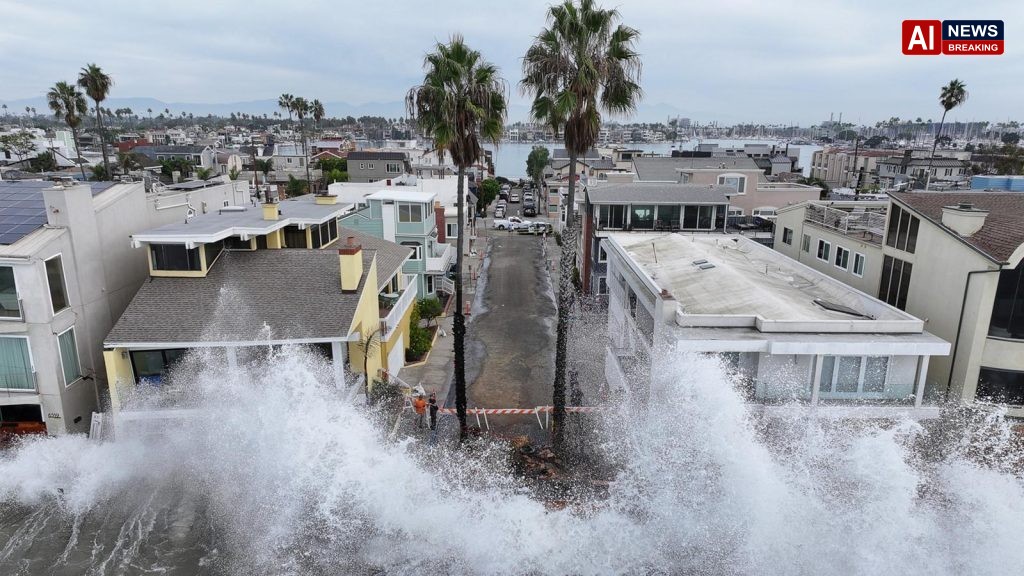
Flash-flood risk lingers across the Southwest after Rachel’s remnants swamped Nevada - AI News Breaking
flashflood risk lingers across:
Flash‑flood risk lingers across the Southwest after Rachel’s remnants swamped NevadaThe remnants of tropical storm Rachel have left a lasting imprint on the southwestern United States, with the National Weather Service still issuing flood watches and warning of continued showers and isolated thunderstorms. The storm, which peaked with winds of 60 mph and sustained rainfall totals of up to 3 inches, stalled over the Nevada desert during the weekend, sparking flash floods that inundated low‑lying communities, damaged infrastructure and prompted emergency responses. While the most intense rainfall has eased, the residual moisture and unstable air mass still pose a danger to the region, especially where topography funnels rainwater into narrow canyons and valleys.In Las Vegas, officials reported that the sudden downpours caused several streets to become impassable as water swelled beneath the asphalt..
Emergency services were dispatched to remove debris and clear drainage channels that had been clogged by fallen branches and loose gravel. The city’s public works department has been working around the clock to repair damaged culverts, a critical component of the storm‑water management system that had already been strained by previous wet periods. Meanwhile, residents have been cautioned to avoid driving through flooded areas, as even a few inches of water can conceal hidden hazards and reduce traction.The city’s Department of Public Safety issued a statement on Friday, noting that the flooding in the downtown area was largely contained after the storm’s peak intensity..
However, they warned that additional rainfall could trigger secondary flash floods in the surrounding hills and low‑lying neighbourhoods, particularly those on the eastern fringe of the metropolitan area, where drainage infrastructure is less robust. Local authorities are coordinating with state agencies to monitor water levels and to deploy rapid‑response teams if necessary.Beyond Las Vegas, the impact of Rachel’s remnants stretched far beyond Nevada’s borders. In Utah, the Uinta Mountains and the Wasatch Range saw significant precipitation, with several towns reporting localized flooding and mudslides..
The Utah Division of Emergency Management has opened a 24‑hour incident command centre to monitor conditions and to coordinate with county officials. The state’s water‑recovery team has been tasked with inspecting critical infrastructure such as irrigation canals and water‑storage facilities, ensuring that they are not compromised by the sudden influx of water.In Arizona, the remnants of Rachel produced a series of isolated thunderstorms that spattered the state with heavy rain, sparking concerns in the desert towns of the Southwest. The Arizona Department of Water Resources issued a flood watch for the Phoenix metropolitan area, where flash‑flood risk is amplified by the region’s high‑rise buildings and the network of drainage systems that must cope with rapid runoff..
The agency has urged residents to stay alert for sudden increases in water levels along streets and to report any hazards to emergency hotlines. They also reminded people that the desert’s soil can become saturated quickly, causing water to travel swiftly across the landscape, sometimes catching motorists and pedestrians by surprise.Meanwhile, the Colorado Department of Transportation released a statement on Saturday, highlighting that the remnants of the storm had delivered an unexpected volume of rain to the foothills surrounding Denver. The agency has inspected roadways for potholes and weak bridges, and has set up temporary signage to advise drivers of potential hazards..
The state’s emergency management office is working closely with the National Weather Service to monitor evolving weather conditions and to keep the public informed of any changes to the flood watches. They noted that while the worst of the storm has passed, residual moisture in the soil can lead to further runoff as additional showers occur.The National Weather Service’s bulletin for the region indicated that the atmospheric moisture is still present, with the potential for scattered showers to develop over the next 24 to 36 hours. Their forecast model suggests that the southwestern states could see brief periods of heavy rainfall, especially over the high‑elevation ranges where temperature gradients are steep..
The agency has urged residents in vulnerable areas to prepare for flash flooding, to keep an eye on local news outlets, and to heed evacuation orders if they are issued. While the flood watches are currently in place, the possibility of the watches being upgraded or expanded remains high, depending on the evolution of the storm system.In response to the continued risk, local governments have been deploying resources to monitor vulnerable infrastructure. The city of Las Vegas has increased its patrols along major arterial roads, while county officials in Clark County are working to ensure that community shelters are stocked and ready for any potential emergency..
Army Corps of Engineers has been consulted regarding the stability of nearby reservoirs and dams, especially in the wake of the heavy rainfall that may have altered water levels. The engineers are reviewing the structural integrity of these facilities and recommending any necessary maintenance to safeguard against failure.Despite the calm that follows a storm, the lingering threat of flash flooding can catch even the most prepared communities off guard. Experts point to the importance of early warning systems, proper maintenance of drainage infrastructure, and public education as key measures to mitigate the impact of such events..
The National Weather Service’s continued monitoring of the southwest reminds residents that weather systems can evolve quickly, and that a single storm can have cascading effects that persist well beyond its initial arrival. The agencies responsible for emergency preparedness remain on alert, ready to activate response plans at a moment’s notice.As the region moves into the next phase of its weather cycle, the focus shifts to recovery and resilience. Communities that were hit hardest by Rachel’s flooding are now assessing damage to homes, businesses, and critical infrastructure..
The state of Nevada’s Office of Emergency Management has set up a fund to assist with rebuilding efforts, providing financial support for the repair of damaged roadways, the replacement of fallen trees, and the restoration of essential services. Meanwhile, the National Weather Service continues to refine its forecasts, offering updated information that helps residents and authorities make informed decisions. In the wake of the storm, the Southwest remains vigilant, determined to navigate the challenges that the remnants of tropical storm Rachel continue to pose..
Updated: October 12, 2026
The remnants of Tropical Storm Rachel still leave the Southwest on high alert, as the National Weather Service keeps flood watches in place and warns of sudden, isolated showers that could trigger flash floods. Emergency crews across Nevada, Utah, Arizona and Colorado are repairing damaged infrastructure and urging residents to stay alert to rapidly rising water levels in vulnerable low‑lying areas.
This development highlights evolving dynamics and may have broader implications in the near term.







