Karnataka SIR: Teaching on the back burner
 Trump administration offers mixed messages on limits to Ukraine’s Starshield access
 US Treasury proposes a rule to crack down on high-tech investments in China, other adversaries
 Calley Means, a key MAHA advocate, resigns as a top RFK Jr. adviser
 Spotify Tightens Family Plan Controls with QR Code Verification
Opposition accuses Tamil Nadu government of high electricity costs
**
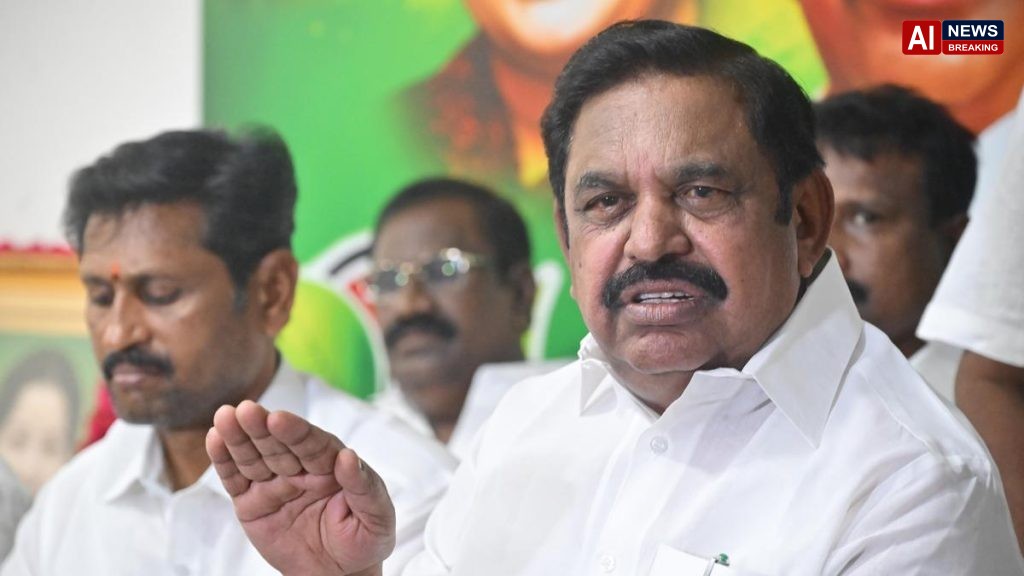
Opposition accuses Tamil Nadu government of high electricity costs - AI News Breaking
AIADMK and BJP leaders have launched a fierce attack on the Tamil Nadu government led by Chief Minister C. Joseph Vijay, accusing it of paying the highest electricity rates to private suppliers. Former Chief Minister Edappadi Palaniswami, who has long been a prominent figure in the region’s politics, spearheaded the criticism, arguing that the state’s purchase agreements are disproportionately expensive and unfair to consumers..
Palaniswami’s remarks came in the wake of a recent audit that revealed the state’s electricity procurement costs were significantly above national averages. He pointed out that Tamil Nadu’s reliance on private power plants has escalated tariff rates for households and industries alike, undermining the state’s economic growth prospects. The former chief minister’s statements were delivered during a press conference attended by a coalition of opposition leaders and local media..
The criticism is not merely a rhetorical flourish; it reflects growing discontent among voters who feel overburdened by the rising cost of living. Tamil Nadu’s electricity market has seen a surge in private generation, prompted by the state’s ambition to meet increasing demand and to diversify its energy mix. Critics argue that the government’s procurement strategy has prioritized supply continuity over cost efficiency, leading to a surge in consumer bills..
Joseph Vijay’s administration has defended its policy, claiming that the higher rates are justified by the premium quality and reliability of the private suppliers. The chief minister emphasised that the state’s long‑term power contracts are designed to secure uninterrupted supply and to meet the rising energy needs of its industrial base. He cited data showing that the cost per kilowatt-hour has not risen as sharply in neighbouring states, suggesting a comparative advantage for Tamil Nadu..
Despite these assurances, the opposition alleges that the government is exploiting its bargaining power, extracting payments from private players at a premium that is ultimately passed on to consumers. They point to the absence of transparent bidding mechanisms in the procurement process as a key concern. The opposition’s stance is grounded in the belief that a more competitive market could yield lower prices without sacrificing supply reliability..
The debate has highlighted the broader policy dilemma faced by many Indian states: how to balance the need for reliable power supply with the imperative of keeping tariffs affordable. The Tamil Nadu government’s reliance on private suppliers stems from an increasing need to bridge the gap left by state-owned utilities. However, critics argue that without stringent regulatory oversight, the private sector can command higher prices, potentially burdening the state’s economy..
The opposition leaders have called for an independent audit of the state’s electricity contracts, urging the Central Electricity Authority to review the tariffs. They have also suggested that the state could explore alternative sources such as solar and wind, which could reduce dependence on costly private generation. Their appeal is rooted in a broader push for sustainability and cost-efficiency across the power sector..
In response, the Vijay administration has maintained that the current strategy is a necessary step toward meeting the state’s growing demand and to support its industrial development. The chief minister asserted that the higher rates are a short‑term cost associated with long‑term benefits such as reduced power shortages and increased investor confidence. He also highlighted the state’s success in attracting new investments thanks to a stable power supply..
The controversy has sparked intense debate within the state legislature, where opposition members have demanded a detailed report on the procurement process. The legislative session saw heated exchanges, with the opposition accusing the ruling party of favouritism and lack of transparency. The ruling party, meanwhile, reiterated its commitment to ensuring that the state’s power needs are met efficiently and reliably..
Observers note that the issue resonates beyond Tamil Nadu, reflecting national concerns about electricity pricing and the role of private players in the sector. Across the country, state governments are grappling with how to secure adequate power while keeping consumer costs manageable. The Tamil Nadu case has therefore become a focal point for discussions on energy policy reform and market regulation..
As the debate continues, voters remain uncertain about which path will best serve their interests. The opposition’s calls for greater transparency and cost control have gained traction among certain segments of the population, while supporters of the government cite the importance of reliable supply for industrial growth. The outcome of this dispute will likely influence future policy decisions on electricity procurement in Tamil Nadu and potentially set a precedent for other states..
Updated: October 14, 2026
If Tamil Nadu’s premium power deals become a national template, voters across the country will soon pay the price for a “reliable‑but‑costly” model, forcing Delhi‑based policymakers to decide whether stability can trump affordability. The debate forces the state to confront a deeper truth: without a transparent, competitive procurement system, any energy strategy risks becoming a fiscal burden rather than an economic catalyst.