Karnataka SIR: Teaching on the back burner
 Trump administration offers mixed messages on limits to Ukraine’s Starshield access
 US Treasury proposes a rule to crack down on high-tech investments in China, other adversaries
 Calley Means, a key MAHA advocate, resigns as a top RFK Jr. adviser
 Spotify Tightens Family Plan Controls with QR Code Verification
Supreme Court upholds Madras HC order quashing Tamil Nadu reservation notification for converts to Islam
** The apex court affirmed the Madras High Court’s decision to quash Tamil Nadu’s notification granting reservation benefits to Muslims converted from Scheduled Castes, Tribes or OBCs, ruling that the move created an “artificial group” and violated constitutional criteria for backward‑class reservations.
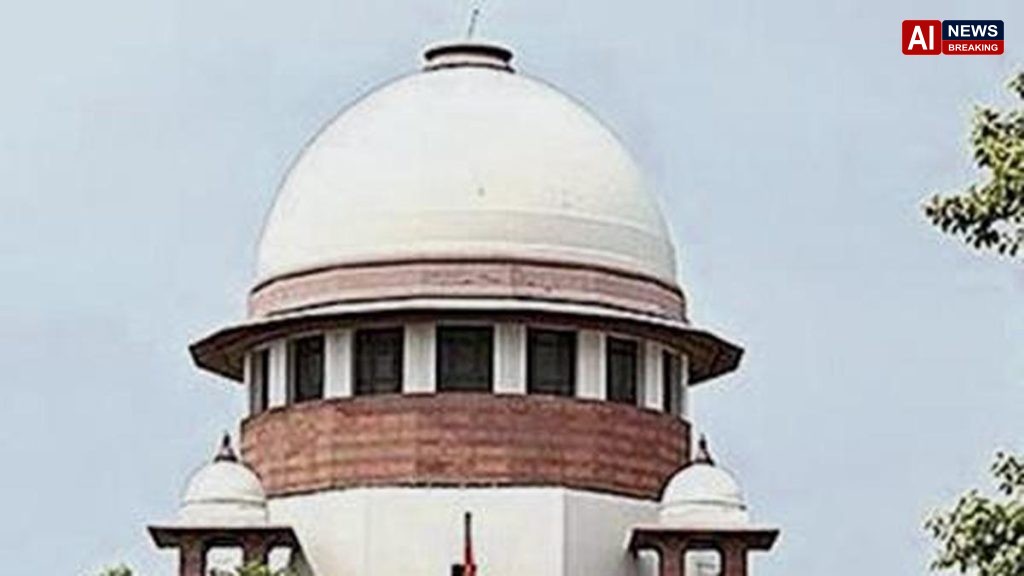
Supreme Court upholds Madras HC order quashing Tamil Nadu reservation notification for converts to Islam - AI News Breaking
The Supreme Court on Monday upheld a decision of the Madras High Court that struck down a Tamil Nadu government notification granting reservation benefits to Muslims who converted from Scheduled Castes, Scheduled Tribes or Other Backward Classes. In a detailed judgment, the apex court said the state order created an “artificial group” that would enjoy the advantages of backward‑class status without satisfying the constitutional criteria for such classification. The ruling marks a significant setback for the Tamil Nadu government’s attempt to expand affirmative action to a newly defined category of beneficiaries and raises fresh questions about the limits of state power in reshaping reservation policy.The controversy began in 2023 when the Tamil Nadu administration issued an order under the state’s reservation policy that earmarked a quota of seats in educational institutions and government jobs for members of the Muslim community who had earlier been listed as Scheduled Castes, Scheduled Tribes or Other Backward Classes..
The government argued that these individuals, having converted to Islam, faced a double disadvantage: the historic marginalisation associated with their caste background and the contemporary social stigma attached to being a religious minority. By creating a separate “converted Muslim” category, the state sought to extend the benefits of the existing reservation system to this group, which it claimed was not adequately represented under the prevailing scheme.The Madras High Court, however, found the notification to be unconstitutional. In a sharply worded order, the bench held that the state had exceeded its legislative competence by carving out a new class of beneficiaries on the basis of religion, rather than on the basis of social and educational backwardness that the Constitution envisages for reservation..
The court warned that such a move could set a precedent for other states to create similar “artificial groups,” thereby diluting the original purpose of affirmative action and opening the door to further communal fragmentation of the reservation system.When the case reached the Supreme Court, the petitioners – a consortium of non‑Muslim SC/ST/OBC candidates who alleged that the new quota reduced their chances of securing seats – argued that the Tamil Nadu order violated the equal‑protection clause of Article 14 of the Constitution. They contended that the state had effectively introduced a new criterion – religious conversion – that was not a factor in the original constitutional design of reservations, which is anchored in historical disadvantage and social exclusion, not faith.In its judgment, the Supreme Court majority accepted this line of reasoning. The bench observed that while the Constitution permits the state to make special provisions for socially and educationally backward classes, it does not empower legislatures to base such provisions on religious identity..
The Court reiterated that the purpose of reservation is to uplift sections of society that have been systematically denied access to public resources, and that the identification of these sections must be grounded in objective socioeconomic data, not in the subjective experience of conversion.The justices also addressed the government’s argument that the converted Muslims continued to face the “dual burden” of caste and religious marginalisation. While acknowledging that many such individuals do encounter discrimination, the Court held that the appropriate remedy lay in improving the overall quality and reach of the existing reservation scheme, rather than creating a separate quota. It warned that the creation of a distinct group could engender a slippery slope, prompting other communities to demand similar carve‑outs, thereby fracturing the reservation framework and potentially leading to a proliferation of communal claims on public resources.The judgment noted that the Constitution’s framers deliberately limited the scope of reservation to prevent the politicisation of social welfare..
By invoking the term “artificial group,” the Court signalled that the Tamil Nadu order was a product of political expediency rather than a response to empirically demonstrable backwardness. It underscored that any alteration to reservation policy must be preceded by a rigorous, data‑driven assessment by an independent commission, as mandated by the Constitution and reinforced by previous Supreme Court rulings such as Indra Sawhney v. Union of India.Legal scholars have pointed out that the verdict reaffirms the Supreme Court’s long‑standing stance that religion cannot be a basis for preferential treatment in public employment and education..
The decision aligns with earlier judgments that have struck down state actions perceived to be “reverse discrimination” on religious lines, thereby preserving the secular character of the Indian republic. It also reinforces the principle that affirmative action must be “temporary” and “targeted,” aimed at achieving substantive equality rather than merely redistributing seats along communal lines.The Tamil Nadu government, through its legal counsel, has indicated that it will explore alternative avenues to address the concerns of converted Muslims. Officials suggested that the state could consider a broader, socioeconomic‑based review of the existing reservation categories, which might capture the needs of those who feel disadvantaged without resorting to a religion‑specific provision..
The government also hinted at the possibility of seeking a constitutional amendment, though such a move would require a lengthy parliamentary process and is likely to spark intense political debate.Political reactions to the ruling have been swift. Opposition parties in the state assembly have seized on the verdict to accuse the ruling Dravida Munnetra Kazhagam (DMK) of communal engineering, while allies of the DMK argue that the decision hampers the state’s ability to tailor welfare measures to its diverse population. Nationally, the case has been cited by commentators as a bellwether for how the judiciary may handle similar attempts by other states to introduce religion‑linked reservations, especially in the context of ongoing debates about caste‑based quotas and the demand for a “creamy layer” exclusion.Human rights organisations have welcomed the judgment, stating that it upholds the principle that public benefits must be allocated on the basis of genuine social disadvantage rather than identity politics..
They caution, however, that the underlying issues of discrimination faced by religious minorities, particularly those from historically oppressed castes, remain unresolved. These groups have called for a comprehensive data collection exercise to better understand the intersection of caste and religion in India’s socio‑economic landscape, arguing that only such evidence can inform policy that is both equitable and constitutionally sound.The Supreme Court’s decision, while narrowly focused on the legal validity of the Tamil Nadu notification, may have broader implications for the country’s affirmative‑action framework. By reinforcing the primacy of socioeconomic criteria over religious affiliation, the judgment underscores the judiciary’s role in safeguarding the secular ethos of the reservation system..
At the same time, it leaves open the question of how the state can address the layered disadvantages experienced by individuals who sit at the intersection of multiple marginalised identities, a challenge that will likely shape future policy debates.In the weeks ahead, the Tamil Nadu government is expected to submit a revised proposal to the state’s reservation committee, seeking a more inclusive but constitutionally compliant approach..
Updated: October 15, 2026
Insight: The ruling exposes how quickly identity‑based carve‑outs can erode the merit of affirmative action, turning a tool for structural uplift into a political bargaining chip. It also signals that any future remedy for “double‑burden” victims must be framed in hard socioeconomic data, not in sect