Trump administration offers mixed messages on limits to Ukraine’s Starshield access
 US Treasury proposes a rule to crack down on high-tech investments in China, other adversaries
 Calley Means, a key MAHA advocate, resigns as a top RFK Jr. adviser
 Spotify Tightens Family Plan Controls with QR Code Verification
 Use of Chief Minister C. Joseph Vijay’s deep fake videos to collect money: Rajasthan youth moves Madras High Court seeking bail
Telangana People’s Front seeks three urgent interventions to save education system
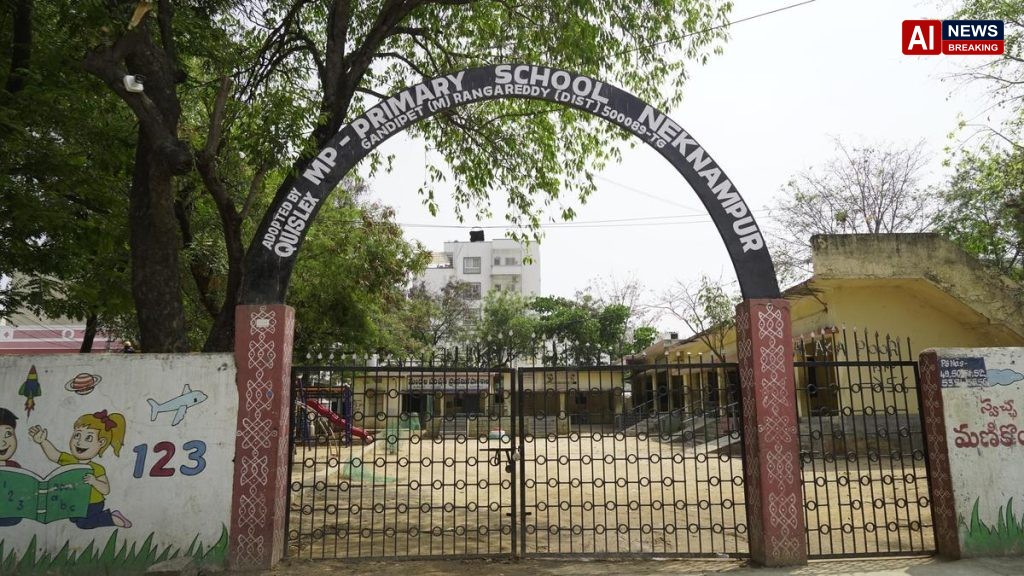
Telangana People’s Front seeks three urgent interventions to save education system - AI News Breaking
telangana peoples front seeks:
Telangana People’s Front seeks three urgent interventions to save education system The Telangana People’s Front (TPF) has issued a comprehensive demand aimed at revitalising the state’s public education system. The party’s latest manifesto, released last Friday, calls for a multi‑pronged approach that includes the strengthening of existing government schools, a significant increase in the state’s education budget, and the establishment of an independent Fee Regulatory Commission. According to the TPF, these measures are essential to address the chronic underfunding, inequitable resource distribution, and fee‑related grievances that plague Telangana’s schools today..
The first thrust of the TPF’s proposal focuses on the “comprehensive strengthening of existing government schools.” The party argues that most of Telangana’s public institutions suffer from inadequate infrastructure, a shortage of trained teachers, and obsolete learning materials. By investing in modern classrooms, science laboratories, and digital learning hubs, the TPF believes that the state can reduce the dropout rate, especially among rural and marginalised communities. They have also called for the introduction of a mandatory teacher‑training programme that would refresh pedagogical skills and keep educators abreast of contemporary educational technologies..
The second demand of the TPF concerns the allocation of at least 18% of the state budget to the education sector. Currently, Telangana spends roughly 12% of its annual revenue on schools, a figure that places it below the national average. The TPF contends that a higher percentage would enable the procurement of essential resources such as textbooks, laboratory equipment, and teacher salaries..
Furthermore, the party argues that the additional funds could be directed toward bridging the digital divide that has widened during the pandemic, ensuring every child has access to e‑learning platforms and reliable internet connectivity. The final and perhaps most controversial demand involves the creation of an independent Fee Regulatory Commission. Presently, the Telangana state government does not have a dedicated body to oversee fee structures in public schools..
The TPF asserts that this absence has led to arbitrary fee hikes, hidden charges, and a lack of transparency for parents. An independent commission, according to the party, would standardise fee schedules, audit school accounts, and enforce penalties for non‑compliance. This step, the TPF argues, would protect families from undue financial stress and restore trust in the public education system..
In a press conference held at the TPF headquarters in Hyderabad, party leader N. Ramesh Kumar outlined how the three interventions are interlinked. “Strengthening schools requires funding,” he said, “and transparent fee structures ensure that the funds are used effectively and that no child is barred from education due to cost.” He added that the commission would also have a role in monitoring the allocation of the increased budget, preventing misappropriation and ensuring that earmarked money reaches the classrooms..
The TPF’s call for an 18% budget allocation aligns with recommendations from the National Education Policy 2020, which suggests that states should devote a minimum of 15% of their revenue to primary and secondary education. By surpassing this benchmark, the party argues, Telangana can meet the policy’s goals of quality, equity, and inclusivity. Critics, however, warn that such a budget hike would strain the state’s finances unless offset by increased revenue or re‑allocation from other sectors..
Opposition parties have responded with caution. The Telangana Rashtra Samithi (TRS) has said that while they support improving schools, they are wary of the proposed 18% figure. “We must balance fiscal responsibility with educational needs,” said TRS spokesperson K..
She emphasized the need for a phased increase, coupled with efficiency audits. Meanwhile, the Indian National Congress (INC) in Telangana has urged the government to conduct a thorough impact assessment before implementing the fee regulatory commission, citing concerns about bureaucratic overreach. Proponents of the TPF’s demands, including several teachers’ unions, argue that the current fee system is a major deterrent for students from low‑income families..
“We’ve seen parents drop their children mid‑year because they can’t afford the last instalment,” said teacher union head R. “A fee regulatory commission would level the playing field.” The union also highlights that independent oversight could reduce corruption at the local level, where teachers and administrators sometimes misuse fee collections for personal gain. The Telangana government has acknowledged the public’s frustration but remains skeptical about the feasibility of the TPF’s demands..
In a statement released after the party’s press conference, the Education Minister, S. Reddy, said the state was “reviewing the proposals” and would consult with stakeholders before taking any decisive steps. He assured that the government was working on a “balanced approach” that would strengthen schools without compromising fiscal prudence..
Meanwhile, civil society groups and educational NGOs have launched an online petition supporting the TPF’s agenda. As of Monday, the petition had garnered over 50,000 signatures across the state, reflecting growing public pressure. “We’re not just asking for more money; we’re demanding accountability,” said petition coordinator Aisha Khan..
“The fee regulatory commission will act as a watchdog, ensuring transparency for parents and safeguarding the integrity of public schools.” Analysts suggest that the TPF’s platform could resonate strongly with voters ahead of the next state elections, scheduled for 2027. “Education is a perennial concern for families,” noted political analyst Rajiv Menon. “A party that promises tangible reforms, such as a fee regulator and increased spending, could tilt the scales, especially among rural constituencies that feel neglected.” He.
Telangana’s new political force, the Telangana People’s Front, is demanding a three‑pronged overhaul of the state’s public schools, calling for a boost to the education budget to 18 % of revenue, a comprehensive upgrade of infrastructure and teacher training, and the creation of an independent fee‑regulatory commission. While the party’s proposal has rallied support from teachers, parents and civil‑society groups, the state government remains cautious, citing fiscal constraints and the need for a
This development highlights evolving dynamics and may have broader implications in the near term.