Trump administration offers mixed messages on limits to Ukraine’s Starshield access
 US Treasury proposes a rule to crack down on high-tech investments in China, other adversaries
 Calley Means, a key MAHA advocate, resigns as a top RFK Jr. adviser
 Spotify Tightens Family Plan Controls with QR Code Verification
 Use of Chief Minister C. Joseph Vijay’s deep fake videos to collect money: Rajasthan youth moves Madras High Court seeking bail
Telangana plans 14-month foodgrain buffer to cover over 3 crore people amid El Niño threat
** Telangana will expand its public distribution system to a 14‑month grain buffer, adding 2‑3 lakh tonnes of rice and other essentials to protect more than 30 million residents from a potential El Niño‑induced drought, with a ₹12 billion investment in storage upgrades and central‑state coordination.
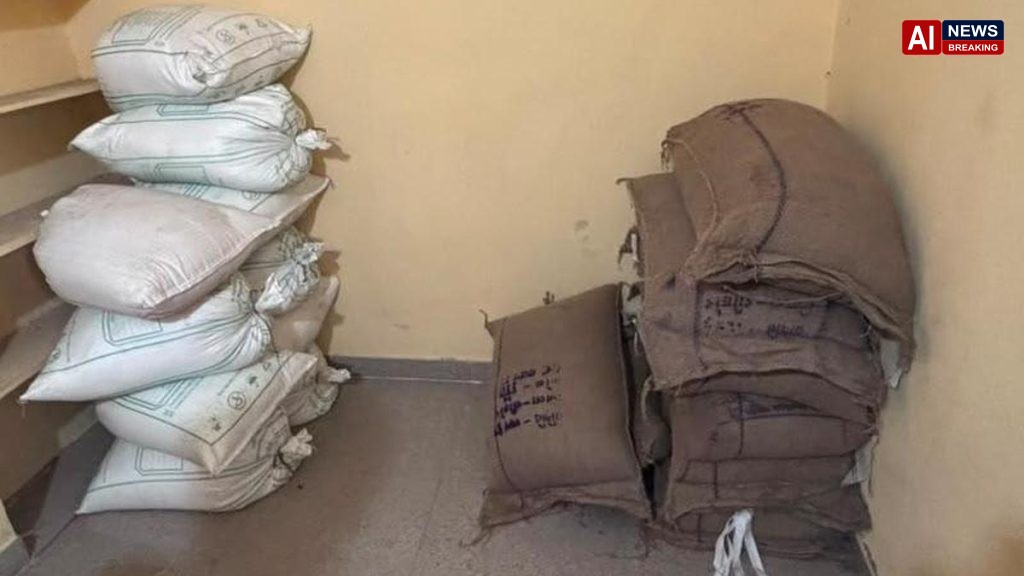
Telangana plans 14-month foodgrain buffer to cover over 3 crore people amid El Niño threat - AI News Breaking
telangana plans 14month foodgrain:
Telangana’s state government has unveiled a plan to create a 14‑month food‑grain buffer aimed at safeguarding more than three crore residents from the looming threat of an El Niño‑induced drought. The proposal, announced by the state’s Minister for Food, Civil Supplies and Consumer Affairs, Uttam Kumar Reddy, seeks to extend the current public distribution system (PDS) reserves beyond the usual 12‑month coverage, ensuring that the most vulnerable households retain access to essential staples even if monsoon rains falter later in the year.According to the minister, the state already holds 28.03 lakh tonnes of rice in its warehouses, a stockpile that, under normal consumption patterns, would be sufficient to meet demand for roughly 11.7 months. By augmenting this with an additional 2‑3 lakh tonnes of rice and supplementing it with wheat flour, pulses, edible oils and other essentials, the government aims to push the buffer to a full 14‑month horizon..
The extra grain will be sourced from both the central government’s food‑grain reserves and purchases from the open market, the minister said, with procurement contracts already underway.The decision comes against a backdrop of heightened climate anxiety across the subcontinent. El Niño, a periodic warming of the central Pacific Ocean, has historically been linked to erratic monsoon behaviour in India, often curtailing rainfall in the Deccan plateau where Telangana lies. Meteorological forecasts released earlier this month indicate a higher probability of below‑average rainfall during the upcoming monsoon season, prompting state officials to act pre‑emptively..
“We cannot afford to wait for a crisis to unfold before we respond,” Reddy told reporters, adding that the buffer is a preventive measure rather than a reactionary one.Stakeholders in the agricultural sector have largely welcomed the move, noting that a robust buffer can mitigate price volatility and protect smallholder farmers from market shocks. The Telangana State Agricultural Marketing Board has indicated that, should the monsoon underperform, the additional reserves could be released in a staggered manner to stabilize retail prices of rice and wheat flour, which have historically spiked during drought years. “A well‑stocked buffer is a key instrument of food‑security policy, especially for a state that produces a significant share of its own grain,” said Dr..
Srinivas, an agricultural economist at Osmania University.However, the plan is not without its critics. Some opposition leaders argue that the emphasis on stockpiling could divert resources from more sustainable solutions such as water‑conservation projects, drought‑resistant crop varieties, and the expansion of irrigation infrastructure. “While buffers are essential, they should not become a substitute for long‑term climate adaptation,” remarked G..
Laxman, a senior member of the state opposition. The minister rebutted, stating that the buffer complements, rather than replaces, ongoing initiatives aimed at improving water use efficiency and promoting climate‑smart agriculture.Implementation logistics present another layer of complexity. Telangana’s food‑grain storage capacity has expanded in recent years, with the construction of modern, climate‑controlled warehouses across districts such as Karimnagar, Nalgonda and Warangal..
Yet, ensuring the quality of the grain over a prolonged storage period requires meticulous monitoring to prevent pest infestations and spoilage. To this end, the state has commissioned an additional 150 million rupees for the upgrade of storage facilities, including the installation of temperature and humidity sensors linked to a central monitoring dashboard.The financial outlay for the 14‑month buffer is expected to be significant. Preliminary estimates place the total cost at around 12 billion rupees, a figure that will be sourced from the state’s own budgetary provisions as well as central assistance under the National Food Security Act (NFSA)..
The central government has already signalled its willingness to contribute to the procurement of wheat flour and pulses, recognizing the broader national implications of a potential El Niño event. “Food security is a shared responsibility, and we are coordinating closely with the Centre to ensure that the most vulnerable are protected,” Reddy affirmed.Beneficiaries of the expanded buffer will primarily be the families listed under the PDS, which currently serves roughly 2.5 crore households in Telangana. Under the new scheme, the eligibility criteria will be broadened to include an additional half‑crore households identified through the state’s socio‑economic survey as being at heightened risk of food insecurity..
These families will receive monthly rations of rice, wheat flour, sugar and kerosene at subsidised rates, with the added buffer ensuring that no interruptions occur in supply even if the monsoon fails to deliver.Civil society organisations have been invited to monitor the rollout of the buffer and to provide feedback on its effectiveness. The Telangana State Human Rights Commission has pledged to oversee the equitable distribution of the grain, aiming to prevent any instances of diversion or corruption that have marred previous PDS operations in parts of the country. “Transparency and accountability are paramount,” said the commission’s chairperson, S..
Patil, during a press briefing. “We will be tracking allocations in real time and will intervene if any irregularities are detected.”In the broader context, Telangana’s move mirrors a growing trend among Indian states to bolster food‑grain reserves in anticipation of climate‑driven disruptions. Karnataka, Andhra Pradesh and Maharashtra have all announced similar plans, signalling a shift toward more proactive governance in the face of climate variability..
As the monsoon approaches, the efficacy of these buffers will be closely watched by policymakers and analysts alike, with the hope that such preparedness measures will mitigate the human toll of any future droughts and set a precedent for resilient food‑security strategies across the nation..
Updated: October 19, 2026
Telangana’s 14‑month grain buffer signals a strategic pivot from reactive relief to pre‑emptive risk hedging, treating food security as a climate‑insurance policy rather than a stop‑gap.
If the stockpile holds up, it could reshape political calculus: voters may