Spotify Tightens Family Plan Controls with QR Code Verification
 Use of Chief Minister C. Joseph Vijay’s deep fake videos to collect money: Rajasthan youth moves Madras High Court seeking bail
 Florida officer took possession of man’s home after finding him dead 4 years ago, police say
 Jury weighs fate of US woman who says father forced her into Syria’s war zone when she was a teen
Japan authorities investigate Danjiri festival fatalities
**
Deaths at Danjiri Float Festival Prompt Questions in Japan - AI News Breaking
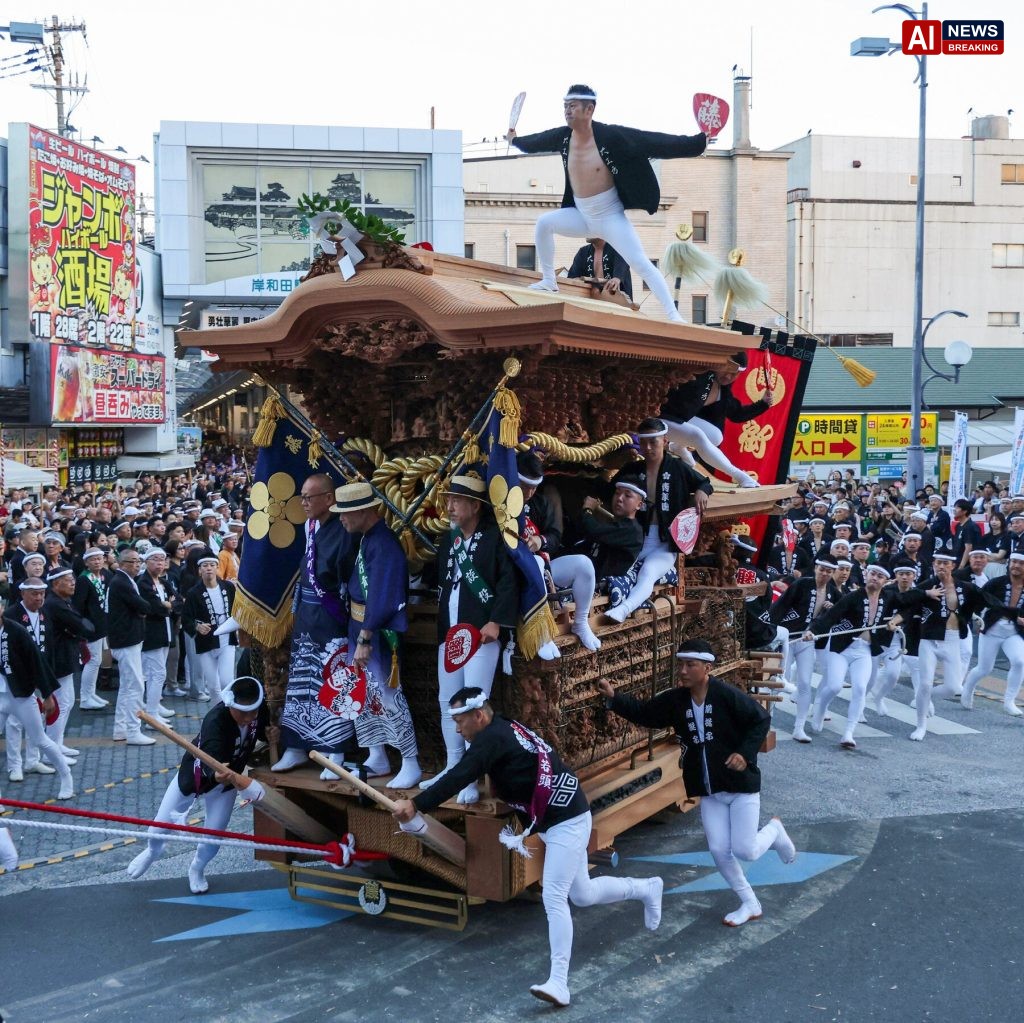
Deaths at Danjiri Float Festival Prompt Questions in Japan The annual Danjiri float festival, a three‑century‑old celebration of craftsmanship and community spirit in the Kansai region, has been thrust into the national spotlight after two participants were killed in separate accidents. The deaths occurred during this year’s events in the towns of Kishiwada and Kaizuka, where massive wooden floats are hauled through crowded streets at breakneck speed. While organisers have long defended the tradition as a vital link to local heritage, safety critics argue that modern regulations have been ignored, prompting a fresh debate over the balance between cultural preservation and public welfare..
The first fatality was recorded on 12 May when a 48‑year‑old float driver, known locally as a “kashira,” was crushed beneath a 5‑tonne danjiri as it careened around a sharp corner in Kishiwada. Witnesses say the driver lost control after the rope‑team slipped on a wet patch of pavement, causing the massive wheel‑axle to collapse onto his chest. Emergency services arrived within minutes, but the injuries were deemed unsurvivable..
The second death, on 27 May in Kaizuka, involved a 22‑year‑old apprentice who was struck by a swinging lantern attached to the float’s front deck while attempting to steady the structure during a sudden gust of wind. Both incidents have sparked an outcry from families, local politicians and safety advocates, who demand an urgent review of the festival’s protocols. The towns’ mayoral offices released statements expressing “deep sorrow” and pledging to cooperate with the national police’s investigation..
However, they also emphasised that the Danjiri festival remains “the heart of our community,” urging residents not to let isolated tragedies “overshadow the joy and unity that these events bring.” The tension between grief and tradition is palpable in council chambers across Osaka Prefecture. Historically, the Danjiri floats are carved from Japanese cypress and richly painted with mythological motifs, each weighing between three and seven tonnes. Built by local artisans over months, the floats are pulled by teams of up to fifty men who chant rhythmic shouts to synchronise their steps..
The spectacle is famed for its speed; floats can reach 20 km/h on narrow, winding streets, a factor that draws both tourists and the occasional on‑lookers’ gasp. Yet this very dynamism has been a source of concern for decades, with minor injuries reported each year, though fatalities have been rare until now. Police reports indicate that the two deaths shared a common element: a failure in the rope‑handling system, which is traditionally inspected only by senior float leaders rather than external engineers..
In Kishiwada, the rope’s hemp fibres had reportedly been replaced with a synthetic blend in the previous year, a change meant to increase durability but which may have altered the rope’s elasticity. In Kaizuka, investigators found that the lantern’s mounting bracket had not been replaced after a previous minor accident, suggesting lapses in routine maintenance. Both findings have fueled calls for professional oversight..
The Japan Festival Association (JFA), the body that oversees many of the nation’s traditional celebrations, responded by issuing a provisional “Safety Advisory” on 1 June. The document recommends that all float teams conduct bi‑annual structural assessments, employ certified safety officers and limit the number of participants on each float to a maximum of thirty. It also suggests that towns consider installing temporary barriers along the most hazardous sections of the route..
While the advisory is non‑binding, the JFA warned that non‑compliance could result in the loss of official festival licences, a sanction that would carry significant economic repercussions for the host towns. Local businesses, many of which rely on the influx of visitors during the Danjiri week, have voiced apprehension about potential restrictions. A survey conducted by the Osaka Chamber of Commerce found that 68 % of merchants feared that stricter safety rules could deter tourists, reducing revenue by an estimated ¥200 million per town..
Conversely, a smaller but vocal group of residents—particularly younger participants who have recently joined the float crews—support the reforms, citing personal experiences with near‑miss incidents. The generational divide underscores a broader societal shift in how Japan reconciles heritage with modern risk management. In the wake of the tragedies, the Ministry of Education, Culture, Sports, Science and Technology (MEXT) announced a task force to evaluate the safety of “intangible cultural assets” that involve physical performance..
The task force, chaired by former Olympic gymnast and safety advocate Hiroshi Tanaka, will review protocols not only for Danjiri festivals but also for other high‑risk traditions such as the Sapporo Snow Festival’s ice‑carving contests and the Gion Matsuri’s massive yamaboko floats. MEXT has earmarked ¥150 million for research and pilot safety programmes, signalling a willingness to intervene at the national level if local measures prove insufficient. Cultural scholars caution that imposing external safety standards could unintentionally erode the communal ethos that defines the Danjiri experience..
Professor Yuki Matsumoto of Kyoto University notes that the festival’s “spontaneous coordination” and “collective responsibility” are integral to its meaning, and that overly rigid regulations risk transforming a living tradition into a staged performance. Nevertheless, Matsumoto acknowledges that “the loss of life is an irreversible rupture” and that the community must adapt to protect its members while preserving the spirit of the event. The families of the deceased have filed civil suits against the towns, alleging negligence in.
Updated: October 19, 2026
Summary: Two fatal accidents at the Danjiri Float Festival in Kishiwada and Kaizuka have ignited a national debate over the balance between cultural heritage and safety, with local officials pledging investigations while community leaders defend the event’s tradition. The Japan Festival Association has issued a provisional safety advisory, and MEXT has launched a task force to evaluate risk management for high‑risk festivals, amid concerns that stricter regulations could dampen tourism and alter the festival’s communal spirit.
The Danjiri tragedies expose how the communal pride that fuels Japan’s most visceral festivals can blind local leaders to the very risks those celebrations create. Balancing heritage with safety will force a cultural shift—if the community can accept external oversight, the festival’s spirit may survive, but clinging to