Spotify Tightens Family Plan Controls with QR Code Verification
 Use of Chief Minister C. Joseph Vijay’s deep fake videos to collect money: Rajasthan youth moves Madras High Court seeking bail
 Florida officer took possession of man’s home after finding him dead 4 years ago, police say
 Jury weighs fate of US woman who says father forced her into Syria’s war zone when she was a teen
Minnesota teen accused of plotting terror attack at Mall of America to remain jailed
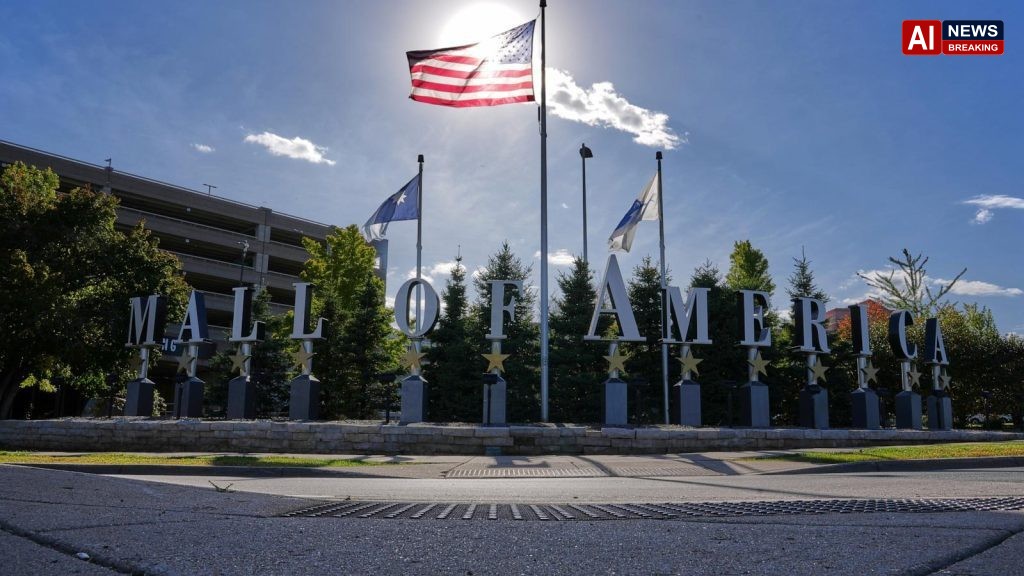
Minnesota teen accused of plotting terror attack at Mall of America to remain jailed - AI News Breaking
minnesota teen accused plotting:
A federal judge in Minnesota on Tuesday ordered that a 17‑year‑old boy accused of conspiring to carry out a terrorist attack at the Mall of America remain in federal custody pending trial. The decision follows a hearing in which the government argued that the teenager poses a flight risk and a danger to the public, while his public‑defender contended that the evidence against him does not justify continued detention. District Judge John Tunheim, found merit in both arguments and concluded that the balance of factors favoured continued incarceration.The teenager, identified only by his initials in court documents, was arrested in June after a joint investigation by the FBI, the Department of Homeland Security and local law‑enforcement agencies..
Prosecutors say he allegedly plotted to use an improvised explosive device inside the sprawling shopping complex, which draws more than 40 million visitors each year and is considered a potential soft target for extremist activity. The indictment alleges that he communicated with an unidentified co‑conspirator online, exchanged sketches of the mall’s layout and researched how to acquire materials for a bomb. He is also accused of attempting to obtain a firearm through illegal means.According to the indictment, the alleged plot was discovered after a tip was submitted to the FBI’s tip line in early May..
Agents traced the tip to a series of encrypted messages exchanged on a social‑media platform that the teenager used to discuss extremist ideology. The messages included references to past attacks in the United States and a desire to “make a statement” against what the suspect described as “the corrupt establishment.” The investigation was aided by digital forensic analysis that linked the suspect’s IP address to a public Wi‑Fi network near the Mall of America.During the hearing, the prosecution presented a detailed risk assessment prepared by a federal prison official. The assessment cited the suspect’s age, the seriousness of the charges, the potential for him to flee if released, and the possibility that he could continue to radicalise or coordinate with other individuals while out on bail..
The government also highlighted that the alleged plan involved the procurement of weapons and explosives, which, if executed, could have resulted in mass casualties. In response, the defense argued that the teen’s family had a stable home environment, that he was a first‑time offender, and that the evidence did not demonstrate an immediate capability to carry out the attack.Judge Tunheim, who has presided over several high‑profile terrorism cases, noted that the decision to deny bail was not taken lightly. “The court must weigh the rights of the accused against the safety of the community,” he said in his ruling..
“Given the nature of the alleged offense, the potential for violence, and the suspect’s connections to extremist networks, the pre‑trial detention is warranted.” He also ordered that the teenager remain under strict supervision, with limited communication privileges and regular checks by the Bureau of Prisons.The case has sparked renewed debate in Minnesota about the balance between civil liberties and security measures in the wake of increasing reports of home‑grown violent extremism. Civil‑rights groups have expressed concern that minors may be subject to harsh pre‑trial conditions without sufficient evidence of imminent danger. The ACLU of Minnesota released a statement urging the court to consider alternatives to incarceration, such as supervised release with electronic monitoring, especially given the defendant’s age and the presumption of innocence.Law‑enforcement officials, however, maintain that the Mall of America presents a unique target due to its size, location and symbolic significance..
The FBI’s Minneapolis field office spokesperson said the agency is “committed to preventing attacks on public venues and will pursue all leads that could jeopardise the safety of millions of visitors.” The spokesperson declined to comment on the specifics of the investigation, citing ongoing proceedings, but affirmed that the agency works closely with federal prosecutors to ensure that any threat is addressed promptly.Legal experts note that the case underscores the challenges prosecutors face when charging juveniles with terrorism‑related offenses. Federal statutes allow for adult sentencing in certain circumstances, and the decision to keep a minor in a federal detention facility can have long‑term implications for rehabilitation and future prospects. Berman of the University of Minnesota Law School explained that “the court must navigate a complex legal landscape where the gravity of the alleged crime intersects with the defendant’s status as a minor, and where the standards for pre‑trial detention are more stringent than for adult defendants.”If convicted, the teenager could face a sentence of up to 20 years in prison, according to the federal sentencing guidelines for weapons‑related terrorism offenses..
The prosecution has indicated that it intends to seek the maximum penalties permissible under the law, emphasizing the need for a strong deterrent message. The defense, meanwhile, has hinted at a possible plea bargain that might involve reduced charges if the teenager cooperates with investigators, though no formal offer has been made public.The trial is scheduled to begin in the spring of next year, and both sides have indicated that they will call expert witnesses on topics ranging from explosive device construction to the psychology of radicalisation among youth. As the case proceeds, the broader community remains watchful of any further developments that could affect public safety or set precedents for how juvenile terrorism cases are handled in the United States..
Updated: October 19, 2026
This development highlights evolving dynamics and may have broader implications in the near term.