Use of Chief Minister C. Joseph Vijay’s deep fake videos to collect money: Rajasthan youth moves Madras High Court seeking bail
 Florida officer took possession of man’s home after finding him dead 4 years ago, police say
 Jury weighs fate of US woman who says father forced her into Syria’s war zone when she was a teen
 France bans certain protests to restore public
Taiz faces humanitarian crisis as Houthi blockade cuts
**
Yemeni City of Taiz Running Out of Essentials as Houthis Close in - AI News Breaking
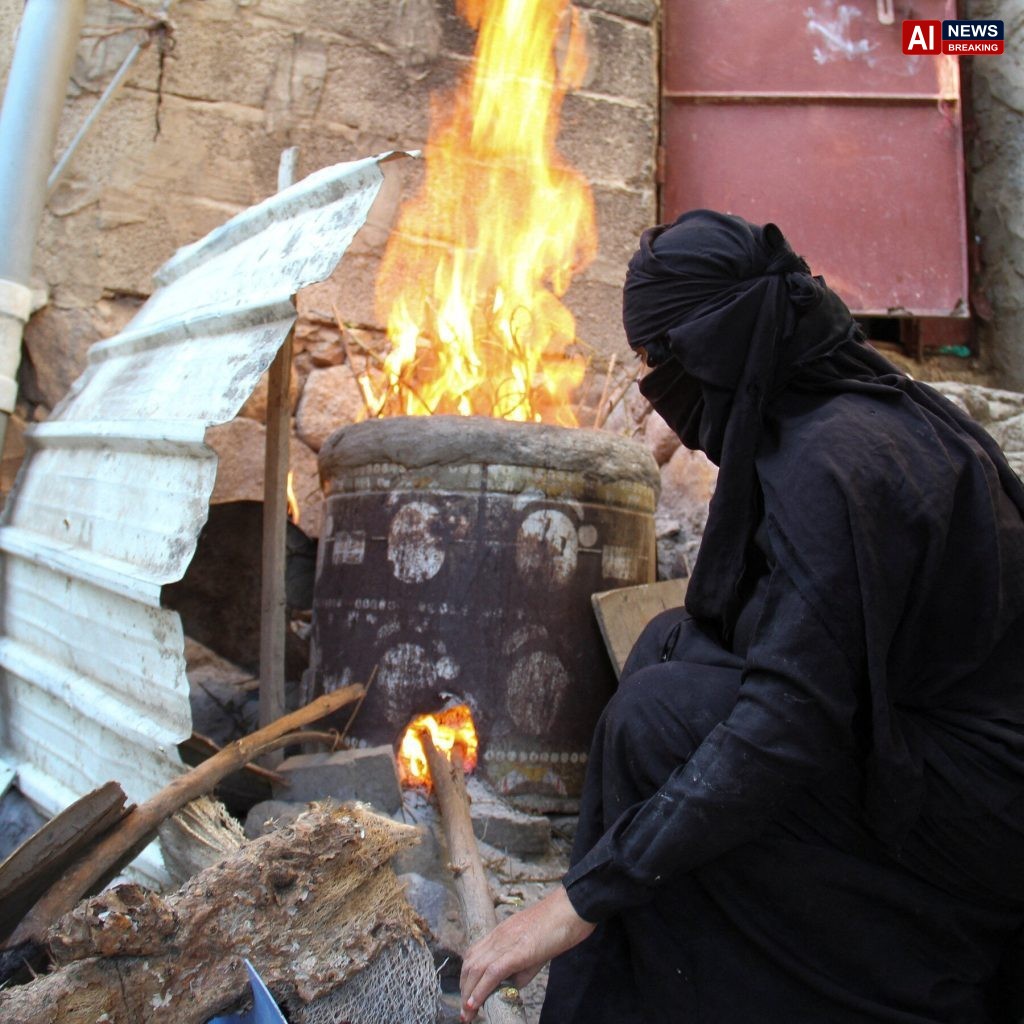
Yemeni City of Taiz Running Out of Essentials as Houthis Close in The Iranian‑backed Houthi militia has cut road access to Taiz, one of Yemen’s largest cities, besieging it. Officials there warn of an impending humanitarian disaster. The blockade, imposed on 23 April, blocks the main supply arteries that once carried food, fuel and medical supplies from the port of Mocha and from the hinterland..
Residents now face dwindling stocks of grain, clean water and essential medicines, while the city’s already fragile health system scrambles to cope with a surge in casualties from ongoing fighting. Aid agencies say the situation could become “catastrophic” within weeks if the siege continues. Taiz, with a pre‑war population of roughly 600,000, has been a focal point of the conflict since the Houthi advance in 2015..
The city sits on a strategic crossroads between the capital Sana’a and the southern port of Aden, making it a coveted prize for both sides. Since the closure of the main highway, informal routes through the mountains have been the only lifelines left, but they are heavily monitored and often subject to gunfire. Traders report that prices for basic staples such as rice and flour have more than doubled, while fuel pumps sit idle, their tanks empty..
International humanitarian organisations have repeatedly called for an immediate cease‑fire to allow safe passage for aid convoys. The United Nations Office for the Coordination of Humanitarian Affairs (OCHA) issued a statement on Tuesday urging the Houthis to “lift all impediments to humanitarian access” under international law. In response, a Houthi spokesperson argued that the siege is a defensive measure against “terrorist” forces operating in the city, and warned that any external interference would be treated as an act of aggression..
On the ground, the impact is already visible. Children are being sent to school without a lunch, and many families have resorted to rationing water for drinking, cooking and personal hygiene. A local mother, Fatima al‑Saadi, told reporters that her three‑year‑old son had not received any medication for his asthma in over a week because the nearest pharmacy has run out of inhalers..
“We are living day by day, hoping that the next delivery arrives, but the road is blocked, and hope is fading,” she said, her voice trembling. Health workers at Taiz General Hospital describe a dire shortage of antibiotics, antimalarial drugs and even basic wound dressings. The facility, already operating at 80 % capacity due to injuries from artillery and small‑arms fire, now faces the prospect of turning away patients..
Ahmed Al‑Mansouri, the hospital’s chief surgeon, warned that “without antibiotics, even minor cuts can become fatal.” He added that the hospital’s generators are running on a dwindling supply of diesel, forcing staff to ration electricity and limiting the ability to perform surgeries after dark. The economic fallout is equally stark. Market stalls that once thrived on the flow of goods from the coast are now deserted, and many shop owners have been forced to close their doors..
A merchant in the central bazaar, who asked to remain anonymous, explained that he has been unable to restock his shop for more than two weeks, as trucks are turned back at Houthi checkpoints. “When the trucks can’t get through, we all suffer,” he said, pointing to empty shelves that once displayed a variety of fresh produce and imported goods. Regional powers are watching the siege with increasing alarm..
Saudi Arabia, which leads a coalition that supports the internationally recognised government, has condemned the Houthi move as “an unlawful attempt to starve civilians.” In a televised address, the Saudi foreign minister called for “urgent diplomatic action” and warned that further escalation could destabilise the entire southern corridor, jeopardising trade routes that are vital for both Yemen and its neighbours. Iran, widely accused of supplying the Houthis with weapons and financial support, has denied direct involvement in the blockade, describing it as a “strategic decision” taken by the militia to protect its own territories. Tehran’s foreign ministry issued a statement claiming that “any external narrative that portrays Iran as the sole architect of Yemen’s suffering is a distortion of facts.” This denial comes even as United Nations experts continue to document the flow of Iranian‑made missiles and drones into Houthi‑controlled areas..
In response to the mounting pressure, the United Nations has convened an emergency meeting of the Security Council in New York. Delegates from the United Kingdom, France and the United States are expected to discuss possible resolutions, including targeted sanctions on individuals responsible for the blockade. Humanitarian NGOs are also urging the council to adopt a “humanitarian corridor” that would allow neutral aid trucks to pass under international monitoring..
Meanwhile, ordinary Yemenis in Taiz have turned to community networks to survive. Neighbourhood groups have organised small‑scale food sharing schemes, and volunteers are distributing bottled water from private wells that have not been contaminated by the fighting. Women’s committees have also begun preparing makeshift shelters for families whose homes have been damaged by shelling, using salvaged materials and donated blankets from abroad..
The looming crisis in Taiz underscores the broader challenges facing Yemen, where more than 24 million people – roughly 80 % of the population – are already in need of humanitarian assistance, according to OCHA. The United Nations estimates that without a rapid increase in.
Updated: October 20, 2026
The siege of Taiz reveals how the Houthis’ tactical advantage is now a humanitarian weapon, turning an entire city into a pressure cooker that could trigger a regional spill‑over if the blockade persists. If the UN cannot enforce a corridor, the same strategy—cutting lifelines to cripple opposition—may become a template for future proxy wars, eroding the international norms that bind civilian protection to the rules of war.