Use of Chief Minister C. Joseph Vijay’s deep fake videos to collect money: Rajasthan youth moves Madras High Court seeking bail
 Florida officer took possession of man’s home after finding him dead 4 years ago, police say
 Jury weighs fate of US woman who says father forced her into Syria’s war zone when she was a teen
 France bans certain protests to restore public
Palestinians Hope Israeli Election Will Oust Netanyahu
**
Palestinians Hope Israeli Election Will Oust Netanyahu - AI News Breaking
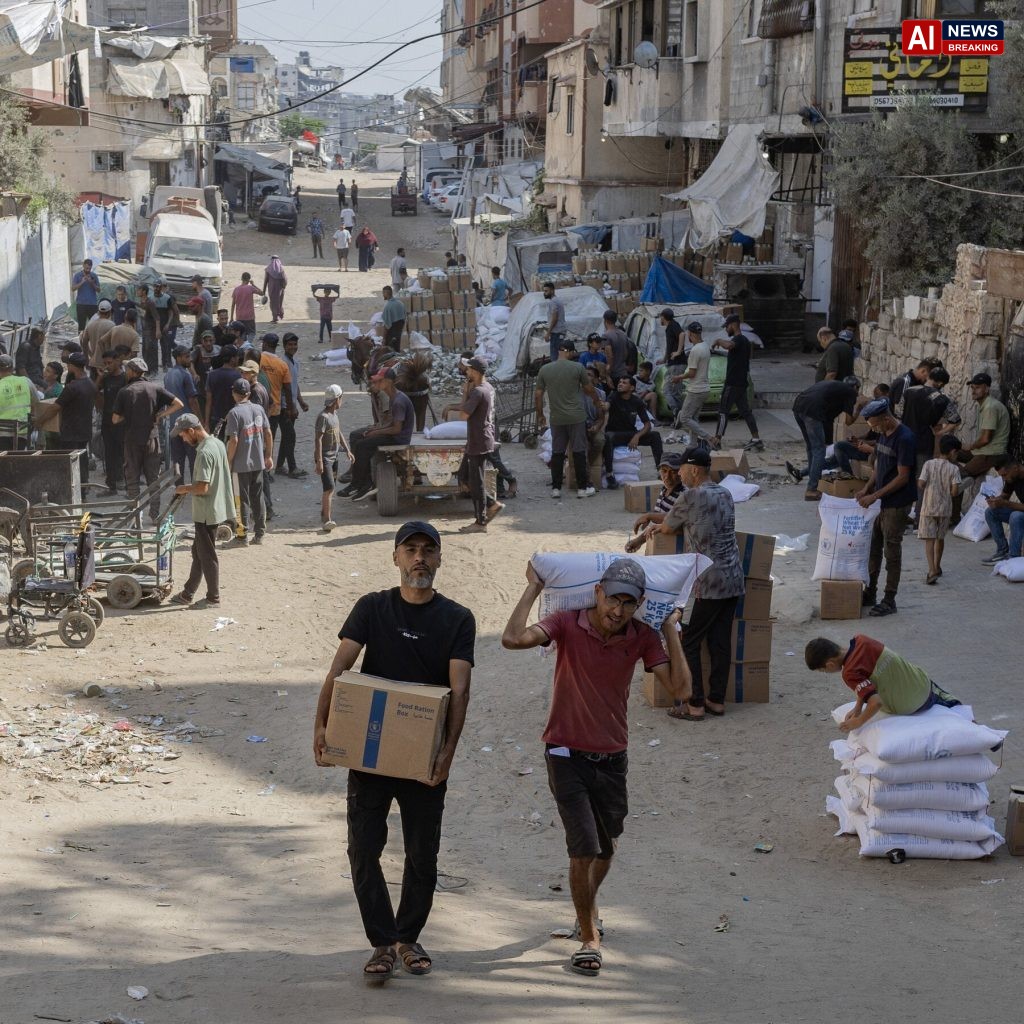
Palestinians across Gaza and the West Bank are watching Israel’s upcoming election with a mixture of cautious optimism and deep scepticism, hoping that a change in leadership could ease the daily hardships imposed by Benjamin Netanyahu’s long‑standing right‑wing administration. For many, the prospect of a new government represents more than a political shift; it is seen as a possible avenue to end the restrictive policies that have intensified the humanitarian crisis in the occupied territories. While some analysts stress that any change is likely to be incremental, the prevailing mood among ordinary Palestinians reflects a yearning for any sign of relief from what they describe as an increasingly unbearable reality.The current political climate in Israel is marked by a fragmented right‑leaning bloc, internal dissent within Netanyahu’s coalition, and the emergence of centrist and left‑wing parties that have campaigned on platforms promising a more conciliatory approach to the Palestinian issue..
Polls suggest that Netanyahu’s party may lose its parliamentary majority, a scenario that could force the formation of a broader coalition. Such a development, observers say, could compel new leaders to revisit contentious policies on settlement expansion, movement restrictions and the administration of the Gaza blockade, all of which have been focal points of Palestinian grievances for years.In the densely populated Gaza Strip, where a United Nations‑reported 80 per cent of the population now lives below the poverty line, the impact of the conflict is felt most acutely. Recent escalations have left infrastructure in ruins, limited access to clean water and electricity, and a mental health crisis among children..
“If the Israeli government changes, we at least hope there will be a pause to the siege and a chance for reconstruction,” said Fatima al‑Hussein, a teacher in Gaza City, who has witnessed three major military offensives in the past decade. Her sentiment echoes a broader desire for diplomatic engagement that could open humanitarian corridors and allow reconstruction aid to flow more freely.On the West Bank, the situation is equally fraught, though the dynamics differ. Israeli settlement activity continues to expand, with new outposts sprouting near major Palestinian cities such as Nablus and Ramallah..
The resulting friction has led to frequent clashes between Israeli forces and Palestinian civilians, often resulting in injuries and arrests. “Every day we see our land being taken piece by piece,” said Youssef al‑Sabbagh, a farmer from the village of Qalqilya. “A new Israeli government might stop the settlements, but we are not sure what will happen to the checkpoints that cut us off from our own farms.”International actors have also placed their bets on the election outcome..
The United States, the European Union and several Arab states have publicly urged Israeli leaders to adopt a more balanced approach to the conflict, linking future aid and diplomatic support to progress on a two‑state solution. In Washington, senior officials have hinted that a post‑Netanyahu administration could be more receptive to resuming direct talks, a prospect welcomed by Palestinian officials who have long accused the current government of using settlement policy as a bargaining chip rather than a genuine obstacle to peace.Nevertheless, many Palestinians remain wary of placing too much hope in electoral politics. Decades of stalled negotiations, repeated cycles of violence and a deepening sense of disenfranchisement have fostered a pervasive cynicism..
“We have seen elections in Israel before, and the policies on the ground hardly change,” warned Leila Khalidi, a researcher at the Palestinian Center for Policy and Survey Research. “A new prime minister may speak differently, but the security apparatus and the settlement agenda are entrenched.”Human rights organisations have warned that any transition of power must be accompanied by concrete measures to address violations that have accumulated over years of conflict. Amnesty International released a report last month documenting alleged war crimes in Gaza and systematic abuses in the West Bank, urging the incoming Israeli leadership to conduct independent investigations and ensure accountability..
The report has been cited by several Palestinian NGOs as a benchmark for what they consider essential reforms, beyond mere rhetoric about peace.Economic pressures also loom large on both sides of the divide. Israel’s economy, while resilient, faces inflationary pressures and a growing fiscal deficit, partly attributed to the high cost of maintaining a prolonged military presence in the occupied territories. Meanwhile, the Palestinian economy remains crippled by restrictions on movement, limited access to external markets and a heavy reliance on foreign aid..
Experts suggest that a more moderate Israeli government could implement policies that facilitate trade and employment opportunities for Palestinians, potentially easing some of the socioeconomic strain that fuels unrest.On the ground, daily life continues under a cloud of uncertainty. In Gaza’s Rafah crossing, families wait for permits that could allow them to travel for medical treatment, while in Hebron, young men risk detention for simply crossing a checkpoint. Yet, amid the uncertainty, small signs of optimism have emerged..
A joint Israeli‑Palestinian civil society forum held in Jerusalem last week discussed possible confidence‑building measures, ranging from easing travel restrictions to coordinating water infrastructure projects. Though such initiatives remain nascent, they reflect a growing recognition that any sustainable solution must involve grassroots engagement alongside high‑level diplomacy.As the election draws near, the Palestinian populace remains poised between hope and pragmatism. While the desire for an end to Netanyahu’s hardline policies is palpable, the path toward genuine improvement in living conditions is fraught with political, security and economic challenges..
Whether the upcoming Israeli vote will translate into a substantive shift in policy remains to be seen, but for many Palestinians, the mere prospect of change—no matter how modest—offers a brief respite from a reality that has felt, for too long, unalterably oppressive..
Updated: October 22, 2026
Palestinians in Gaza and the West Bank watch Israel’s looming election with guarded hope that a new government could ease settlement expansion, movement bans and the Gaza blockade, even as many remain skeptical of real change. Analysts warn any shift will likely be incremental, but the prospect of softer policies offers a rare glimpse of relief amid deepening humanitarian and economic crises.