Use of Chief Minister C. Joseph Vijay’s deep fake videos to collect money: Rajasthan youth moves Madras High Court seeking bail
 Florida officer took possession of man’s home after finding him dead 4 years ago, police say
 Jury weighs fate of US woman who says father forced her into Syria’s war zone when she was a teen
 France bans certain protests to restore public
Uttarakhand Madrasas to observe Sunday holiday instead of Friday
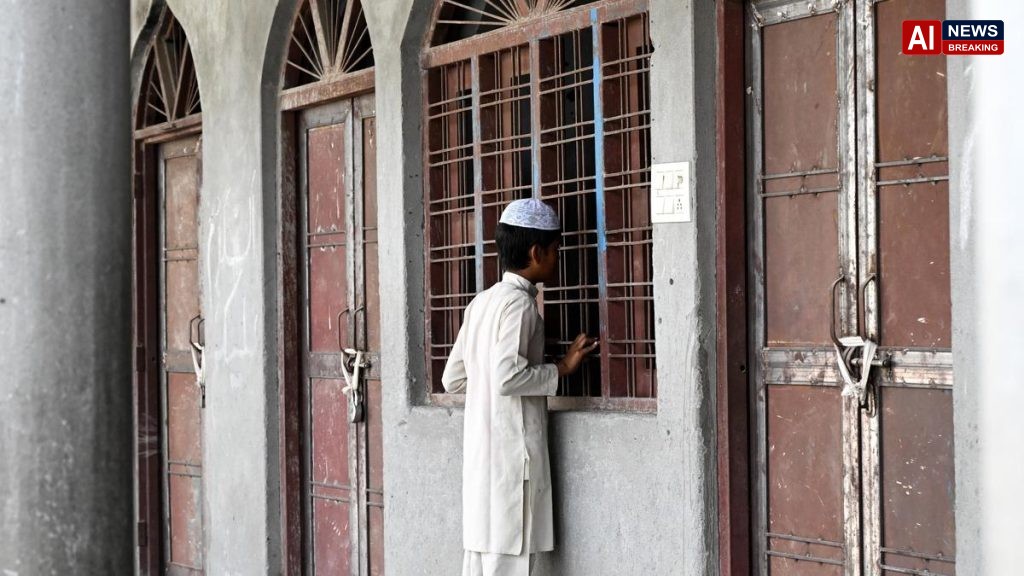
Uttarakhand Madrasas to observe Sunday holiday instead of Friday - AI News Breaking
uttarakhand madrasas observe sunday:
In Uttarakhand, authorities have announced that registered madrasas will observe Sunday as a holiday instead of the traditional Friday, a decision that follows the recent reclassification of these institutions as schools. The move comes in the context of a broader effort by the state to bring non‑formal religious schools into the mainstream education system and to align their schedules with the wider educational calendar.The education department released a statement confirming the change, noting that “the registered madrasas have been reclassified as schools, hence the institutions are required to follow the guidelines issued by the education department and the authority.” The change is intended to ensure that madrasas, now considered part of the formal schooling framework, adhere to the same statutory requirements as other schools in the state, including the observance of the weekly day off. While Friday has traditionally been observed as a day of rest and religious activity in many Muslim communities, the new policy will designate Sunday as the mandatory weekly break for these schools.Proponents of the reclassification argue that it provides madrasas with access to government funding, infrastructure development, and curriculum support..
By recognising them as schools, the department intends to improve academic outcomes and standardise the quality of education across the state. In addition, the policy is seen as a step toward greater integration of religious schools into the public education system, allowing for better oversight and consistency in teacher training and student assessment.Critics, however, have voiced concerns that the change might undermine religious practice and community traditions. Some madrasa teachers and parents fear that shifting the day of rest from Friday to Sunday could create scheduling conflicts with religious obligations, including prayer and communal worship..
The concern is that the new holiday might reduce the amount of time students and teachers can devote to Islamic studies, which often take place outside of standard school hours.The education department has attempted to address these concerns by clarifying that the shift does not alter the number of instructional days. According to a spokesperson, the total weekly instructional hours will remain the same, with the only difference being the day on which the school is closed. “The intention is not to diminish religious education but to streamline the educational calendar,” the spokesperson said..
“The schools will still have the flexibility to schedule religious studies either before or after the standard school hours, as well as on Saturdays or other suitable days.”The reclassification came after a long debate within the state’s legislative assembly, where members of both the opposition and ruling parties argued over the best approach to regulate madrasas. The debate highlighted the tension between maintaining religious autonomy and ensuring that schools meet minimum educational standards set by the state. The final decision, announced by the education minister, was based on a report that examined the performance and infrastructure of registered madrasas across the state..
The report found that many madrasas lacked basic facilities such as libraries and laboratories, and that their curricula were often unaligned with the state board’s syllabi.In addition to the holiday shift, the government has announced a series of measures aimed at improving the quality of education in madrasas. These include the introduction of a standardised curriculum that incorporates basic secular subjects such as mathematics, science, and language studies, alongside traditional religious instruction. The government has also pledged to provide teacher training programmes and to supply learning materials in line with the state board’s requirements.The decision has received mixed reactions from the Muslim community..
While some community leaders have welcomed the opportunity to integrate madrasas into the formal education system, others have expressed scepticism. A representative of a local madrasa association stated that the community would support the change if it ensures that religious teachings are preserved and not diluted. He added that the community would appreciate a clear framework for how the new policies would be implemented, and how religious and secular subjects would be balanced in the curriculum.The policy change is also expected to have broader social implications..
By aligning madrasas with the state school calendar, the government hopes to facilitate smoother transitions for students who move between religious and secular schools, and to reduce the stigma often associated with non‑formal religious education. The policy could also encourage higher enrolment rates, particularly among girls, by providing a more structured environment that adheres to national educational standards.Opposition parties have called for a review of the decision, arguing that it may violate the rights of religious minorities to manage their own educational institutions. They have urged the state assembly to consider the potential cultural impact of replacing Friday, a significant day in Islam, with a Sunday holiday..
A parliamentary debate scheduled for next month will examine these concerns in greater detail, with several members calling for a compromise that would allow madrasas to keep Friday as a day for religious observance while still meeting the state’s regulatory requirements.In the meantime, the education department has requested that all registered madrasas prepare for the transition, ensuring that their staff and students are informed of the new holiday schedule. The department also announced that it would provide guidance on how to integrate the new curriculum and to manage the logistical aspects of the change, such as rescheduling examinations and adjusting teacher assignments.The policy reflects a broader trend in India, where governments are increasingly seeking to bring religious schools under the purview of state education authorities. Proponents argue that such measures help ensure that all children receive a minimum standard of education, regardless of the type of institution they attend..
Critics, however, warn that such interventions risk eroding the distinct identity and autonomy of religious schools.The Uttarakhand government’s decision, therefore, sits at the intersection of education policy, religious freedom, and community identity. It will be closely watched by both the state’s Muslim community and by observers of education reform across the country. How effectively the new policies are implemented and how well the community adapts to the shift from a Friday holiday to a Sunday break will likely determine whether the move achieves its intended goals of standardising education and improving access to resources..
Updated: October 22, 2026
This development highlights evolving dynamics and may have broader implications in the near term.