 ‘Eagle’s Nest,’ Nazi-Era Guesthouse in German Alps, Is Gutted by Fire
 Social security, welfare fund board pensions in Keralam to be distributed from October 26
 Horror Fans, Rejoice: FilmQuest Breakout ‘The Crawling’ Is the Gutsy Alien Freakout of Your Dreams
 Pennsylvania enacts mandatory AI
 Lauren Santo Domingo Brought a Stylish Crowd to Colombia to Fete the Four Seasons Cartagena
Pennsylvania enacts mandatory AI
**
Pennsylvania will require labels on AI-generated ads - AI News Breaking
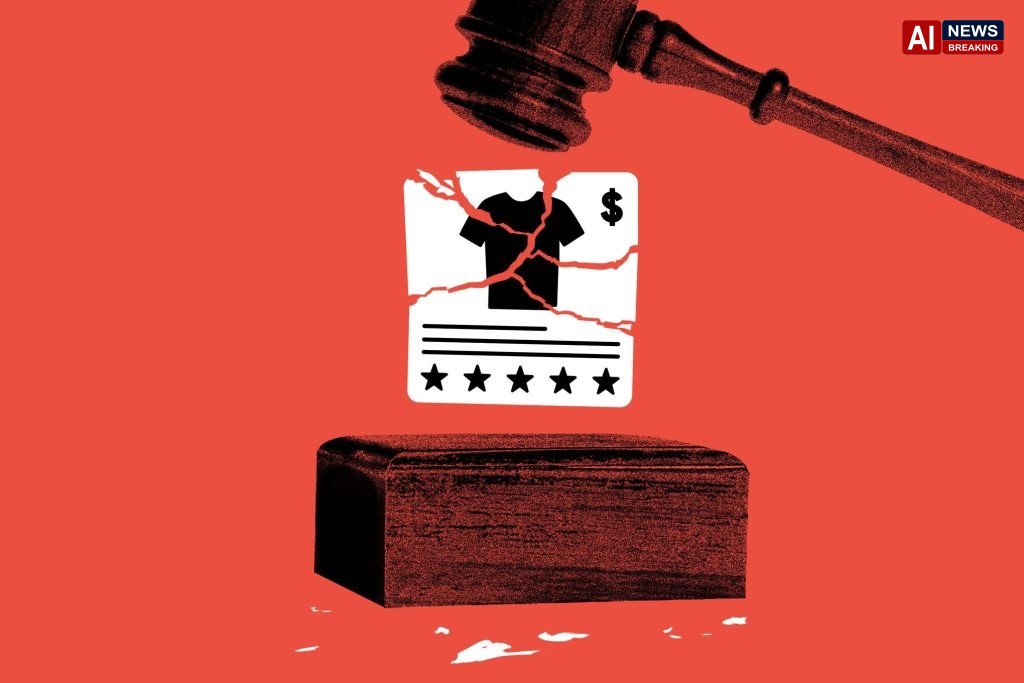
Pennsylvania has become one of the first U.S. states to legislate mandatory disclosures for advertising that incorporates artificial intelligence, after Governor Josh Shapiro signed the Artificial Intelligence Deceptive Advertising Act into law on Thursday. The measure, which applies to all forms of commercial content—including static images, video, audio and text—requires that any advertisement that has been “significantly modified or generated by artificial intelligence” carry a clear label indicating the AI involvement..
The label must appear in the same format as the underlying ad, ensuring that viewers receive the disclosure in the same visual or auditory context in which the message is delivered.The legislation is notable for its breadth. It does not limit the requirement to online platforms or to large‑scale campaigns; any commercial communication that reaches a consumer, from a national television spot for a multinational corporation to a local restaurant flyer advertising a wing special, must comply. The law also applies irrespective of where the advertisement is displayed..
Whether a consumer encounters a billboard, a streaming service ad, a social media post or a printed pamphlet, the AI label must be present if the content meets the statutory definition.Proponents of the act argue that the rapid rise of generative AI tools—such as image‑synthesis programs, deep‑fake video generators and large language models—has outpaced existing consumer‑protection frameworks. “When an ad is created by a machine, it can blur the line between genuine endorsement and fabricated persuasion,” said Rebecca Harrington, a consumer‑rights advocate with the Pennsylvania Office of Attorney General. “Providing a simple, consistent disclosure helps maintain transparency and trust in the marketplace.” The law mirrors similar efforts in Europe, where the European Commission has proposed an AI‑labeling regime for high‑risk applications, and follows the United Kingdom’s recent guidance encouraging voluntary disclosures for AI‑generated content.The act defines “significantly modified or generated” with a focus on material changes that affect the ad’s core message or presentation..
Minor edits, such as correcting a typo with a spell‑checker, would not trigger the requirement. However, the use of AI to create a new visual concept, rewrite copy, or produce a synthetic voice for a spokesperson would. The statute also outlines penalties for non‑compliance, ranging from civil fines to possible injunctions, though the exact enforcement mechanisms will be developed by the state’s Department of Consumer Protection over the coming months.Industry reaction has been mixed..
Large advertisers, many of whom already employ AI for efficiency and creative testing, welcome the clarity that a uniform disclosure rule provides. “We have been integrating generative tools into our workflow for months, and a clear standard helps us plan our campaigns responsibly,” said Mark Delgado, senior vice‑president of marketing at a national consumer‑goods company. Smaller businesses, however, expressed concern about the administrative burden and potential costs associated with adding labels to every piece of collateral..
“A small diner may not have the resources to redesign a flyer just to add a tiny disclaimer,” said Linda Ramos, owner of a family‑run pizzeria in Scranton. The state’s consumer‑protection agency has indicated that it will issue guidelines and template language to assist small enterprises in meeting the requirement without prohibitive expense.Legal experts note that the Pennsylvania law could set a precedent for other jurisdictions. “If the enforcement proves practical and the compliance costs remain manageable, we may see a cascade of similar statutes across the country,” observed Professor Alan Chen, a specialist in technology policy at the University of Pennsylvania..
“The challenge will be defining ‘significant modification’ in a way that is both technically sound and legally enforceable.” Critics point out that the rapid evolution of AI models could render any static definition obsolete, prompting calls for periodic review of the language and thresholds embedded in the act.Consumer‑advocacy groups have praised the move as a step toward safeguarding public discourse, particularly as AI‑generated content becomes increasingly convincing. “The risk is not just commercial deception but also the erosion of confidence in any visual or auditory information,” warned Sara Patel, director of the Digital Rights Initiative. “By insisting on transparent labeling, Pennsylvania is reinforcing the principle that consumers have a right to know when a machine is speaking for a brand.” Yet Patel also cautioned that disclosure alone may not be sufficient, urging complementary measures such as media literacy programs and stronger penalties for malicious use of deep‑fakes.The law’s implementation timeline allows advertisers a six‑month grace period before the first enforcement actions commence..
During this window, the Department of Consumer Protection will conduct outreach, host webinars, and provide a publicly available toolkit that includes design templates, sample wording and best‑practice checklists. The agency also plans to set up a reporting portal where consumers can flag ads they believe lack the required label, enabling regulators to prioritize investigations.As AI continues to reshape creative industries, Pennsylvania’s Artificial Intelligence Deceptive Advertising Act signals a growing willingness among policymakers to intervene before the technology’s novelty turns into a source of widespread misinformation. Whether the state’s approach proves effective in balancing innovation with consumer protection will likely influence legislative debates in other states and at the federal level..
For now, advertisers across the Commonwealth must adapt to a new reality in which the invisible hand of the algorithm must be made visible to the public..
Updated: October 24, 2026
Pennsylvania has enacted the Artificial Intelligence Deceptive Advertising Act, obliging any commercial content materially created or altered by AI to display a clear label indicating its machine‑generated nature across all media. The statewide rule, which applies to both large and small advertisers, aims to boost consumer transparency and could serve as a model for future U.S. legislation.