Indonesia denies foreign claim to rescued orangutans
 Turkey hosts COP31 climate talks in Antalya.
 Pope meets Argentine bishops.
 APOD: 2026 November 8 – Major Fireball Meteor
 Indonesian Horror Hit ‘Pabrik Gula’ Gets 2028 Sequel as MD Entertainment Lines Up Three Imax Films
Tamil Nadu government revises auto-rickshaw fares in Chennai, other regions
**
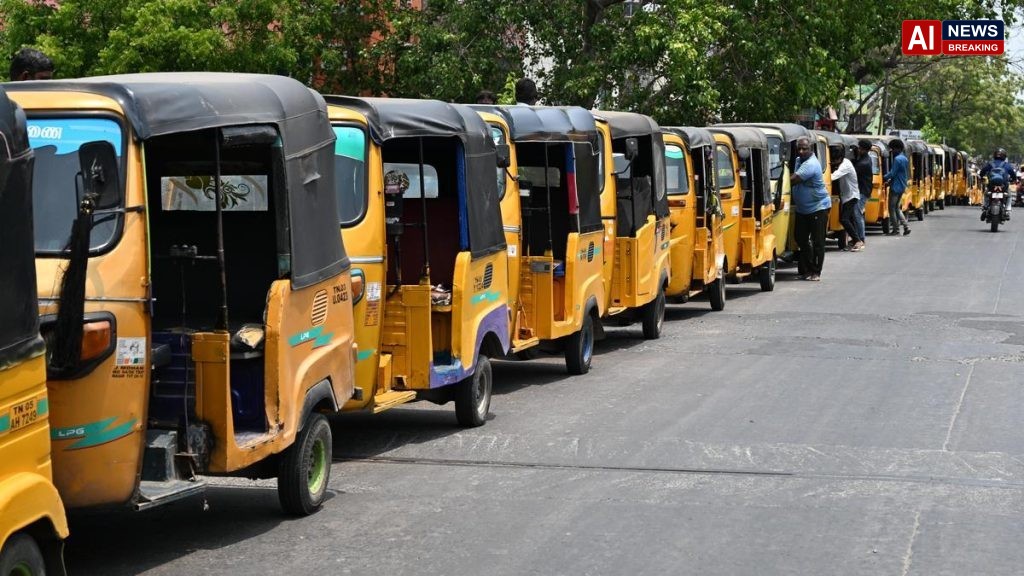
Tamil Nadu government revises auto-rickshaw fares in Chennai, other regions - AI News Breaking
Tamil Nadu’s transport ministry has issued a new fare structure for auto‑rickshaws, a move that will affect both the capital city of Chennai and a number of other districts across the state. The revision, published in the official government gazette on Monday, sets a minimum charge of ₹50 for the first 1.8 kilometres of any journey, regardless of the vehicle’s make or the time of day. Officials say the decision follows a comprehensive review of operating costs, fuel prices and passenger demand, aiming to bring uniformity to a sector that has long been criticised for price volatility..
The Gazette notification, which is legally binding once it appears in the public record, also outlines a tiered kilometre‑wise fare schedule beyond the initial 1.8 km. According to the document, the next 2 km will be billed at ₹15 per kilometre, while any distance beyond 3.8 km will attract a rate of ₹12 per kilometre. These figures replace the earlier, loosely enforced rates that varied from one municipality to another, often leading to disputes between drivers and commuters over what constituted a “fair” charge..
State transport officials say the new rates were calculated after consulting a panel of economists, representatives of auto‑rickshaw unions, and consumer‑rights groups. The panel considered the recent surge in diesel and CNG prices, which have risen by more than 20 % over the past twelve months, as well as the increased cost of vehicle maintenance and insurance. By anchoring the minimum fare at ₹50, the government hopes to provide a safety net for drivers while ensuring that short‑haul trips remain affordable for passengers..
Chennai, the state’s most densely populated urban centre, will see the changes implemented from 1 October, a date chosen to coincide with the start of the financial year for many municipal bodies. The city’s Transport Department has already begun training its staff on the new fare tables and is issuing updated fare charts to be displayed on every auto‑rickshaw. Drivers have been instructed to use electronic fare meters that automatically calculate charges based on the revised schedule, a step that authorities hope will reduce the need for manual negotiations and curb instances of overcharging..
The response from the auto‑rickshaw community has been mixed. While senior union leaders have welcomed the guaranteed minimum fare, arguing that it will protect drivers from erratic earnings during low‑traffic periods, younger drivers have expressed concerns about the impact on short rides that previously generated modest but steady income. “If a passenger only needs to go two kilometres, the new fare will be higher than before,” said Ravi Kumar, a 28‑year‑old driver from T..
“We will have to adapt, but we also understand the need for a transparent system.” Consumer advocacy groups, meanwhile, have praised the government’s effort to codify fares, calling it a necessary step toward protecting passengers from arbitrary pricing. The Consumer Forum of India released a statement noting that the fixed minimum fare eliminates the “guesswork” that often forces commuters to overpay in the absence of a functional meter. The forum also urged the state to monitor compliance closely, warning that without rigorous enforcement, the benefits of the new policy could be undermined by rogue operators..
Enforcement mechanisms are being bolstered alongside the fare revision. The state’s transport police will be given authority to inspect fare meters and to levy penalties on drivers who fail to adhere to the prescribed rates. Initial guidelines suggest fines of up to ₹5,000 for first‑time violations, with escalating penalties for repeated offences..
Additionally, the government plans to launch a mobile app that will allow passengers to report discrepancies in real time, a feature that is expected to increase accountability and deter misconduct. Economists predict that the fare adjustment could have a modest impact on the broader transport ecosystem in Tamil Nadu. A recent study by the Madras School of Economics estimated that the revised fares might increase the average earnings of auto‑rickshaw drivers by 6‑8 % over the next year, assuming stable fuel prices..
However, the same study cautioned that any significant rise in fuel costs could erode these gains, potentially prompting the government to revisit the rates again within a short time frame. The changes also intersect with the state’s ongoing push to modernise its public transport network. The Tamil Nadu government has been investing heavily in expanding the Chennai Metro and improving bus services, initiatives that aim to reduce road congestion and offer commuters more options..
By standardising auto‑rickshaw fares, authorities hope to position these vehicles as a reliable last‑mile solution that complements larger transit modes, rather than as a competing, unregulated service. Local businesses anticipate that the new fare structure could affect commuter patterns, especially for short trips to markets, schools and offices. “If the cost of a quick ride goes up, some employees might choose to car‑pool or use bicycles,” said Priya Natarajan, a human‑resources manager at a tech firm in Velachery..
“We are already looking at flexible work‑from‑home policies to mitigate any potential impact on our staff’s daily commute.” While the immediate focus is on implementation, officials acknowledge that the fare revision is part of a longer‑term strategy to ensure sustainable livelihoods for auto‑rickshaw drivers. The transport ministry has signalled plans to introduce a periodic review mechanism, with the next assessment slated for early 2027. This review will consider factors such as inflation, changes in fuel subsidies, and feedback from both drivers and passengers, ensuring that the fare system remains responsive to evolving economic conditions..
As the new rates take effect, the eyes of commuters, drivers and policymakers alike will be on Chennai and the surrounding districts to gauge.
Standardising auto‑rickshaw fares may finally tether driver earnings to predictable economics, yet the higher baseline cost could nudge short‑haul commuters toward alternative modes, subtly reshaping Chennai’s last‑mile landscape.
If enforcement falters, the reform risks becoming a cosmetic fix, leaving the sector vulnerable to the same price volatility that spurred the policy in the first place.