Indonesia denies foreign claim to rescued orangutans
 Turkey hosts COP31 climate talks in Antalya.
 Pope meets Argentine bishops.
 APOD: 2026 November 8 – Major Fireball Meteor
 Indonesian Horror Hit ‘Pabrik Gula’ Gets 2028 Sequel as MD Entertainment Lines Up Three Imax Films
India says AI, maritime security key priorities for its UNSC candidature for 2028–29
**
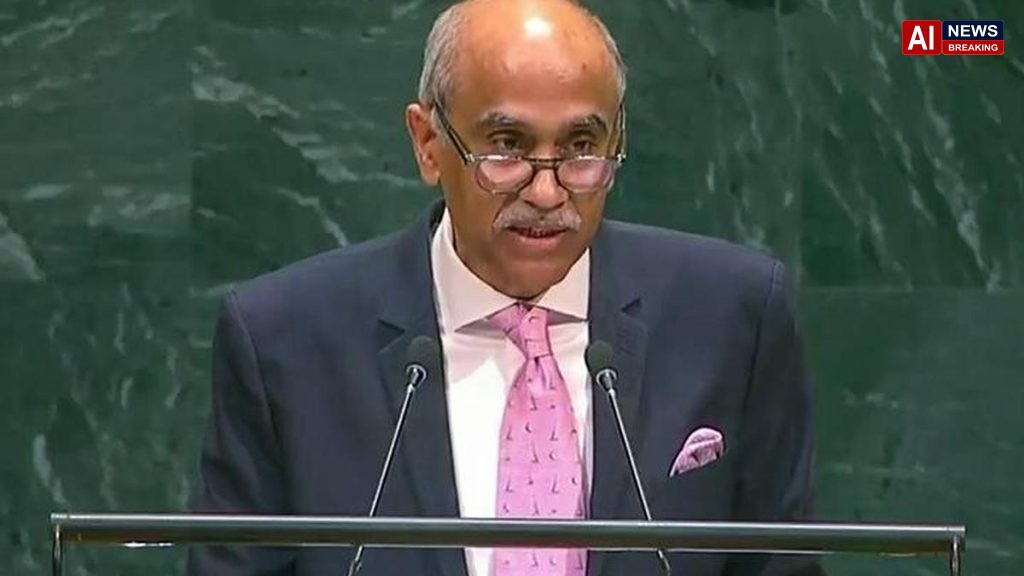
India says AI, maritime security key priorities for its UNSC candidature for 2028–29 - AI News Breaking
india says maritime security:
New Delhi has placed artificial intelligence and maritime security at the heart of its campaign to secure a non‑permanent seat on the United Nations Security Council for the 2028‑29 term, officials said on Tuesday. The emphasis reflects a broader strategy to showcase India’s growing diplomatic clout and its capacity to contribute to global governance on issues that increasingly dominate international agendas. By foregrounding technology and the safety of sea lanes, India hopes to appeal to a wide spectrum of member states, many of which are grappling with the dual challenges of rapid digital transformation and heightened geopolitical tension in key maritime regions.Speaking at a press conference in New Delhi, Foreign Ministry spokesperson Vikas Parvathaneni highlighted the need to safeguard freedom of navigation and maritime commerce, noting that recent attacks against commercial shipping have demonstrated how disruptions at critical chokepoints can have consequences far beyond their immediate geography..
He cited incidents in the Gulf of Aden, the Strait of Malacca and the Red Sea, where missile strikes and armed assaults on merchant vessels have sparked a ripple effect on global supply chains, insurance premiums and the price of essential commodities. “The safety of the world’s arteries of trade is a collective responsibility,” Parvathaneni said, adding that India’s own experience in protecting its own maritime interests equips it to play a constructive role on the Council.The push for an AI focus aligns with India’s broader ambition to position itself as a leader in shaping norms for emerging technologies. In recent months New Delhi has hosted a series of multilateral workshops on the ethical use of artificial intelligence, cyber‑security cooperation and the development of common standards for algorithmic transparency..
The Foreign Ministry’s statement stressed that AI is no longer a peripheral concern but a core component of international peace and security, capable of influencing everything from autonomous weapon systems to misinformation campaigns that can inflame conflicts. By championing a collaborative approach to AI governance, India seeks to counter the narrative that the technology is dominated by a handful of Western powers and to ensure that developing countries have a seat at the table in setting the rules of the digital future.India’s maritime priorities are underscored by its geographic position along some of the world’s most trafficked sea routes. The country’s coastline stretches over 7,500 kilometres and its Exclusive Economic Zone encompasses more than 2.2 million square kilometres of ocean..
Over 90 percent of India’s trade is conducted by sea, making the security of shipping lanes a matter of national survival as well as a strategic interest for global markets. Parvathaneni pointed to the Indian Navy’s recent deployments to the Indian Ocean Region (IOR) as evidence of the nation’s commitment to maintaining a stable maritime environment. These deployments have included anti‑piracy patrols, joint exercises with allied navies and the establishment of a network of surveillance assets designed to monitor vessel movements in real time.The candidacy comes at a time when the Security Council is under pressure to reform its composition and to address new security challenges that were not envisaged when the body was created in 1945..
Critics have argued that the Council’s structure does not reflect contemporary geopolitical realities, and there have been calls for greater representation of emerging powers and developing nations. India’s bid, which is supported by a coalition of African, Latin American and Asian states, seeks to present a case for a more diversified Council that can draw on a wider array of perspectives when deliberating on crises ranging from armed conflict to climate‑induced displacement.In addition to diplomatic lobbying, India is preparing a detailed dossier outlining its contributions to United Nations peacekeeping missions, its track record in conflict mediation, and its initiatives in capacity‑building for smaller states. The dossier will also feature a section on “Digital Peacekeeping,” a concept that envisions the use of AI‑driven analytics to improve situational awareness, predict escalation patterns and streamline logistical support for peace operations..
Analysts note that such a proposal could resonate with member states seeking to modernise United Nations processes while maintaining the core principles of impartiality and consent.The emphasis on maritime security also dovetails with ongoing discussions about the regulation of the high seas under the United Nations Convention on the Law of the Sea (UNCLOS). India has been a vocal advocate for the protection of innocent passage and the prevention of unilateral actions that could impede the free flow of commerce. Recent tensions in the South China Sea, where competing territorial claims have led to a series of confrontations between naval vessels, have amplified concerns about the potential for miscalculations to spiral into broader conflicts..
By positioning itself as a guardian of the rules‑based order at sea, India hopes to attract the support of both traditional Western allies and countries in the Global South that rely heavily on maritime trade.The AI component of India’s platform also addresses the growing threat of cyber‑enabled attacks on critical infrastructure, including ports and shipping networks. In the past year, several high‑profile cyber incidents have disrupted port operations in Europe and East Asia, prompting calls for a coordinated international response. India’s Ministry of Electronics and Information Technology has recently rolled out a framework for “Secure Digital Infrastructure” that encourages public‑private partnerships to enhance resilience against such threats..
Parvathaneni suggested that the Security Council could serve as a venue for establishing norms on state behaviour in cyberspace, echoing proposals put forward by other nations for a UN‑mandated cyber‑conflict prevention mechanism.Domestic political considerations also play a role in the timing of the campaign. The ruling party’s recent electoral successes have emboldened foreign policy officials to pursue a more assertive global posture. Prime Minister Narendra Modi’s government has repeatedly highlighted its “Act East” and “Neighbourhood First” doctrines, both of which emphasise connectivity, trade and security cooperation with a broad array of partners..
Securing a seat on the Security Council would provide a platform to amplify these policies and to showcase India’s contributions to peacebuilding initiatives in Afghanistan, Myanmar and the Sahel, where Indian diplomatic teams have been engaged in mediation efforts.The response from other aspirant nations has been mixed. Brazil, which is also vying for a seat, has welcomed India’s focus on AI and maritime issues but cautioned that any expansion of the Council’s mandate must be accompanied by genuine procedural reforms. European Union representatives have expressed support for a more inclusive Council but have called for clear criteria to assess candidates’ commitment to upholding international law..
Meanwhile, several African Union members have signalled that they will consider India’s track record on development assistance and climate finance when casting their votes later in the year.Observers note that the success of India’s bid will hinge on its ability to translate rhetoric into concrete proposals that resonate with the diverse interests of the United.
Updated: October 30, 2026
India is foregrounding AI governance and maritime security in its push for a 2028‑29 non‑permanent UN Security Council seat, positioning itself as a tech‑savvy defender of global trade routes and a champion of emerging‑nation voices. The strategy aims to leverage its naval capabilities and recent AI workshops to win support from a broad coalition of developing and Western states.