
 Indonesia denies foreign claim to rescued orangutans
 Turkey hosts COP31 climate talks in Antalya.
 Pope meets Argentine bishops.
 APOD: 2026 November 8 – Major Fireball Meteor
 Indonesian Horror Hit ‘Pabrik Gula’ Gets 2028 Sequel as MD Entertainment Lines Up Three Imax Films
France Protests Turn Violent as 320,000 Demonstrators Rally Against Pension Reforms
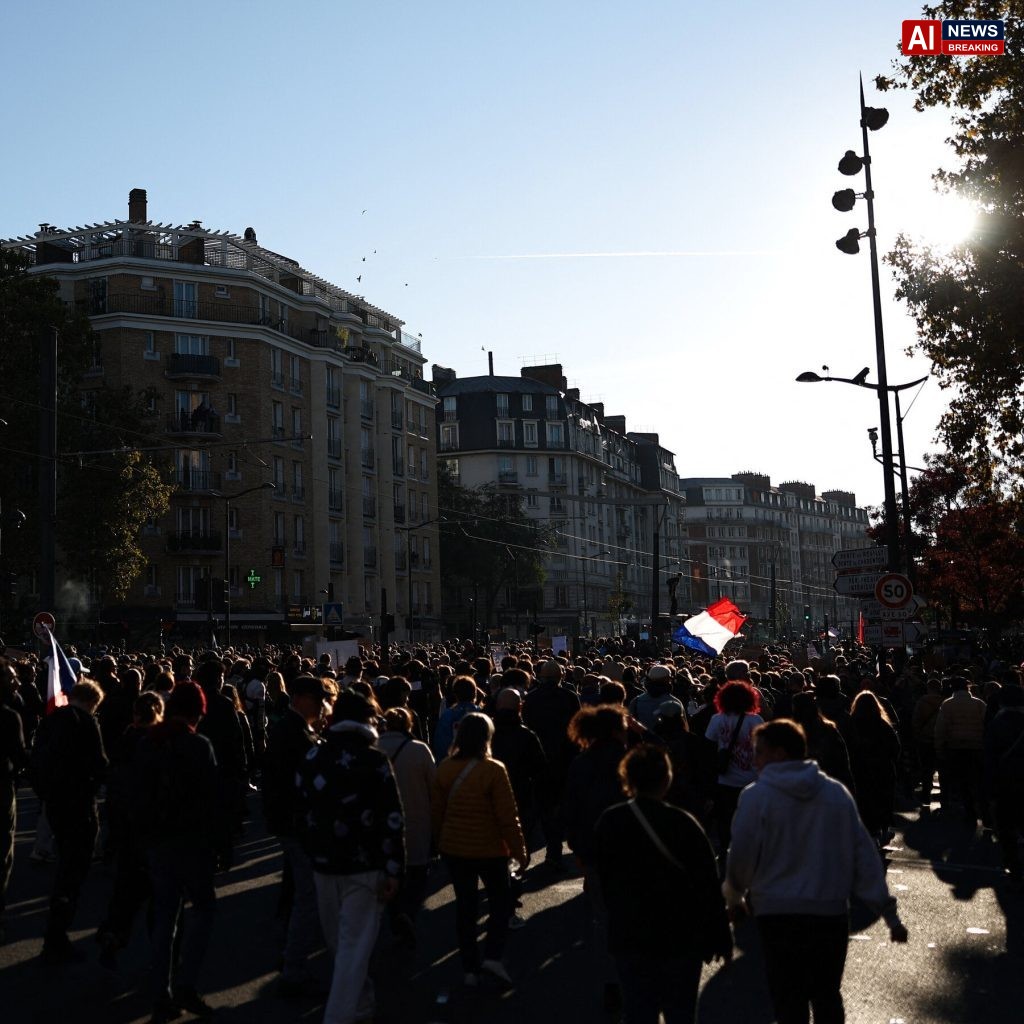
Live Updates: Hundreds of Thousands Join Another Round of Protests in France - AI News Breaking
Hundreds of thousands of demonstrators marched across France on Saturday, sparking another round of clashes between protestors and police that once again underscored the country’s deepening political and social rifts. According to the interior ministry, the figure reached 320,000, a slight decline from the 350,000 who turned out for the previous two Saturdays, yet still a significant proportion of the nation’s population. The numbers were compiled from a combination of local police estimates, independent observers and social media activity, offering a rough gauge of the nationwide mobilisation.The protests were largely centred on the new pension reforms announced by the government, which propose an increase in the retirement age to 64..
The reforms have been met with fierce opposition from trade unions, who argue that they will disproportionately affect workers in physically demanding jobs and reduce the security that long‑standing pension systems have afforded. Many of the protestors were members of major unions such as the CGT, CFDT and FO, all of whom have declared their intent to maintain pressure on the government until the reforms are abandoned or significantly altered.In Paris, the demonstrations began in the Latin Quarter before moving toward the Hôtel de Ville, where a large crowd gathered to hold placards and chant slogans. The police, equipped with rubber bullets and tear gas canisters, attempted to contain the march but were forced to withdraw after a number of protestors breached the barrier..
The scene was chaotic, with chants echoing through the streets as protestors, many wearing blue and white scarves, demanded an end to the reforms and a broader debate on social policy. Police sources reported that about thirty officers sustained injuries, primarily from thrown objects, while a small number of demonstrators were detained for assaulting police.Other major cities across the country echoed the Parisian scenes. In Lyon, a crowd of around 20,000 gathered in Place Bellecour before marching towards the Palais de Justice..
The police in Lyon deployed a tactical response team to the scene, but the protestors’ numbers overwhelmed their capacity to maintain a physical barrier. The city’s mayor issued a statement calling for calm and urging both sides to avoid violence, but the situation deteriorated when a group of protestors set fire to a police vehicle’s rear bumper, prompting a rapid deployment of water cannons and an evacuation of the vehicle.Marseille witnessed a smaller, yet equally fervent demonstration. Protestors gathered near the Vieux Port and marched to the Prefecture, where they confronted the police who were stationed on a nearby bridge..
The confrontation led to the deployment of tear gas, and several protestors were arrested for their role in the ensuing altercations. The mayor of Marseille released a statement expressing concern over the escalating tensions and pledging support for a dialogue between the parties involved.In Strasbourg, the demonstration was notable for its international dimension. A number of foreign nationals, including representatives from the European Union and several non‑governmental organisations, joined the march to show solidarity with the French protestors..
The protestors chanted slogans in multiple languages, underscoring the sense that the debate on pension reform and workers’ rights had a broader resonance across the continent. The police, wary of an international backlash, opted for a more restrained approach, but the protestors’ determination forced them to employ tear gas to prevent further escalation.The protests also raised concerns about the safety of journalists. Several reporters from major media outlets were caught in the crossfire between protestors and police..
One reporter, who requested anonymity, described how the police’s use of tear gas made it difficult to document the events accurately. In the aftermath, a number of journalists issued statements calling for the protection of press freedom and the right to cover political events without fear of violence or intimidation.The economic implications of the pension reforms were also a key focus for protestors. Many argued that the reforms would reduce the overall quality of life for a large segment of the population..
Economists affiliated with the French Economic Institute released a study that indicated the reforms could potentially reduce pension payouts by an average of 5% over the next decade, a figure that would have far-reaching effects on consumer spending and the national economy. The study also suggested that the reforms could result in a 2% increase in the national debt if not offset by other fiscal measures.The political response to the protests was swift. Prime Minister Gabriel Méndez issued a statement on national television, urging calm and calling for a “dialogue with all stakeholders.” He acknowledged that the government had underestimated the public’s reaction to the reforms and pledged to review the policy in light of the “valid concerns” expressed by the protestors..
Meanwhile, the opposition parties capitalised on the protests, with opposition leader Isabelle Rousseau calling the government’s actions “draconian” and threatening a vote of no confidence in parliament.The impact on public transport was also significant. Many of the protestors used public transport to reach the demonstration sites, leading to disruptions across the national rail network. Several stations reported overcrowding and delays, with some services cancelled entirely..
The transport ministry issued an advisory urging commuters to use alternative routes, but the disruptions persisted throughout the day as the protests continued to swell and spread.In the days that followed, the French government announced a temporary pause in the implementation of the pension reforms while it consulted with the unions. However, union leaders said that the pause did not amount to a genuine concession and that the reforms would likely resume if the government’s stance remained unchanged. The situation remains fluid, and both sides appear ready to engage in further negotiation, albeit with the risk that future protests could become even larger and more volatile.The protests have highlighted a broader debate that extends beyond pension policy..
Protestors raised concerns about the growing sense of inequality, the erosion of workers’ rights and the perceived lack of representation within the political process. Many of the demonstrators, particularly the younger generation, expressed frustration at a political system that they feel has failed to address their economic and social concerns. The protests also reflected a growing trend of civil engagement across the country, as citizens increasingly use public demonstrations to voice their discontent and demand accountability.Despite the clashes, the protests also underscored the resilience of France’s civil society..
Thousands of people travelled from small towns to major cities to join the cause, and the solidarity among different groups—unions, NGOs and independent activists—suggests a widespread appetite for change. As France continues to grapple with the complex dynamics of social policy, the next week will likely bring further protests, debates and potentially new policy adjustments. The government’s ability to negotiate with the unions and respond to the protestors’ concerns will be a critical factor in determining the country’s social and political trajectory in the months ahead..
Updated: October 31, 2026
The sheer scale of the protests signals that France’s political elite may soon have to confront the fact that policy shifts can ignite a national backlash that threatens social cohesion more than fiscal balance. In this moment, the government’s willingness to negotiate could either transform the pension debate into a broader dialogue on worker security or, if ignored,






