Indonesia denies foreign claim to rescued orangutans
 Turkey hosts COP31 climate talks in Antalya.
 Pope meets Argentine bishops.
 APOD: 2026 November 8 – Major Fireball Meteor
 Indonesian Horror Hit ‘Pabrik Gula’ Gets 2028 Sequel as MD Entertainment Lines Up Three Imax Films
Gurnam Singh Charuni warns against Indo-U.S. trade agreement
**
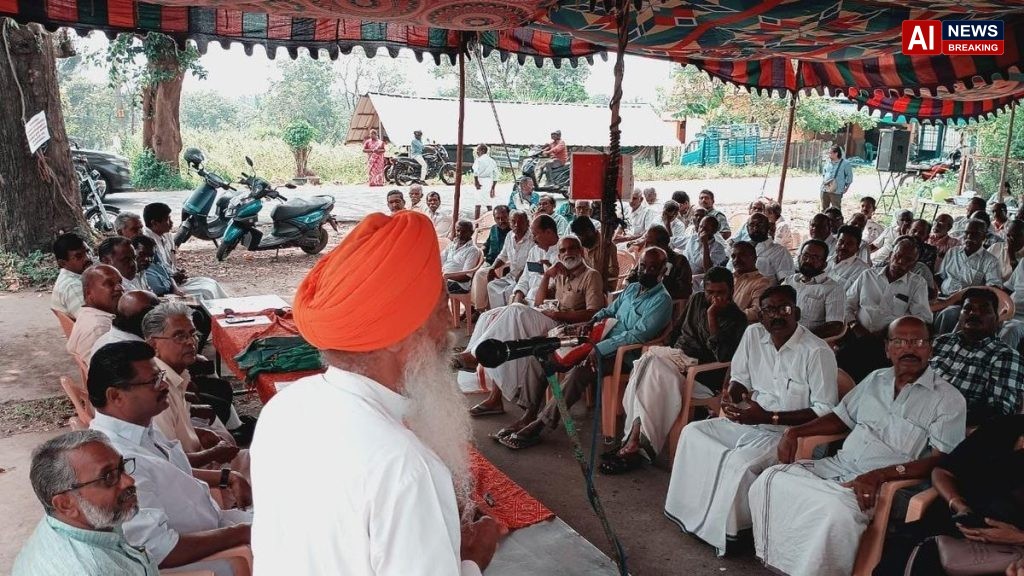
Gurnam Singh Charuni warns against Indo-U.S. trade agreement - AI News Breaking
Gurnam Singh Charuni, a prominent farmer leader from Haryana, used the inauguration of a Kisan Mahapanchayat in Plachimada, Palakkad, to launch a sharp critique of the proposed Indo‑U.S. Addressing a crowd of thousands of small‑holder cultivators, fishermen and rural entrepreneurs, Charuni warned that the pact, if ratified, would open India’s markets to unrestricted imports of agricultural produce, undermining domestic production across a spectrum of sectors. He argued that the agreement’s language, he said, lacked sufficient safeguards for vulnerable communities and would favour multinational corporations over local livelihoods..
The Mahapanchayat, convened under the banner of “Self‑Reliant Bharat”, brought together representatives from the agrarian heartland as well as coastal fisheries and dairy cooperatives. Charuni highlighted that the trade deal’s tariff reductions on commodities such as wheat, rice, milk powder and poultry feed would flood the market with cheaper foreign goods, eroding price parity for Indian farmers. He cited recent data from the Ministry of Agriculture, which showed a steady decline in farmgate prices for staples over the past two years, attributing part of the pressure to existing imports from the United States and other nations..
In his speech, Charuni warned that the agreement’s provisions on “non‑tariff barriers” were vague, leaving room for regulatory arbitrage that could disadvantage Indian producers. He pointed to the United States’ use of stringent sanitary and phytosanitary standards as a tool to limit market access for Indian agricultural exports, while simultaneously seeking to lower barriers for its own products. According to Charuni, such asymmetry would tilt the balance of trade in favour of the United States, leaving Indian smallholders to volatile global price swings..
The farmer leader also raised concerns about the impact on India’s burgeoning dairy sector, which supplies over 50 percent of the nation’s milk consumption. He argued that the influx of imported milk powder, already a contentious issue under the current tariff regime, would become even more pronounced under the new pact. Charuni warned that domestic dairy farmers, many of whom operate on marginal margins, could be pushed out of the market, leading to loss of livelihoods and increased rural distress..
Beyond agriculture, Charuni warned that the agreement’s liberalisation clauses would extend to fisheries and poultry farming, sectors that employ millions in coastal states and hinterland villages. He cited a recent study by the National Fisheries Development Board that projected a 15 percent decline in fish prices if imports of frozen and processed seafood were allowed without quotas. Similarly, poultry producers feared that cheaper imported feed and meat could undercut local businesses, a scenario that Charuni said would exacerbate unemployment in rural districts..
Charuni’s remarks resonated with the broader anti‑globalisation sentiment that has been gaining traction among Indian farmer unions in recent months. He referenced the 2020 farmer protests against three agricultural bills, noting that the current trade agreement represents a continuation of policies perceived to erode agrarian sovereignty. While the government maintains that the pact will boost exports and attract foreign investment, Charuni argued that the promised gains would be unevenly distributed, with benefits accruing primarily to large agribusinesses and multinational firms..
The Kisan Mahapanchayat also served as a platform for local entrepreneurs to voice concerns about the agreement’s effect on small businesses. Shop owners in Plachimada, many of whom rely on selling locally produced vegetables and dairy products, expressed fear that cheaper imports would diminish demand for their wares. Charuni underscored that a decline in rural consumption would ripple through the informal economy, reducing income for vendors, transporters and ancillary service providers who depend on farm‑gate transactions..
In response to Charuni’s warnings, a Ministry of Commerce spokesperson reiterated that the Indo‑U.S. trade agreement includes “robust safeguard mechanisms” designed to protect sensitive sectors. The official highlighted that the negotiation team had secured “special provisions” for agricultural commodities, allowing for periodic reviews and the possibility of reinstating tariffs if domestic industries suffer undue harm..
However, Charuni dismissed these assurances as “paper promises”, insisting that past experiences have shown that such safeguards are often invoked only after irreversible damage has occurred. Analysts observing the debate noted that the trade talks are part of a broader strategic alignment between New Delhi and Washington, aimed at countering China’s influence in the Indo‑Pacific region. While security considerations have driven diplomatic momentum, economic experts warned that the domestic political cost could be high if the agreement proceeds without broader consensus..
They pointed out that the Indian parliament is expected to debate the pact later this year, offering a potential arena for farmer unions and civil society to press for amendments. The Mahapanchayat concluded with a resolution calling for a moratorium on the trade agreement until a comprehensive impact assessment is conducted. Charuni urged the government to engage directly with farmer representatives, fisheries cooperatives and small‑scale entrepreneurs to negotiate protective clauses that reflect ground realities..
He emphasized that sustainable development hinges on safeguarding the livelihoods of those who produce food, not merely on expanding export corridors for multinational corporations. As the Kisan Mahapanchayat dispersed, participants carried forward a sense of urgency, organising workshops to educate rural communities about the trade deal’s provisions. Charuni’s appeal, he said, was not merely about opposing a single agreement but about preserving India’s agricultural self‑reliance in the face of growing globalisation pressures..
He called on the media, policymakers and the public to scrutinise the agreement’s fine print, insisting that “our farms, our fisheries, our dairy farms are not commodities to be bargained away”. The unfolding debate over the Indo‑U.S. trade agreement underscores a larger contest over.
Updated: November 2, 2026
India’s farmers are positioning the Indo‑U.S. pact as a threat to rural sovereignty, arguing that the deal’s liberalisation will tilt the market toward multinational interests and erode local livelihoods. In effect, the debate is framing trade as a zero‑sum game where protecting domestic production is seen as essential to maintaining social