Indonesia denies foreign claim to rescued orangutans
 Turkey hosts COP31 climate talks in Antalya.
 Pope meets Argentine bishops.
 APOD: 2026 November 8 – Major Fireball Meteor
 Indonesian Horror Hit ‘Pabrik Gula’ Gets 2028 Sequel as MD Entertainment Lines Up Three Imax Films
Iran Says It Would Reopen Strait of Hormuz in 2 Days as Part of U.S. Deal
**
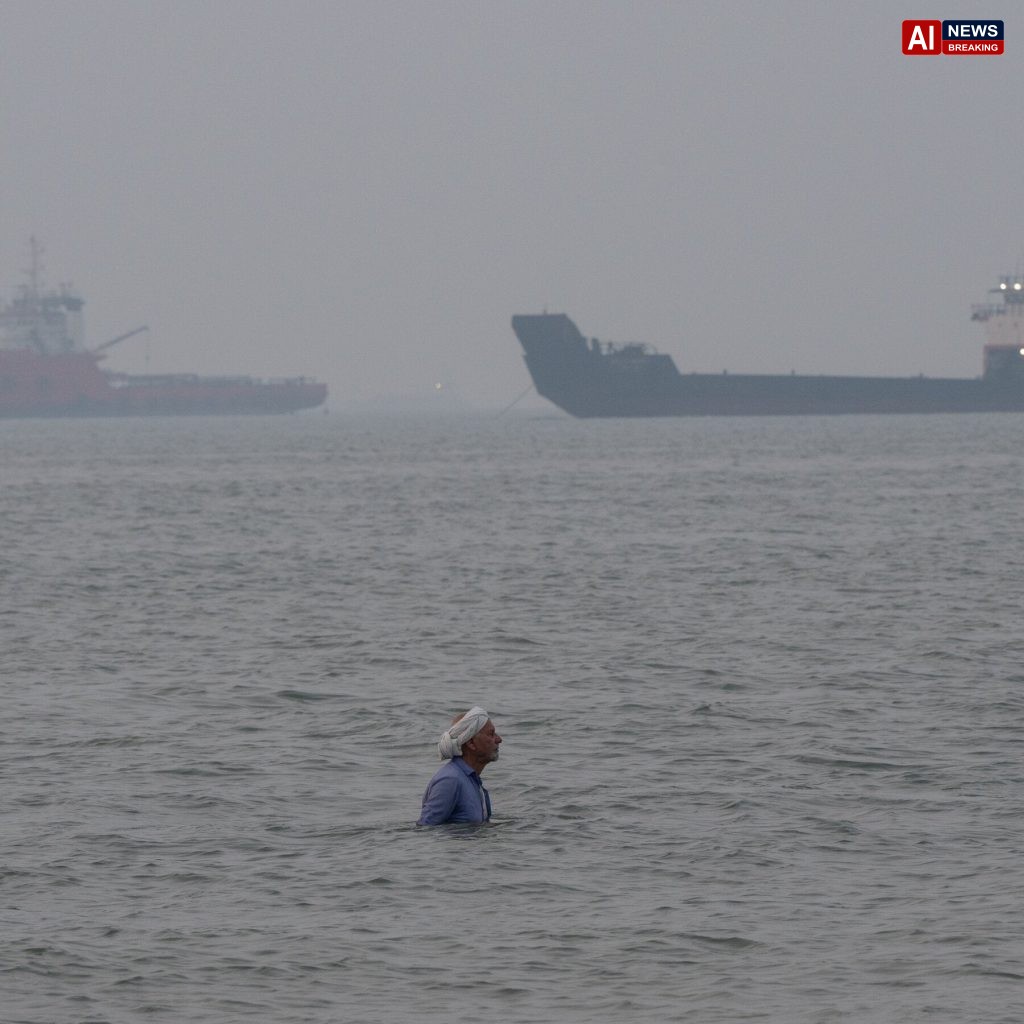
Iran Says It Would Reopen Strait of Hormuz in 2 Days as Part of U.S. Deal - AI News Breaking
iran says would reopen:
Iranian officials announced on Saturday that they expect to reopen the Strait of Hormuz within two days, a development they described as a concrete result of recent diplomatic talks with the United States. The statement, delivered by a senior spokesperson for the Foreign Ministry, said the decision reflected “significant progress” in negotiations aimed at easing the tension that has surrounded the strategic waterway since Tehran began scaling back its navigation guarantees earlier this year. The promise of a rapid reopening came as Tehran prepared its military for the possibility of a broader confrontation, underscoring the dual track of diplomacy and defence that has characterised the country’s approach since the escalation began.The Strait of Hormuz, a narrow passage between the Persian Gulf and the Gulf of Oman, channels roughly a fifth of the world’s petroleum shipments..
Any interruption to traffic through the strait has immediate repercussions for global oil markets, prompting close monitoring by governments, energy analysts and financial institutions. In the weeks preceding the announcement, the price of Brent crude had risen by more than three per cent, while futures traders cited concerns that a prolonged closure could trigger a sharp supply shock. The Iranian pledge to restore normal traffic, if realised, would therefore be welcomed by markets, but observers cautioned that the underlying political dispute remained unresolved.U.S..
officials, speaking on condition of anonymity, said they had been engaged in “intensive, high‑level talks” with Iranian counterparts over the past several days. The discussions, according to the sources, focused on a range of issues including the release of American citizens detained in Iran, the removal of sanctions tied to the country’s ballistic‑missile programme, and a mutual interest in preventing any escalation that might jeopardise commercial shipping. While the United States has not officially confirmed a timetable for the strait’s reopening, it has expressed optimism that the talks could lead to a “credible path forward” for de‑escalation.Iranian media reported that the decision to lift the navigation restriction would be implemented by the Revolutionary Guard Navy, which has been tasked with monitoring vessel movements and ensuring compliance with Tehran’s directives..
The announcement noted that the two‑day window was intended to give commercial operators sufficient time to adjust their routes and schedules, and to allow the Iranian authorities to verify that the agreed‑upon security arrangements were in place. No detailed operational plan was released, but analysts familiar with the region’s maritime protocols expect a phased resumption, beginning with the escort of neutral tankers under the watch of Iranian patrol boats.The timing of the announcement coincided with a visible increase in Iranian military readiness. Satellite imagery captured on Friday showed a concentration of surface‑to‑air missile batteries and artillery units near the coastal cities of Bandar Abbas and Kharg, while the Islamic Revolutionary Guard Corps (IRGC) conducted a series of naval drills in the Gulf of Oman..
Tehran’s supreme leader, Ayatollah Ali Khamenei, has repeatedly warned that any attempt by external powers to coerce Iran would be met with “maximum resistance.” The juxtaposition of diplomatic overtures with a show of force reflects a long‑standing Iranian strategy of leveraging both negotiation and deterrence to achieve its foreign‑policy goals.International reaction to the potential reopening has been measured. The United Nations’ ary‑General issued a brief statement urging all parties to “avoid actions that could further destabilise this critical maritime corridor.” The European Union’s High Representative for Foreign Affairs, meanwhile, called for “transparent communication” and affirmed that the EU would continue to monitor the situation closely. Oil‑producing nations in the Gulf, including Saudi Arabia and the United Arab Emirates, welcomed the prospect of reduced shipping disruptions, but also reiterated their support for a “rules‑based order” that guarantees the free flow of trade.Energy analysts caution that the announced two‑day window may be more aspirational than operational..
Past instances of temporary closures have shown that even a short‑term halt can produce lingering effects on tanker schedules, insurance premiums and charter rates. Moreover, the security environment in the Gulf remains volatile, with several incidents of missile launches and drone activity reported in the past month. “Even if the strait reopens tomorrow, the underlying risk calculus for ship owners has fundamentally changed,” said a senior analyst at a London‑based consultancy..
“They will be demanding higher security guarantees and may reroute vessels through longer passages, at least until confidence is fully restored.”The broader context of the talks includes a series of reciprocal steps that have taken place over the previous weeks. Tehran announced the release of two American citizens who had been detained on espionage charges, a move that was welcomed in Washington and described as a “good‑will gesture.” In return, the United States signalled a willingness to consider a partial easing of secondary sanctions that have hampered Iran’s ability to access the global financial system. However, key points of contention remain, notably the status of Iran’s uranium enrichment programme and its development of unmanned aerial systems, which Washington continues to label as destabilising.Critics of the Iranian approach argue that the promise to reopen the strait may be used as a bargaining chip rather than a firm commitment..
A former diplomat with experience in Gulf affairs warned that “Iran has a history of leveraging strategic chokepoints to extract concessions, and the short notice given to commercial actors suggests a degree of coercion.” Conversely, supporters of Tehran’s stance contend that the move demonstrates a pragmatic willingness to balance regional security concerns with economic imperatives, particularly as Iran faces mounting pressures from a deteriorating domestic economy and a shrinking oil export capacity.The next 48 hours will be crucial in determining whether the announced timetable translates into observable changes on the water. Shipping companies have begun to file revised voyage plans with their agents, and some vessels are expected to enter the strait under the escort of Iranian naval vessels later this week. Monitoring agencies such as the International Maritime Organization will be watching for any incidents or violations of the agreed protocols..
Should the reopening proceed without incident, it could serve as a confidence‑building measure that paves the way for further diplomatic engagement.Nevertheless, the possibility of a rapid reversal cannot be discounted. Regional actors have warned that any perceived breach of the tacit understandings reached in the talks could trigger a swift and decisive response from Tehran, including the reinstatement of navigation restrictions or the deployment of anti‑ship missiles. The United States, for its part, has reiterated that it remains prepared to defend the freedom of navigation and protect its commercial interests in the region..
As both sides navigate the delicate balance between concession and coercion, the Strait of Hormuz stands as a litmus test for the durability of the emerging U.S.–Iranian dialogue and its capacity to avert a wider conflict..
Updated: November 2, 2026
Iran’s promise to reopen the Hormuz waterway is less a triumph than a carefully staged bluff—its two‑day deadline tests the limits of diplomatic credibility while the IRGC’s missile drills send a clear message that Tehran will back words with force if the market’s optimism turns to panic. The global oil market will watch closely, but any slip could see the Strait become a flashpoint again, forcing shipping lines to seek longer, riskier routes and undermining the very economic incentives that motivated the talks.