Indonesia denies foreign claim to rescued orangutans
 Turkey hosts COP31 climate talks in Antalya.
 Pope meets Argentine bishops.
 APOD: 2026 November 8 – Major Fireball Meteor
 Indonesian Horror Hit ‘Pabrik Gula’ Gets 2028 Sequel as MD Entertainment Lines Up Three Imax Films
Cyclone Murasu leaves trail of destruction in Prakasam district; no casualties reported
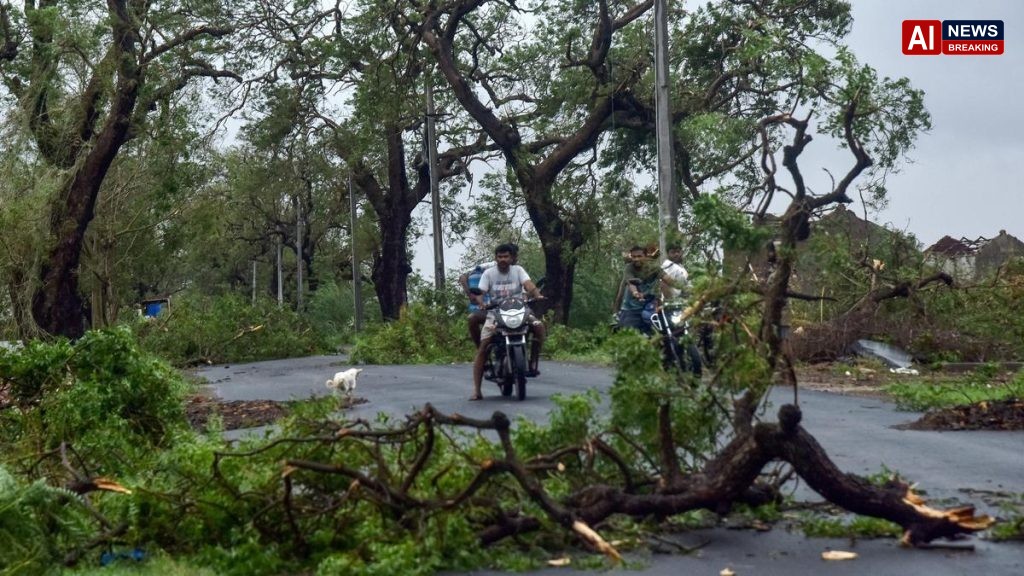
Cyclone Murasu leaves trail of destruction in Prakasam district; no casualties reported - AI News Breaking
Cyclone Murasu leaves trail of destruction in Prakasam district; no casualties reported A powerful cyclone, named Murasu, slammed the eastern coast of India on Monday night, leaving a path of devastation across the Prakasam district. Meteorological reports confirmed sustained wind speeds of over 100 kilometres per hour, coupled with torrential rains that fell for more than 12 hours. The storm’s force was enough to bring down hundreds of trees, topple utility poles, and disrupt essential services for many residents, yet, remarkably, no fatalities were recorded..
Early accounts from local authorities noted that the cyclone’s onslaught uprooted an estimated 600 to 700 trees in the rural outskirts of the district. The debris left scattered across fields and roadways, rendering many main roads impassable for days. The sudden loss of forest cover has raised concerns about soil erosion, as the roots that once held the soil together were destroyed in a matter of minutes..
In addition to the trees, the cyclone damaged a significant number of electricity poles along the main highways and within villages. Power outages stretched for nearly 48 hours, leaving residents without lighting, heating, or refrigeration during the peak of the storm. Utility companies have issued a statement that they expect to restore full service to all affected areas by the end of the week..
Mobile network coverage was also severely affected. Telecommunications companies reported widespread outages, particularly in the more remote hamlets. Emergency services relied on satellite phones and radio communication to coordinate relief efforts, as traditional network infrastructure was knocked offline by the high winds and falling debris..
Livestock suffered considerable losses as well. Veterinary officials and farmers reported that at least 200 animals, primarily cattle and goats, perished during the cyclone. The animals were found stranded in flooded fields, unable to escape the rising waters or the sudden loss of shelter..
Veterinary teams are now working to provide emergency care and food supplies to the surviving animals. In response to the widespread damage, the district administration swiftly activated its disaster relief plan. Emergency shelters were opened in schools and community centres across the district..
Officials moved vulnerable families, including 137 pregnant women, to these temporary accommodations to ensure they had adequate protection and medical oversight during the storm’s aftermath. Local hospitals have been on high alert, ready to treat any injuries that may arise from the damage. While no casualties were reported, the medical teams are prepared for potential cases of respiratory illness, dehydration, or injuries caused by falling branches..
The district health officer urged residents to seek medical help immediately if they experienced any symptoms related to the cyclone’s conditions. The government’s emergency response was coordinated through a joint task force comprising local police, fire services, and the national disaster management authority. They conducted nightly assessments to identify the most critical areas requiring assistance..
The task force also set up a hotline for residents to report emergencies and request help, ensuring that the response was both timely and efficient. The economic impact of the cyclone is expected to be significant. Preliminary estimates suggest that damage to agriculture alone could amount to several million rupees, given the loss of crops and livestock..
The local government has announced a financial aid package for affected farmers, which will cover compensation for lost produce and subsidies for replanting. Environmental groups have expressed concern about the long-term ecological consequences of the tree loss. They are urging the authorities to initiate a rapid reforestation program to mitigate soil erosion and restore habitats that have been disrupted..
Early replanting efforts are already underway, with seedlings being distributed to farmers and community groups across the district. While the cyclone has left the district in a state of emergency, officials are optimistic about recovery. They are leveraging the experience and lessons learned from past storms to strengthen infrastructure resilience..
Plans are in place to reinforce power lines, upgrade drainage systems, and improve early warning mechanisms for future cyclonic events. In the days ahead, residents will gradually return to their homes as services are restored and reconstruction begins. The district administration has pledged transparency and accountability, providing regular updates through community meetings and local media..
As the Prakasam district rebuilds, the collective resilience of its people continues to shine, underscoring the community’s capacity to endure and recover from natural disasters..
Updated: November 3, 2026
The cyclone’s swift tree‑clearing shows how fragile rural infrastructure can be—soil, power, and even basic communication vanish in moments, exposing deep vulnerabilities that are rarely front‑page. Yet the absence of human casualties hints at a surprisingly effective warning system; if early alerts had been missed, the same