Indonesia denies foreign claim to rescued orangutans
 Turkey hosts COP31 climate talks in Antalya.
 Pope meets Argentine bishops.
 APOD: 2026 November 8 – Major Fireball Meteor
 Indonesian Horror Hit ‘Pabrik Gula’ Gets 2028 Sequel as MD Entertainment Lines Up Three Imax Films
US Midterm Election Results 2026: Democrats Make Major Gains as Trump Faces Battle for Control of Congress
Democrats make significant gains in the 2026 US midterm elections, flipping Republican-held Senate seats in North Carolina and South Carolina. Find the latest Republican vs Democrat seat position, House results and the political impact on Donald Trump’s presidency.
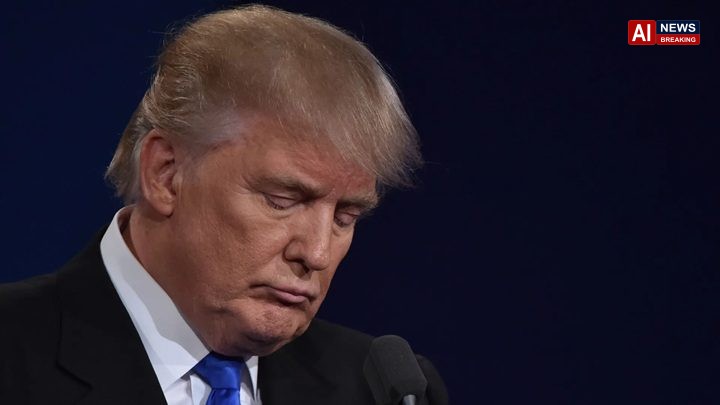
US Midterm Elections 2026 | Live Results | November 4, 2026
American politics is witnessing a major electoral test as voters deliver their verdict in the 2026 United States midterm elections. Early results indicate strong Democratic performances in several closely contested races, including important victories in traditionally Republican territory, raising the possibility of a shift in power in the US Congress during the final two years of President Donald Trump’s second term.
Democrats have secured significant Senate victories in North Carolina and South Carolina, while holding key seats in Georgia and New Hampshire. The results have increased pressure on Republicans, who entered the election with narrow majorities in both chambers of Congress.
However, the overall battle for congressional control remains unresolved, with millions of votes still being counted across several states and competitive House districts.
US Midterm Election Results 2026: Key Highlights
- Democrats have flipped Republican-held Senate seats in North Carolina and South Carolina.
- Republican majorities in both chambers are under pressure following Democratic gains.
- Democrat Roy Cooper defeated Republican Michael Whatley in North Carolina’s Senate race.
- Democrat Annie Andrews defeated Trump-backed Republican Darline Graham in South Carolina.
- Republicans entered the election with a 53–47 Senate advantage and a narrow House majority.
- Two Democratic House victories have been reported in North Carolina and New Jersey.
- Control of the House and Senate remains uncertain as counting continues.
US Midterm Elections 2026: Latest Party Position
Before Election Day, Republicans controlled both chambers of Congress. The following figures show the pre-election balance and the minimum impact of the two confirmed Republican-held Senate seat flips reported by Reuters.
1. US Senate: Republicans face major setbacks
The Senate has 100 members. Before the midterm elections, Republicans held 53 seats, while Democrats held 45. Two independent senators caucused with Democrats.
| Political party | Before election | After two confirmed GOP-seat flips* |
|---|---|---|
| Republicans | 53 | 51 |
| Democrats | 45 | 47 |
| Independents | 2 | 2 |
| Total | 100 | 100 |
Illustrative arithmetic based on the two reported Republican-held Senate pickups, assuming all other seats remain unchanged. This is not the final election-night Senate count.
Democrats need a net gain of four seats to take control of the Senate. Republicans can retain effective control with 50 seats because Vice President JD Vance can cast a tie-breaking vote.
The North Carolina and South Carolina results represent important breakthroughs for Democrats. However, several other competitive Senate races remain critical to determining the final balance of power.
2. US House of Representatives: The battle for 218 seats
All 435 seats in the House of Representatives are being contested.
Before the election, the Republican caucus held 219 seats, compared with 214 for Democrats, with two vacancies.
| Political party | Pre-election position |
|---|---|
| Republicans | 219 |
| Democrats | 214 |
| Vacancies | 2 |
| Total | 435 |
A party needs at least 218 seats to secure a majority in a fully occupied House.
Democrats have recorded important victories in North Carolina and New Jersey, but the nationwide House seat count remains subject to continuing vote counting and official race calls.
The House could become the decisive battleground of the 2026 midterms. Even a relatively small number of Republican seat losses could transfer control to Democrats.
Major Senate Election Results: State-by-State Developments
North Carolina: Roy Cooper defeats Trump’s candidate
One of the biggest Democratic victories came from North Carolina, where former Democratic governor Roy Cooper defeated Republican candidate Michael Whatley.
The victory is particularly significant because Republicans had previously held the Senate seat.
Cooper’s victory represents a Democratic pickup and could prove important in the broader fight for control of the Senate.
The result also indicates that Republican candidates may face difficulties in competitive states where voters are increasingly concerned about economic conditions and the direction of the federal government.
South Carolina: Annie Andrews delivers a historic Democratic victory
South Carolina produced another major political surprise.
Democrat Annie Andrews defeated Republican Darline Graham, who had received support from President Donald Trump.
The victory is especially significant because South Carolina has traditionally been a strong Republican state in presidential elections.
According to Reuters, Andrews became the first Democrat to win a South Carolina Senate seat since 1998.
The result demonstrates that Democratic candidates have made inroads beyond their traditional electoral strongholds.
Georgia: Jon Ossoff holds his Senate seat
Democratic Senator Jon Ossoff secured re-election in Georgia, according to election projections reported by Reuters.
Georgia remains an important political battleground, and Ossoff’s victory strengthens the Democratic position.
His re-election also prevents Republicans from gaining a seat that could have helped them maintain their Senate majority.
New Hampshire: Democrats retain an important Senate seat
Democrats also held their Senate position in New Hampshire, according to Reuters’ election coverage.
The result is important because Republicans needed to make gains in competitive states to strengthen their position in the upper chamber.
Florida and West Virginia: Republicans secure victories
Republicans also recorded important victories.
Florida’s Senate seat remained with the Republican Party, while Republican Senator Shelley Moore Capito won another term in West Virginia.
These victories helped Republicans limit Democratic gains in the Senate.
Why Are Democrats Gaining Ground?
Several political and economic issues have influenced the 2026 midterm elections.
1. Rising cost of living and economic pressure
Affordability has emerged as one of the most important concerns among American voters.
Higher fuel costs, household expenses, inflationary pressures and uncertainty about economic growth have affected public confidence.
Democrats have attempted to make the economy a central campaign issue, arguing that the administration’s economic policies have not delivered sufficient relief to ordinary households.
2. Trump’s Iran policy and foreign policy challenges
The US conflict with Iran has become another major political issue.
Military action, geopolitical uncertainty and concerns about energy prices have contributed to public dissatisfaction.
Higher oil prices can affect transportation, manufacturing, food distribution and household budgets, making foreign policy directly relevant to domestic voting behaviour.
3. Opposition to tariffs and trade policies
The Trump administration’s tariff policies have also attracted criticism.
While Republicans have defended tariffs as a tool for protecting American industries and strengthening domestic manufacturing, critics argue that import duties can increase costs for businesses and consumers.
The economic consequences of trade policy have become an important issue in several competitive electoral contests.
4. Voter dissatisfaction with the direction of the country
Reuters reported that exit polling showed widespread dissatisfaction with the country’s direction.
Around half of voters in the reported exit polls said the midterm elections represented an opportunity to express opposition to the president.
This suggests that the election is not simply a contest between individual candidates. It is also a broader referendum on the performance and political direction of the Trump administration.
What Happens If Democrats Take Control of Congress?
The consequences could be significant for President Donald Trump.
If Democrats secure control of the House, the administration could face stronger congressional scrutiny, more aggressive oversight and greater opposition to its legislative priorities.
A Democratic majority in the House would have the power to:
- Conduct congressional investigations into federal government policies.
- Hold hearings involving administration officials.
- Influence federal spending and budget negotiations.
- Challenge proposed legislation.
- Exercise greater oversight of executive branch activities.
If Democrats also secure the Senate, their influence would extend to confirmation proceedings involving federal appointments and judicial nominations.
However, congressional control does not automatically allow either party to implement its entire political agenda. The president retains executive powers, and legislation still faces constitutional and procedural constraints.
What Does a Republican Defeat Mean for Trump’s Presidency?
Midterm elections traditionally serve as a political assessment of the sitting president’s performance.
For Trump, the 2026 elections carry additional importance because Republicans entered the campaign controlling both chambers of Congress.
A Democratic takeover of even one chamber would create a divided government and make it more difficult for the administration to pass legislation.
It could also increase political pressure on Republican lawmakers, particularly those representing competitive districts.
If Democrats win both chambers, the final two years of Trump’s presidency could become significantly more confrontational.
The administration would need to negotiate with an opposition-controlled Congress on spending, legislation, appointments and national policy.
US Midterm Elections 2026: International Implications
The election results are also being closely watched outside the United States.
Impact on India
India has important strategic, economic and diplomatic relationships with Washington.
A change in congressional control could influence discussions surrounding trade, tariffs, immigration, technology cooperation, defence partnerships and strategic relations in the Indo-Pacific.
However, a change in congressional majority would not automatically reverse US foreign policy. The president retains substantial authority over diplomacy and national security.
Impact on global markets
Financial markets are monitoring the election because congressional control could influence future fiscal policy, taxation, government spending and regulatory decisions.
Investors may also assess whether a divided Congress could create uncertainty around budget negotiations and government funding.
The immediate market reaction will depend on the final results, political stability and the economic implications of the new congressional balance.
Impact on US-China relations
US-China relations remain an important international issue.
Trade policy, semiconductor restrictions, artificial intelligence, Taiwan and strategic competition are likely to remain central to Washington’s foreign policy regardless of which party controls Congress.
A Democratic victory could change congressional priorities and oversight, but it does not necessarily mean a fundamental reversal of US policy towards China.
What Happens Next?
The election results will become clearer as state and county election officials complete counting.
Several factors could delay the final outcome:
- Mail-in ballots that require verification.
- Provisional ballots.
- Close margins in competitive congressional districts.
- Ranked-choice voting in certain states.
- Recounts and election-related legal challenges.
- State-level canvassing and certification procedures.
Media projections and official certification are different stages of the election process. A projected winner is not the same as a formally certified result.
The Associated Press and other major news organisations call races when their respective evidence standards are met. Official state certification follows the applicable legal process.
Conclusion: A Major Political Test for Donald Trump
The 2026 US midterm elections are emerging as a significant political challenge for President Donald Trump and the Republican Party.
Democratic victories in North Carolina and South Carolina have demonstrated that the opposition can compete successfully in states traditionally considered Republican territory. Meanwhile, Democratic victories in Georgia and reported House gains have strengthened expectations of a more competitive Congress.
Nevertheless, the final balance of power remains dependent on outstanding races.
The central question is whether Democrats can convert their early momentum into control of the House, the Senate or both.
Whatever the final outcome, the 2026 midterms could reshape the political environment in Washington and determine how much freedom the Trump administration has to pursue its domestic and international agenda during the remaining two years of its term.
AI News Breaking Editorial Analysis: The 2026 midterms are more than a contest for congressional seats. They are a test of voter confidence in the administration’s economic policies, foreign policy decisions and political leadership. The final results will determine whether Trump continues with a Congress controlled by his party or faces a powerful Democratic opposition.