Indonesia denies foreign claim to rescued orangutans
 Turkey hosts COP31 climate talks in Antalya.
 Pope meets Argentine bishops.
 APOD: 2026 November 8 – Major Fireball Meteor
 Indonesian Horror Hit ‘Pabrik Gula’ Gets 2028 Sequel as MD Entertainment Lines Up Three Imax Films
Joshua Wong, Hong Kong Democracy Activist, Is Sentenced to 10 Years in Prison
**
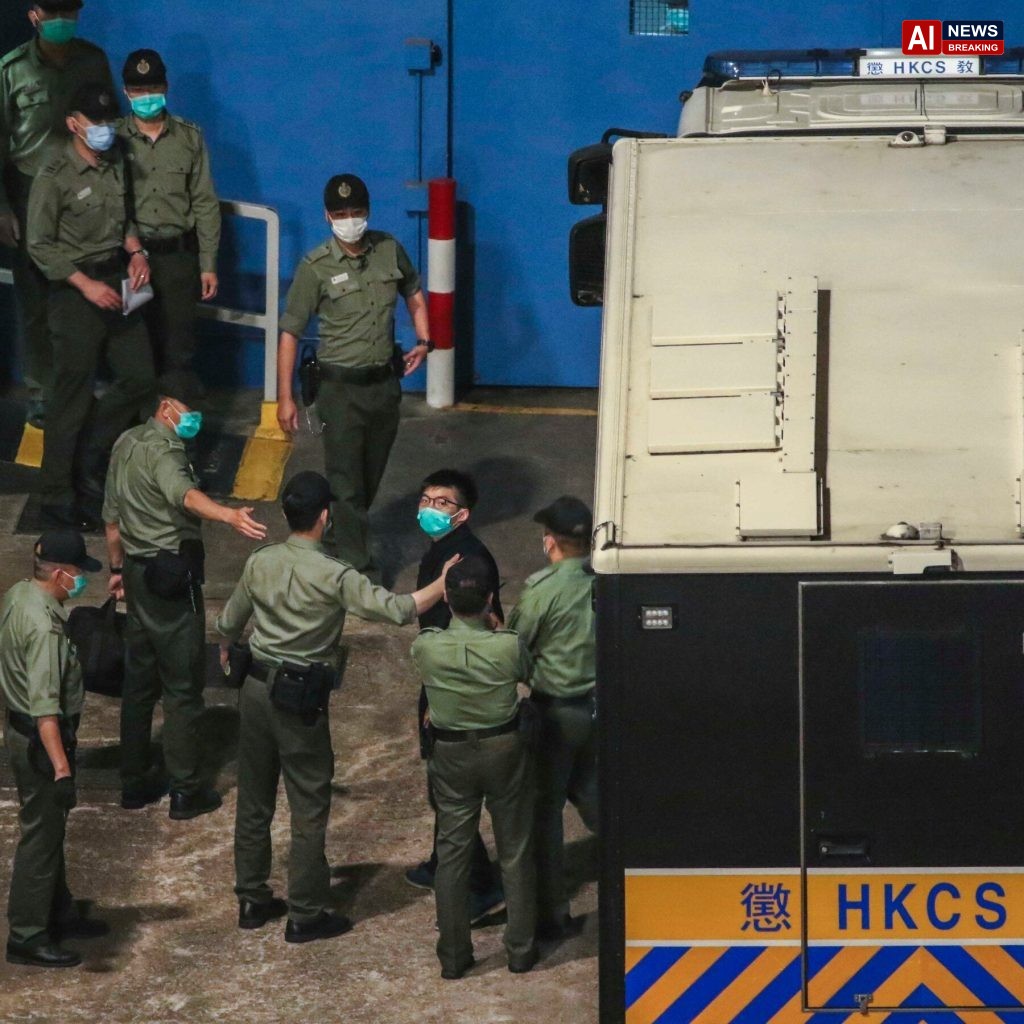
Joshua Wong, Hong Kong Democracy Activist, Is Sentenced to 10 Years in Prison - AI News Breaking
joshua wong hong kong:
Joshua Wong, Hong Kong Democracy Activist, Is Sentenced to 10 Years in Prison Hong Kong’s most recognised pro‑democracy figure, Joshua Wong, was handed a ten‑year jail term yesterday after a court found him guilty of “conspiracy to collude with foreign forces”, an offence under the city’s sweeping national security law. The verdict marks the culmination of a protracted legal battle that began shortly after the 2020 crackdown on the protest movement that had once filled the streets of the city with umbrellas, placards and chants for universal suffrage. International observers warned that the sentence signalled a further erosion of Hong Kong’s autonomous legal system..
Wong, now 28, first rose to prominence as a teenager during the 2014 Umbrella Movement, where he helped organise sit‑ins that demanded genuine democratic elections. He later co‑founded the now‑banned Demosistō party and became a leading voice in the 2019 anti‑extradition bill protests, which drew millions of participants. After the imposition of the national security law in June 2020, the government moved swiftly to dissolve opposition groups and arrest prominent activists, including Wong, who was detained in August of that year..
The trial, which lasted for three months, was conducted behind closed doors, a measure the authorities justified as protecting state security. Prosecutors alleged that Wong had maintained contact with overseas NGOs and foreign politicians, seeking “illicit assistance” to undermine Hong Kong’s stability. They presented emails, social‑media messages and recorded calls as evidence, arguing that these communications demonstrated a concerted effort to coordinate “foreign interference” in local affairs..
Wong’s defence team countered that the communications were part of routine advocacy and that no tangible assistance was ever provided. They argued that the national security law’s vague wording allowed the prosecution to criminalise ordinary political expression. In a closing statement, lead counsel, Christopher Tang, warned that the sentence could set a “dangerous precedent” for criminalising dissent, effectively silencing an entire generation of activists..
The presiding judge, Justice Chan, delivered the sentence without offering any leniency, stating that “the gravity of the offence and the defendant’s influential position demand a penalty that reflects the seriousness of collusion with foreign forces.” He added that the ruling was intended to serve as a deterrent to anyone who might consider “subverting the lawful order” of the Special Administrative Region. The judge’s remarks were met with stunned silence in the courtroom. Human rights organisations reacted swiftly..
Amnesty International condemned the decision as “a stark illustration of Hong Kong’s drift towards authoritarianism,” urging the United Nations to investigate potential violations of international law. The Hong Kong Watch, a UK‑based monitoring group, described the ten‑year term as “the longest ever imposed on a political activist since the handover,” and called for coordinated diplomatic pressure on Beijing. The Chinese central government defended the outcome, with a spokesperson for the Ministry of Foreign Affairs describing the ruling as “a necessary enforcement of the law to safeguard national security.” The statement reiterated that Hong Kong’s judiciary operates independently and that “any attempts to politicise the case are unfounded.” The official line echoes Beijing’s broader narrative that the national security law is a legitimate response to foreign meddling..
In Hong Kong, public reaction was muted. Police barred a planned gathering outside the courthouse, and several pro‑democracy NGOs were denied permits to hold a vigil. Yet on social media platforms that remain accessible, users posted tributes to Wong, sharing clips from his earlier speeches and calling the sentence “a martyrdom for freedom.” The government has repeatedly warned citizens against “spreading false information” that could incite unrest, further chilling open discussion..
The sentencing also reverberates beyond Hong Kong’s borders. In London, the Foreign Office issued a statement expressing “deep concern” over the length of the punishment and its implications for the “rule of law in Hong Kong.” The United States, which maintains a consular presence in the city, reiterated its “commitment to support human rights defenders” but stopped short of imposing new sanctions, citing the need for “constructive engagement.” Legal analysts note that Wong’s case may become a benchmark for future prosecutions under the national security law. Professor Michael Dillon of the University of Hong Kong warned that “the elasticity of the ‘foreign forces’ clause could be stretched to encompass virtually any contact with the outside world, eroding the space for legitimate civil society work.” He added that the sentence could discourage Hong Kong’s diaspora from returning, potentially draining the city of talent and expertise..
Wong’s family released a brief statement shortly after the verdict, expressing “deep sorrow but unwavering pride” in his commitment to democracy. They affirmed that they would continue to “fight for justice” and appealed to the international community for support. As the former activist is led away in handcuffs, his supporters vowed to keep his message alive, organising underground study groups and online forums to discuss Hong Kong’s future..
The case underscores a stark transformation in Hong Kong’s political landscape since the 2019 protests. Once lauded as a vibrant international hub with a robust civil society, the city now appears increasingly constrained by a legal framework that criminalises dissent. As the world watches, the ten‑year sentence handed to Joshua Wong may well become a defining moment in the ongoing struggle between authoritarian control and the aspirations of a populace yearning for democratic freedoms..
Updated: November 5, 2026
Wong’s ten‑year sentence is less a punishment for a single act and more a warning that the city will now treat any global connection as a threat, effectively turning dissent into a crime. This move signals Beijing’s intent to silence not just protest leaders but any citizen willing to question the