Indonesia denies foreign claim to rescued orangutans
 Turkey hosts COP31 climate talks in Antalya.
 Pope meets Argentine bishops.
 APOD: 2026 November 8 – Major Fireball Meteor
 Indonesian Horror Hit ‘Pabrik Gula’ Gets 2028 Sequel as MD Entertainment Lines Up Three Imax Films
U.S. Rep. Khanna criticises Hindu nationalist rhetoric in India
**
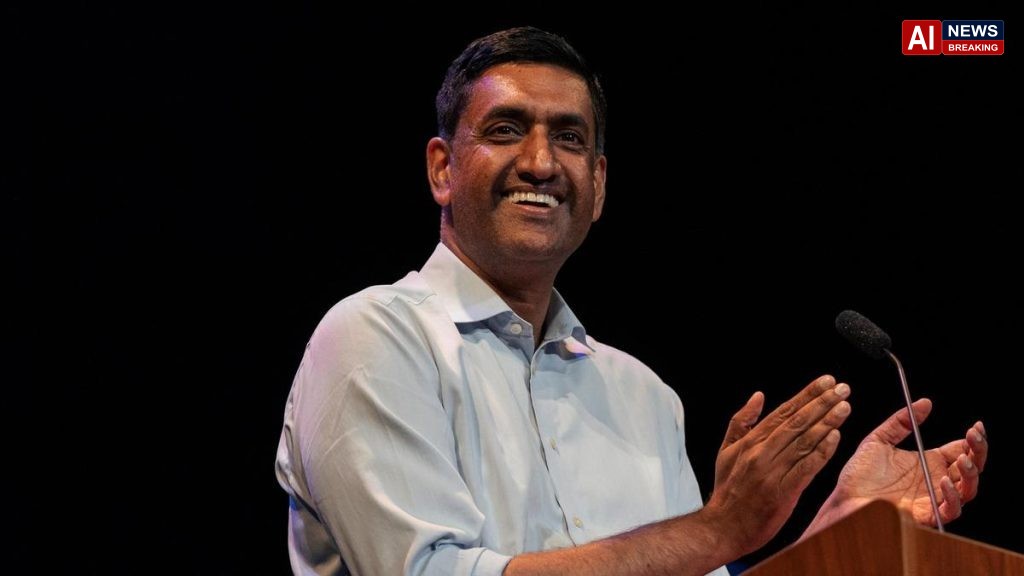
Condemn Hindu nationalism, support students’ protests: U.S. Representative Ro Khanna - AI News Breaking
Representative Ro Khanna, a California Democrat and longtime advocate for South‑Asian affairs, has taken a public stand against Hindu nationalist rhetoric in India, describing it as “dangerous” and “incompatible with democratic values”. In a statement released on Monday, Khanna praised recent student protests on Indian campuses that have demanded greater secularism and an end to communal discrimination, urging the Indian government to respect freedom of expression and protect minority rights. His remarks, made during a virtual briefing with members of the Congressional Asian Pacific American Caucus, have sparked a rapid response from both Indian officials and diaspora organisations, highlighting the fraught intersection of foreign policy, domestic politics and transnational activism.Khanna’s comments came as the United States Commission on International Religious Freedom (USCIRF) released a report documenting a rise in violent incidents targeting Sikh places of worship in the Indian state of Punjab..
The commission described a series of shootings outside gurdwaras between 2022 and 2024 as “vigilante attacks” motivated by a broader climate of communal hostility, linking them to the growing influence of Hindu nationalist groups that have been accused of fostering anti‑Sikh sentiment. USCIRF urged the Indian government to launch thorough investigations, hold perpetrators accountable and strengthen protection for religious minorities.In response, an advisor to India’s Ministry of Information and Broadcasting, who spoke on condition of anonymity, dismissed Khandra’s statements as “misinformed” and “interfering in India’s internal affairs”. The official argued that the United States should not “lecture” a sovereign nation on how it manages its democratic processes, and warned that such commentary could undermine the bilateral relationship that underpins trade, security cooperation and strategic dialogue..
The advisor also contended that the incidents in Punjab were isolated criminal acts, not indicative of a state‑sanctioned or ideologically driven campaign.The Indian Ministry of External Affairs (MEA) has not issued an official reply to Khanna’s remarks, a silence that observers say may be deliberate, allowing the government to avoid escalating a diplomatic row while still signalling displeasure through other channels. Senior officials in the MEA have previously warned U.S. lawmakers against “politicising” community issues, noting that India’s internal law‑and‑order matters are best resolved domestically..
Analysts at the Observer Research Foundation note that the ministry’s reticence could be a calculated effort to keep the focus on economic and security cooperation, especially as both countries navigate challenges posed by China’s growing influence in the Indo‑Pacific.Student activists across Indian universities, from Delhi University to Panjab University, have been at the forefront of protests demanding the repeal of the so‑called “anti‑conversion” laws in several states, which they argue discriminate against religious minorities. The demonstrations have been marked by sit‑ins, petitions and rallies that call for a reaffirmation of India’s constitutional secularism. Khanna’s endorsement of these protests has been welcomed by several diaspora groups, including the Sikh American Legal Defense and Education Fund, which issued a statement praising the congressman for “amplifying the voices of those on the ground who face intimidation and violence”.However, not all reactions from the diaspora have been supportive..
Representatives of the Hindu American Foundation (HAF) released a press release condemning Khanna’s comments as “one‑sided” and “fueling communal tensions”. HAF argued that the congressman’s portrayal of Hindu nationalism ignored the legitimate concerns of many Indians who view such movements as a response to perceived threats against cultural identity. The foundation called for a balanced dialogue that recognises both the aspirations of majority communities and the rights of minorities, warning that external criticism could deepen polarization within India.The controversy has also reignited debate within the U.S..
Congress over the appropriate level of engagement on religious freedom issues abroad. While some lawmakers, such as Representative Pramila Jayapal, have urged the State Department to issue a formal rebuke of the attacks in Punjab, others caution that overt criticism could be weaponised by rival powers seeking to sow discord. A senior official at the State Department, who declined to be named, said that Washington continues to monitor the situation closely and remains committed to “a principled approach that upholds human rights without compromising strategic partnerships”.International observers note that the timing of Khanna’s statement coincides with a broader shift in U.S..
policy towards a more values‑based diplomacy under the current administration. The administration has repeatedly highlighted concerns about religious persecution in countries ranging from Myanmar to Iran, and has signalled an intent to use diplomatic tools such as the International Religious Freedom Act to address violations. Critics, however, argue that selective focus on India may reflect domestic political calculations, given the growing influence of South‑Asian voters in key swing states.In Punjab, families of victims of the gurdwara shootings have called for justice and greater security..
One bereaved mother, speaking to local media, recounted the night her son was wounded when gunfire shattered the sanctity of the Golden Temple precincts. She appealed directly to the Indian Prime Minister, urging swift action and expressing hope that international attention, such as that from Khanna and USCIRF, would accelerate investigations. Human rights groups in the state have filed petitions in the Punjab High Court demanding an independent probe, citing concerns that local police investigations have stalled.The episode underscores the delicate balance that democratic societies must maintain when addressing religious intolerance abroad while respecting sovereign jurisdiction..
As Khanna’s remarks continue to circulate on social media and in diplomatic circles, the discourse is likely to evolve, with further statements expected from both Indian ministries and U.S. Whether the episode will translate into concrete policy changes, enhanced protections for minorities, or merely remain a point of rhetorical contest remains to be seen, but it has undeniably placed the issue of Hindu nationalism and anti‑Sikh violence back onto the international agenda..
Updated: November 6, 2026