Indonesia denies foreign claim to rescued orangutans
 Turkey hosts COP31 climate talks in Antalya.
 Pope meets Argentine bishops.
 APOD: 2026 November 8 – Major Fireball Meteor
 Indonesian Horror Hit ‘Pabrik Gula’ Gets 2028 Sequel as MD Entertainment Lines Up Three Imax Films
Seville European Film Festival opens with awards for Holland, Frémaux and
**
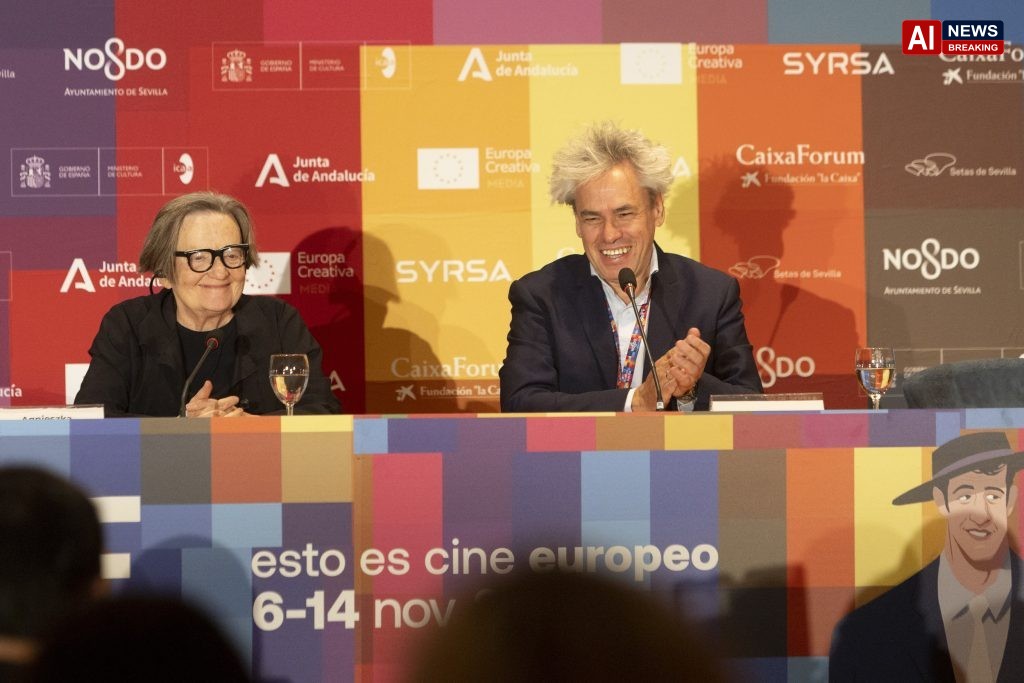
Seville European Film Festival Honors Agnieszka Holland, Thierry Frémaux and Cartoon Saloon - AI News Breaking
The Seville European Film Festival opened its 2026 edition on Friday with a star‑studded ceremony that placed a spotlight on three of the continent’s most influential cultural figures: Polish director Agnieszka Holland, French film programmer Thierry Frémaux and the Irish animation collective Cartoon Saloon. Their inclusion among the festival’s honorees signals a deliberate effort by the organisers to celebrate both the established mastery and the emerging vitality of European cinema, while also underscoring the festival’s ambition to position Seville as a key hub for artistic exchange across the continent.Agnieszka Holland, whose career spans more than five decades and includes a litany of internationally acclaimed works such as “Europa Europa”, “In Darkness” and the recent “Green Border”, was presented with a lifetime achievement award that highlighted her capacity to weave political history with personal narrative. In a short speech delivered in fluent Spanish, the director reflected on the importance of “telling stories that resist forgetting” and praised the festival’s commitment to giving space to “voices that challenge the status quo”..
Holland’s presence attracted a sizable audience of industry professionals, students and film lovers, many of whom gathered in the historic Teatro de la Maestranza to hear her discuss the evolution of European co‑production models and the role of film as a vehicle for cultural diplomacy.The second honour went to Thierry Frémaux, the long‑time artistic director of the Cannes Film Festival, whose influence on the European festival circuit is virtually unparalleled. Frémaux, who accepted the accolade alongside a modest entourage of French cinephiles, spoke about the shifting landscape of film distribution in the digital age and the need for festivals to remain “living laboratories” where filmmakers can test the limits of form and content. His remarks were punctuated by references to the growing importance of hybrid formats that blend cinema with immersive technologies, an area where Seville has already begun to invest through a series of VR workshops held in partnership with local universities.Cartoon Saloon, the Irish studio responsible for critically lauded animated features such as “The of Kells”, “Song of the Sea” and “Wolfwalkers”, received a special jury prize that recognised its contribution to a distinctly European animation aesthetic..
Representatives from the studio, including co‑founder Tomm Moore, highlighted the studio’s commitment to hand‑drawn techniques and mythic storytelling rooted in Celtic folklore, noting that such an approach “keeps alive a visual language that is both timeless and unmistakably European”. The studio’s latest project, an upcoming feature set in a mythic version of the Iberian Peninsula, will make its world premiere at the festival later in the week, further cementing the link between the honorees and the event’s programming.The festival’s main competition, unveiled during the opening ceremony, pits Dani de la Orden’s darkly comic thriller “The Director” against Andrew Haigh’s contemplative drama “A Long Winter”. Both films embody the broad tonal spectrum the Seville European Film Festival seeks to showcase..
“The Director”, a Spanish‑language satire that dissects the power dynamics of a failing regional theatre, offers a sharp critique of bureaucratic inertia, while Haigh’s British production, set against a bleak winter landscape, explores themes of grief and redemption through a restrained, character‑driven narrative. The competition jury, composed of a mix of veteran critics, emerging curators and two of the newly honoured guests, will deliberate over the next six days before awarding the coveted Golden Seville award.Beyond the competition, the festival programme includes a series of retrospectives and thematic strands designed to map the evolving terrain of European cinema. A dedicated “New Voices” showcase will present debut works from directors in the Balkans, the Baltics and the Iberian Peninsula, offering a platform for filmmakers whose perspectives have traditionally been under‑represented in mainstream circuits..
Meanwhile, a curated selection of restored classics from the 1960s and 1970s, including several of Holland’s early Polish features, will run in parallel, providing context for contemporary audiences to trace the lineage of artistic innovation across decades.In addition to screenings, the festival has organised a number of industry forums aimed at fostering co‑production opportunities. A notable panel titled “Financing the Future” brought together representatives from Eurimages, Creative Europe and several private funds to discuss new funding mechanisms that accommodate both high‑budget feature films and lower‑budget animated projects. The discussion, moderated by a senior producer from the European Broadcasting Union, highlighted the growing appetite for cross‑border collaborations, particularly those that integrate live‑action and animation—a synergy that Cartoon Saloon’s upcoming Iberian project exemplifies.The cultural impact of the honours extends beyond the ceremony itself..
Local schools in Seville have been invited to attend special screenings of Holland’s early work, accompanied by educational workshops that explore film as a medium of historical testimony. Similarly, a series of masterclasses led by Frémaux will be open to aspiring festival programmers, offering insights into curatorial practice, audience engagement and the delicate balance between artistic integrity and commercial viability. These outreach initiatives underscore the festival’s broader mission to nurture a new generation of European film professionals.Critics have praised the festival’s decision to combine reverence for established masters with a forward‑looking emphasis on emerging talent..
In a review published in Variety, one commentator noted that “Seville’s 2026 edition manages to honour the past without being trapped by it, weaving a narrative that celebrates both the storied legacies of Holland and Frémaux and the fresh, hand‑crafted imagination of Cartoon Saloon”. The same review highlighted the festival’s logistical achievements, including the seamless integration of live‑streamed events that allowed a global audience to participate in real time—a move that reflects the increasing hybridity of festival experiences in a post‑pandemic world.As the festival progresses, anticipation builds for the closing awards ceremony, where the Golden Seville will be presented and the honorees will each receive a special tribute. Organisers hope that the confluence of distinguished guests, diverse programming and industry networking will not only elevate the profile of the Seville European Film Festival but also reinforce its role as a crucible for European cinematic innovation..
In a city known for its rich artistic heritage, the festival’s 2026 edition stands as a testament to the enduring power of film to bridge cultures, generations and artistic disciplines, echoing the very ethos that Agnieszka Holland, Thierry Frémaux and Cartoon Saloon have championed throughout their illustrious careers..
Updated: November 6, 2026
Insight: Seville’s deliberate mingling of venerable auteurs with emerging hand‑drawn voices signals a strategic pivot: the city is positioning itself as a hub where legacy and innovation collide, inviting cross‑border co‑production that can redefine European storytelling.
If the festival’s hybrid model succeeds, it could set a new standard for cultural diplomacy—leveraging film’s emotive power to bridge political divides while nurturing a generation of filmmakers who view cinema as both art and active dialogue.