Indonesia denies foreign claim to rescued orangutans
 Turkey hosts COP31 climate talks in Antalya.
 Pope meets Argentine bishops.
 APOD: 2026 November 8 – Major Fireball Meteor
 Indonesian Horror Hit ‘Pabrik Gula’ Gets 2028 Sequel as MD Entertainment Lines Up Three Imax Films
PM Modi to celebrate Deepavali with forces in Bastar that was once den of Maoists
**
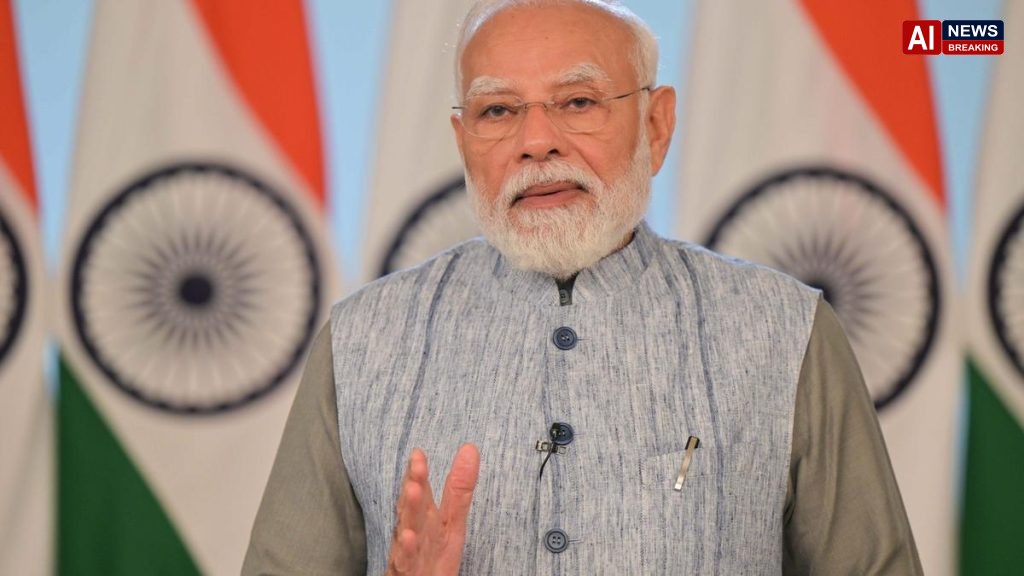
PM Modi to celebrate Deepavali with forces in Bastar that was once den of Maoists - AI News Breaking
modi celebrate deepavali forces:
PM Modi to celebrate Deepavali with forces in Bastar that was once den of Maoists The Indian Prime Minister, Narendra Modi, will mark the Hindu festival of Deepavali this year by joining security forces in the Bastar region of Chhattisgarh, an area that was once a stronghold of Maoist insurgents. The ceremony, scheduled for early November, is intended to showcase the government’s confidence that the region has moved beyond its violent past and is now on a trajectory of development and stability. Officials say the event will include a modest cultural program and a brief speech by the prime minister highlighting the progress made under central and state initiatives..
Bastar, covering a vast tribal heartland of central India, has long been associated with the Naxalite-Maoist movement, which at its peak controlled swathes of forested terrain and posed a serious challenge to law and order. The insurgents exploited local grievances over land rights, unemployment and neglect, establishing parallel structures of governance in many villages. Over the past decade, a combination of security operations, infrastructure projects and welfare schemes has gradually eroded their influence, though sporadic violence still occurs..
In recent years, the Indian government has intensified its “integrated approach” in the so‑called Red Corridor, pairing police and paramilitary action with development programmes such as the Mahatma Gandhi National Rural Employment Guarantee Act and the Pradhan Mantri Awas Yojana. According to the Ministry of Home Affairs, the number of Maoist‑related incidents in Chhattisgarh fell by more than 30 percent between 2018 and 2023, and the number of casualties on both sides also declined. The Deepavali celebration is being positioned as a symbolic culmination of these efforts..
The decision to hold the event in Bastar has drawn mixed reactions. Local tribal leaders have praised the attention to their region, saying it underscores the central government’s commitment to addressing longstanding socio‑economic deficits. “We have seen schools being built, roads laid and electricity reaching our homes, something that was unimaginable a decade ago,” said a representative of the Bastar Tribal Council during a recent press conference..
The prime minister’s presence is expected to further galvanise community support for ongoing projects. Conversely, human‑rights observers caution against portraying the situation as entirely resolved. Amnesty International’s India desk noted that while large‑scale attacks have declined, reports of forced displacement, arbitrary arrests and the use of the Armed Forces Special Powers Act persist in remote villages..
The organisation urged the government to ensure that development does not come at the expense of civil liberties, and that any security operation respects the rights of indigenous peoples. Security forces in the area have been undergoing a transformation of their own. The central government’s “Mission Police” programme has introduced community‑policing modules aimed at building trust between the police and tribal residents..
According to a senior officer of the Chhattisgarh Police, the forces now conduct regular outreach meetings, health camps and educational workshops, moving beyond a solely combat‑focused mandate. The Deepavali gathering will be the first time the prime minister will appear alongside a mixed contingent of army, central reserve police and local tribal volunteers. Economically, Bastar’s fortunes have begun to shift..
The state’s annual budget allocated over 8,000 crore rupees to the region for infrastructure, health and education between 2020 and 2024. New highways linking Bastar to Raipur and Jagdalpur have reduced travel times, facilitating trade of agricultural produce such as rice, millets and forest‑derived non‑timber products. The government also promoted eco‑tourism, encouraging visits to waterfalls, caves and cultural sites, hoping to create alternative livelihoods for youth who might otherwise be susceptible to extremist recruitment..
Critics argue that the benefits have not been evenly distributed. A recent survey by the Centre for Policy Research found that households owning land above a certain size have disproportionately reaped the gains from new irrigation schemes, while landless labourers remain marginalised. The survey also highlighted that female literacy rates, though improving, still lag behind the national average..
These disparities, if unaddressed, could undermine the narrative of inclusive development that the prime minister’s Deepavali appearance seeks to project. The political dimension of the event cannot be ignored. As India heads toward its next general elections, the ruling Bharatiya Janata Party aims to consolidate support in tribal belt constituencies that have traditionally swung between parties..
By highlighting security successes and development milestones in a region once synonymous with insurgency, the party hopes to reinforce its image as a strong, decisive government capable of delivering tangible change to the nation’s most remote areas. Local businesses have expressed optimism about the increased visibility. Small‑scale entrepreneurs in Bastar anticipate a surge in demand for traditional handicrafts, bamboo products and tribal cuisine during the festival period..
The state tourism department has already announced a promotional campaign featuring Deepavali lights strung across newly constructed market stalls, hoping to attract domestic tourists from neighboring states. Such commercial activity, if sustained, could provide a steady source of income for families that have long depended on subsistence farming. The upcoming Deepavali ceremony will also include a moment of silence to honour victims of the Maoist conflict, a gesture that acknowledges the human cost of the decades‑long struggle..
Families of former combatants and security personnel are expected to be present, underscoring the complex tapestry of loss and reconciliation that continues to shape Bastar.
Updated: November 8, 2026
Modi’s Deepavali rally in Bastar crystallises a political gamble: it projects a narrative of conquered insurgency to win tribal votes, yet the lingering rights abuses and uneven development risk turning symbolic triumph into a backlash against the BJP’s “development‑first” playbook.