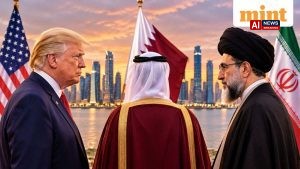
 Iran sends nuclear proposal via Qatar: How Doha emerged as a key mediator between US, Iran after distancing itself
 Democrats debate AI
 Eisenkot elected as Israel opposition leader
 President Herzog hands coalition mandate to Eisenkot
**
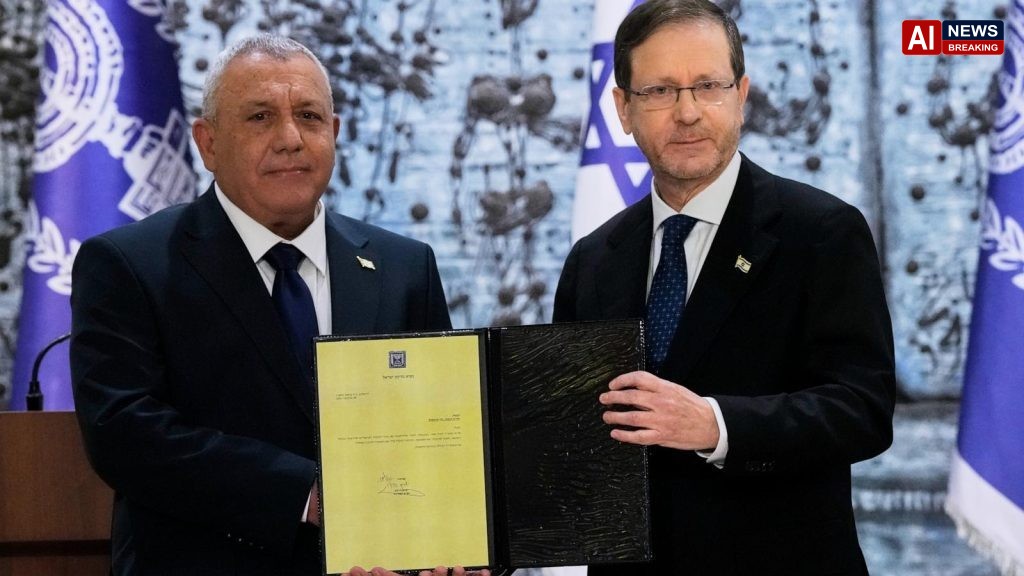
Israel’s president officially gives opposition leader Gadi Eisenkot the first chance to form the next government - AI News Breaking
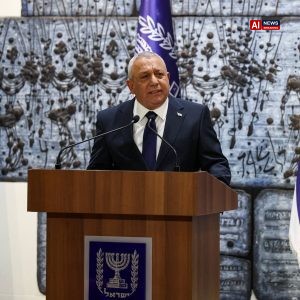
The president of Israel, Isaac Herzog, has formally handed the first mandate to form a government to opposition leader Gadi Eisenkot, a move that could reshape the country’s political landscape following a series of inconclusive elections. The gesture, announced in a ceremony at the presidential palace in Jerusalem, came after weeks of deliberation by Herzog’s office and a series of informal consultations with political leaders. Eisenkot, who heads the right‑leaning Telem party, has been seen as a potential bridge between the fragmented right‑wing bloc and the broader coalition that could secure a majority in the Knesset.The decision follows the most recent election held in March, in which the Israeli electorate split their votes across a crowded field of parties..
The right‑leaning bloc, led by Benjamin Netanyahu’s Likud, secured 30 seats, while the centrist Yesh Atid and the left‑leaning Labor party each gained 20 seats. No party achieved the 61 seats needed for an outright majority, and the post‑election negotiations stalled as coalition talks broke down over policy disagreements and power‑sharing disputes. In the interim, the outgoing Prime Minister, Netanyahu, remained in a caretaker role until a new government could be sworn in.President Herzog’s decision to give Eisenkot the mandate comes after a series of exploratory meetings between the president’s office and representatives of the major parties..
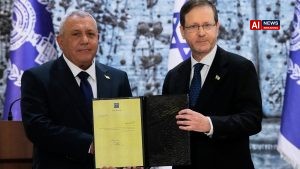
According to sources close to the process, Herzog consulted with senior officials from the Likud, Yesh Atid, and several smaller factions, all of whom expressed uncertainty about their willingness to form a coalition. Eisenkot, who has been a vocal critic of Netanyahu’s leadership style but has also shown a willingness to negotiate with the right‑wing bloc, was viewed as a compromise candidate capable of bringing together disparate groups.The formal handover involved Herzog presenting Eisenkot with an official document that outlines the mandate to negotiate and form a coalition. The document specifies that the mandate will expire if a government is not formed within a stipulated time frame, at which point Herzog would be free to approach other leaders for the task..
Eisenkot accepted the mandate on the spot, expressing gratitude for the opportunity and emphasizing his commitment to establishing a stable, inclusive government that could address pressing issues such as the cost of living, the ongoing conflict with Gaza, and the country’s long‑term security strategy.Eisenkot’s party, Telem, has traditionally positioned itself as a centrist, technocratic alternative, with a focus on pragmatic solutions over ideological posturing. He has been praised for his previous tenure as Minister of Internal Security, where he implemented reforms aimed at improving infrastructure and public services. His acceptance of the mandate signals a willingness to step into the centre of a complex coalition negotiation that will involve balancing the interests of right‑wing nationalists, liberal moderates, and left‑leaning socialists.Analysts note that Eisenkot’s mandate is not without challenges..
The Likud, which remains the largest party, is unlikely to accept a coalition headed by a Telem leader without significant concessions, such as ministerial posts and policy guarantees. Meanwhile, Yesh Atid and the Labor party have already signalled their reluctance to join a coalition that does not include Netanyahu or that shifts too far right. The task will therefore require Eisenkot to negotiate a broad, cross‑sectional agreement that addresses a range of policy areas, from settlement policy and security to economic reform and civil liberties.In addition to the political dynamics, the broader socio‑economic climate in Israel adds urgency to the process..
Inflation has surged, with consumer prices rising by more than 10 per cent in the past year, and the cost of housing continues to outpace wages. Public opinion polls indicate a growing frustration among Israelis, with many calling for decisive action to curb the economic downturn and to address the ongoing humanitarian crisis in Gaza. An effective coalition could potentially stabilize these conditions, but only if the parties can reach consensus on key fiscal and foreign‑policy matters.Eisenkot’s approach has already begun to shape the early stages of coalition talks..
He has reportedly met with senior leaders from the Likud, the National Unity Party, and the Labor movement to discuss possible arrangements. Preliminary reports suggest that Eisenkot is willing to consider a rotating premiership model, in which the prime minister role would shift among coalition partners over a fixed period. While such a model has never been implemented in Israel, it could offer a way to satisfy the competing demands for power and policy influence..
However, critics warn that rotating leadership could lead to instability and weaken the executive’s ability to respond to crises.The next step will involve formal negotiations, in which Eisenkot will need to secure at least 61 seats in the 120‑member Knesset. The coalition’s composition will ultimately determine its policy agenda. If Eisenkot can secure a majority, his government will inherit a host of immediate challenges, including the need to pass a budget, reform the judiciary, and manage the security situation on Israel’s borders..
His ability to navigate the delicate balance between the right and the left will be critical for maintaining the confidence of both the public and the international community.For now, the political scene in Israel remains in a state of cautious optimism. The handover of the mandate to Eisenkot represents a significant shift from the previous stalemate and offers a new avenue for constructive dialogue among Israel’s diverse political factions. Whether this will culminate in a stable, functioning government remains to be seen, but the opportunity for a fresh start is now on the table..
Updated: November 8, 2026
Insight: Herzog’s handover to Eisenkot signals a strategic pivot—Israel is betting that a technocratic, centrist figure can broker a fragile, cross‑stream coalition when hard‑line factions have stalled. If Eisenkot succeeds, the rotating‑premiership gamble may become a template for balancing competing