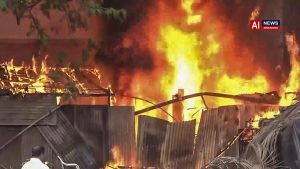
 Major fire breaks out in Mumbai’s Dongri, dousing ops on; one dead in November 7 highrise blaze
 Australia drops Marnus Labuschagne from New Zealand Test squad
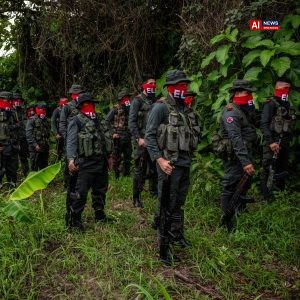
 Targeted by U.S., Armed Group Strikes Back in Colombia
 Here’s the full text of Jensen Huang’s memo to Nvidia
 Oscar Predictions: Best Casting — ‘Being Heumann’ and ‘La Bola Negra’ Found the Year’s Boldest Discoveries. Will the Academy Reward Them?
More Than 50 Killed in Yemen in One of the Deadliest 24 Hours of the War
**
More Than 50 Killed in Yemen in One of the Deadliest 24 Hours of the War - AI News Breaking
more than killed yemen:
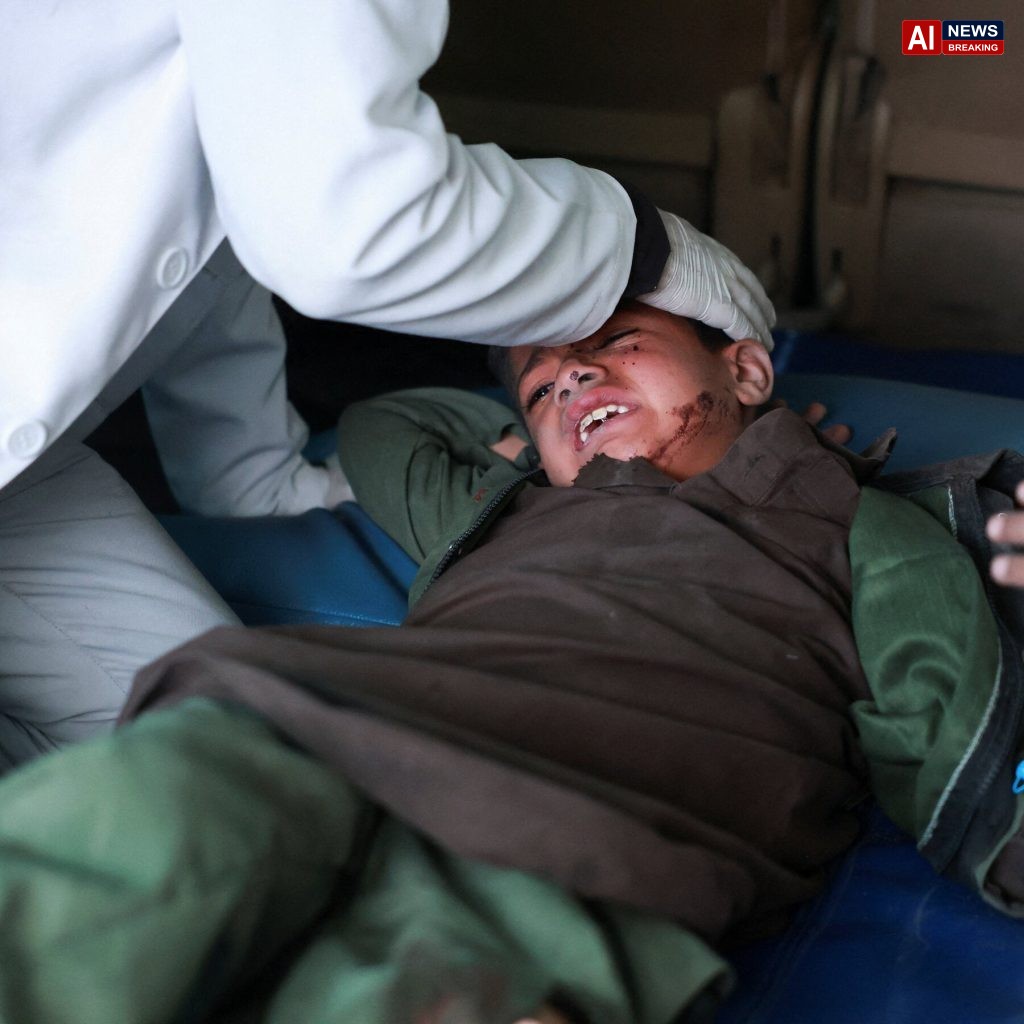
More Than 50 Killed in Yemen in One of the Deadliest 24 Hours of the War Strikes show the heavy toll since fighting between the Houthis and the Saudi‑backed government reignited in August, with civilians paying a heavy price. The United Nations reported that at least 52 people lost their lives and more than 120 were wounded during a series of air‑strikes and ground assaults that unfolded across Yemen’s central highlands on Thursday. The attacks, which targeted the provinces of Marib, Al‑Jawf and Saada, marked the deadliest 24‑hour period since hostilities flared anew in August..
Aid agencies said the majority of the casualties were civilians, many of them women and children trying to flee the fighting. The latest wave of violence came after a fragile ceasefire brokered by the United Nations in early September collapsed amid accusations of violations from both sides. The Houthi rebel movement, which controls the capital Sana’a and much of the north, claimed it was responding to “unprovoked Saudi‑backed air raids” on its positions..
The Saudi‑led coalition, meanwhile, insisted its strikes were aimed at “terrorist” sites linked to the Houthis and their Iranian backers. The resulting cross‑fire has left entire villages in ruins. In Marib, the oil‑rich province that the government sees as a vital economic lifeline, residential neighborhoods were hit by three separate missile strikes within a two‑hour window..
Satellite imagery released by the humanitarian group AirWatch shows craters the size of small cars, with smoke still rising from the debris. Local officials told reporters that the strikes destroyed a market, a school and a makeshift clinic that was treating wounded civilians from earlier clashes. Al‑Jawf, a sparsely populated agricultural region bordering Saudi Arabia, suffered a ground assault by government forces that pushed into Houthi‑held territory..
Witnesses described armored vehicles rolling through fields, firing indiscriminately at houses that appeared empty from the road. The United Nations Office for the Coordination of Humanitarian Affairs (OCHA) warned that the incursion could displace up to 15,000 people, already reeling from food shortages and a collapsing health system. Further north, in Saada, the historic stronghold of the Houthis, a series of air‑bursts from Saudi‑operated jets struck a densely packed refugee camp that had been set up for families fleeing earlier fighting..
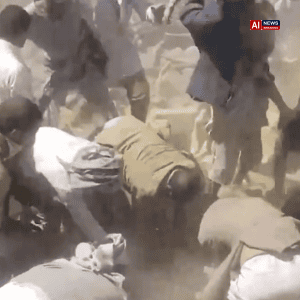
The camp, managed by the International Committee of the Red Cross, housed roughly 3,500 internally displaced persons. Survivors recounted the sound of a “massive explosion” followed by a cloud of dust that made it impossible to breathe, and many were forced to crawl out of collapsed tents with shattered limbs. Humanitarian organisations have condemned the escalation as “a blatant disregard for civilian life.” Médecins Sans Frontières (MSF) said its field hospital in Marib, which was already operating at capacity, was forced to turn away patients after a bomb destroyed its triage area..
“We are witnessing a humanitarian catastrophe on a scale we have not seen since the early years of the conflict,” said Dr. Leila Haddad, MSF’s regional director for Yemen. The United Nations has called for an immediate, unconditional ceasefire, urging both parties to return to the peace talks that were paused in late October..
ary‑General António Guterres, speaking from New York, described the latest bloodshed as “unacceptable” and warned that the war could spiral further without a renewed diplomatic push. He appealed directly to regional powers, including Saudi Arabia and Iran, to use their influence to de‑escalate the situation. Saudi Arabia, a key ally of the internationally recognised Yemeni government, issued a brief statement saying the coalition “remains committed to protecting Yemen’s sovereignty and will continue to target only legitimate military objectives.” The statement stopped short of acknowledging civilian casualties, a point that has drawn sharp criticism from human rights watchdogs..
Iran, which denies supplying weapons to the Houthis, condemned the coalition’s actions as “aggressive violations of international law.” In the capital, Sana’a, Houthi officials held a press conference in which they vowed “swift retaliation” against any further attacks on civilian areas. A senior Houthi commander, Ali al‑Alawi, warned that “the blood of the innocent will not be forgotten, and the response will be decisive.” The rhetoric raises concerns that the conflict could expand into a broader regional confrontation, especially given the involvement of external actors on both sides. International observers note that the pattern of targeting civilian infrastructure—markets, schools and health centres—has become increasingly common since the war’s resurgence..
A recent report by the International Crisis Group highlighted that both the coalition and the Houthis have used “indiscriminate firepower” as a tactic to pressure the opponent, despite UN Security Council resolutions demanding the protection of civilians. The report called for stronger monitoring mechanisms and possible sanctions against violators. For ordinary Yemenis, the numbers on paper translate into shattered families and a growing sense of hopelessness..
Fatima al‑Maqri, a 34‑year‑old mother from a village near Marib, recounted how her home was reduced to rubble and how she now carries her two youngest children, both under five, in search of shelter. “We have lost everything,” she whispered, eyes fixed on the horizon where smoke still lingered. “When will the war stop hurting our children?” Aid agencies fear that the latest surge in violence will undo months of painstaking progress in delivering food, clean water and medical supplies..
The World Food Programme warned.
Updated: November 8, 2026
UN officials say at least 52 people were killed and over 120 wounded in a wave of air‑strikes and ground assaults across Marib, Al‑Jawf and Saada, marking the deadliest 24‑hour period since the conflict reignited. Aid groups warn the attacks, which hit markets, schools and a refugee camp, could push tens of thousands more into displacement and deepen Yemen’s humanitarian crisis.