 Why political parties must be kept out of local body polls
 Gadi Eisenkot urges fast formation of new government to prevent crisis
 Thane Collector bans aerial rockets, similar firecrackers across district till January 8
Why political parties must be kept out of local body polls
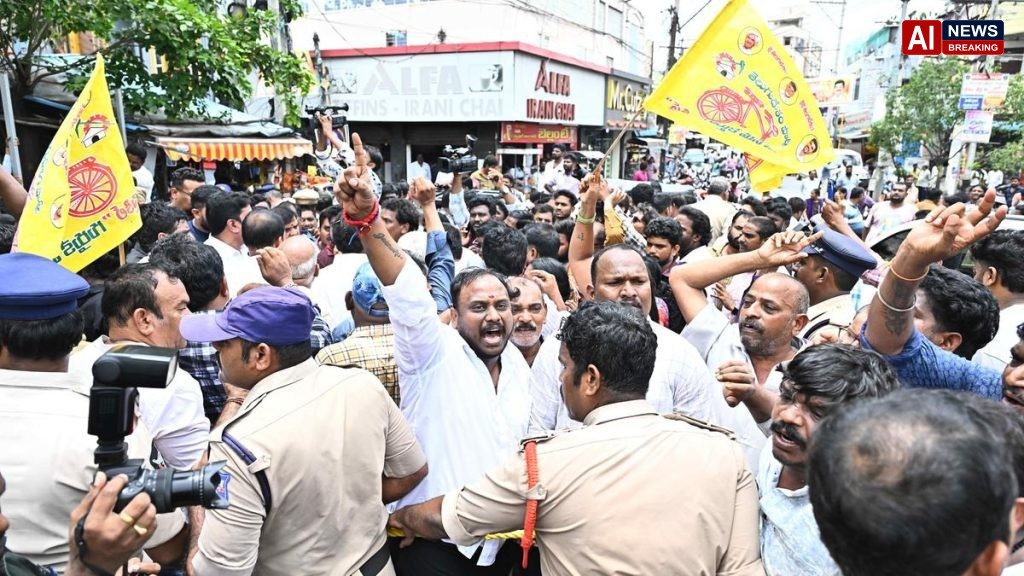
Why political parties must be kept out of local body polls - AI News Breaking
political parties must kept:
The decision to conduct elections for urban local bodies on the basis of political parties rather than on individual candidates has become a contentious issue in India’s democratic discourse. Advocates of a non‑party framework argue that it would restore the primary purpose of municipal governance—efficient public service delivery—by reducing the influence of partisan politics at the grassroots level. Critics, however, warn that excluding parties could lead to a fragmented decision‑making process, weaker accountability, and a potential vacuum that may be filled by informal power structures..
The debate hinges on whether the advantages of party‑based elections outweigh the risks associated with politicising local governance.One of the most frequently cited grievances is that party politics inject a level of competition that is more about electoral victory than civic responsibility. In party‑led polls, candidates are often expected to align with the broader ideological platform of their national or regional party, which can result in local issues being subsumed under a national narrative. For example, a candidate from a party that prioritises agrarian reform may find it difficult to focus on water management or waste disposal in a rapidly urbanising municipality..
Such misalignment can hamper the responsiveness of local bodies to the immediate needs of the community and divert attention from pragmatic solutions to partisan slogans.The influence of money in local elections is another concern. Party‑aligned candidates typically receive substantial financial backing from the party apparatus, which can create an uneven playing field. Small, independent candidates or local community leaders may struggle to match this funding, thereby reducing the diversity of voices in the council..
When political parties bring in large sums of money, the risk of corruption and rent‑seeking behaviour increases, as officials may feel indebted to party leaders for their financial support. This dynamic can undermine public trust in local institutions and erode the democratic ethos that local bodies are supposed to nurture.Proponents of a non‑party electoral system also point to the fragmentation that parties create within councils. In a party‑based system, the council is often divided into competing factions that prioritise their own agendas..
Such factionalism can slow down decision‑making processes, stall essential projects, and even lead to gridlock in situations where swift action is required. By contrast, a non‑party framework encourages individual representatives to collaborate across ideological lines, focusing on the practical outcomes of policy choices rather than partisan victories.Accountability is a double-edged sword in this context. While parties can provide a clear line of responsibility, they can also shield individual members from scrutiny by spreading blame across the entire organisation..
In a non‑party system, voters can assess each candidate’s performance on a case‑by‑case basis, holding them directly accountable for their actions. This individual accountability can incentivise officials to perform more diligently, as they know that their future electoral prospects depend on their personal track record rather than on the popularity of their party.Another argument in favour of removing party influence is the potential for increased public participation. When elections are not framed as battles between parties, voters may feel more empowered to support candidates based on local reputation and competence rather than on the party’s brand..
This could lead to a more engaged electorate, with citizens taking a proactive role in shaping municipal policies. Moreover, the absence of a party framework may reduce the influence of lobbyists and special interest groups that often operate through party channels, thereby promoting a more equitable distribution of resources.On the flip side, opponents of a non‑party system argue that parties provide essential organisational structures and resources that are indispensable for effective governance. Parties bring together like‑minded individuals who can pool expertise, coordinate policy initiatives, and mobilise public support..
In the absence of parties, local bodies may lack the capacity to formulate coherent long‑term strategies, especially in complex areas such as urban planning, infrastructure development, and public health. The absence of a shared ideology can result in a piecemeal approach, where each council member pursues their own agenda, leading to inconsistency in policy implementation.The legal framework surrounding local body elections also complicates the debate. The 74th Constitutional Amendment Act provides for the election of municipalities on a democratic basis, but it does not explicitly mandate party‑based or non‑party elections..
Some states have experimented with independent candidate lists, yet the majority of local elections remain party‑aligned. Changing this status quo would require constitutional amendments, extensive legal restructuring, and a consensus among political stakeholders, all of which pose significant hurdles.Historical evidence suggests that both models have their merits and pitfalls. In some regions, non‑party elections have produced councils that deliver high‑quality public services, while in others, the absence of a party apparatus has led to disjointed governance and a lack of vision..
Likewise, in states where parties have a stronghold over local elections, the resulting councils are often well‑organised and financially stable, but they can also be prone to nepotism and patronage. Thus, a nuanced approach that incorporates the strengths of both systems may be more pragmatic than an outright ban on party involvement.In conclusion, the question of whether political parties should be excluded from local body elections does not lend itself to a one‑size‑fits‑all answer. The potential benefits of reducing party influence—greater focus on local issues, reduced corruption, and enhanced individual accountability—must be weighed against the organisational advantages and the risk of fragmented governance that a non‑party system could introduce..
A balanced solution might involve reforms that limit the extent of party involvement—such as stricter regulations on campaign financing, clearer delineation of local issues, and mechanisms that promote cross‑party collaboration—while preserving the organisational strengths that parties bring to the electoral process. Only through such a measured approach can local bodies fulfil their mandate of providing efficient, transparent, and responsive governance to the communities they serve..
India’s debate over whether municipal elections should be party‑based or open to independents hinges on a trade‑off: parties promise organisational strength and accountability, but critics argue they dilute local focus, invite corruption and stall decision‑making. A hybrid model—tightening finance rules, clarifying local issues, and encouraging cross‑party collaboration—has emerged as the most pragmatic path forward.
This development highlights evolving dynamics and may have broader implications in the near term.