Europe warns of Russia’s hybrid attacks but struggles to counter them
  Former chief election commissioner calls SIR scheme illegal.
  A Corruption Scandal Is Reshaping Brazil’s Presidential Election
  US citizen injured in Illinois after ICE agents mistook him for fugitive, tried to arrest him
  At 10 years old, Smithsonian’s Black museum is undaunted amid pressure from Trump administration
 Jammu University Considers Removing Jinnah and Iqbal from Curriculum Amid Protests
A controversy has erupted at Jammu University over the potential removal of Mohammad Ali Jinnah and Allama Iqbal from the syllabus, with the university’s administration considering the move amid protests by the Akhil Bharatiya Vidyarthi Parishad (ABVP) and opposition from local political parties.
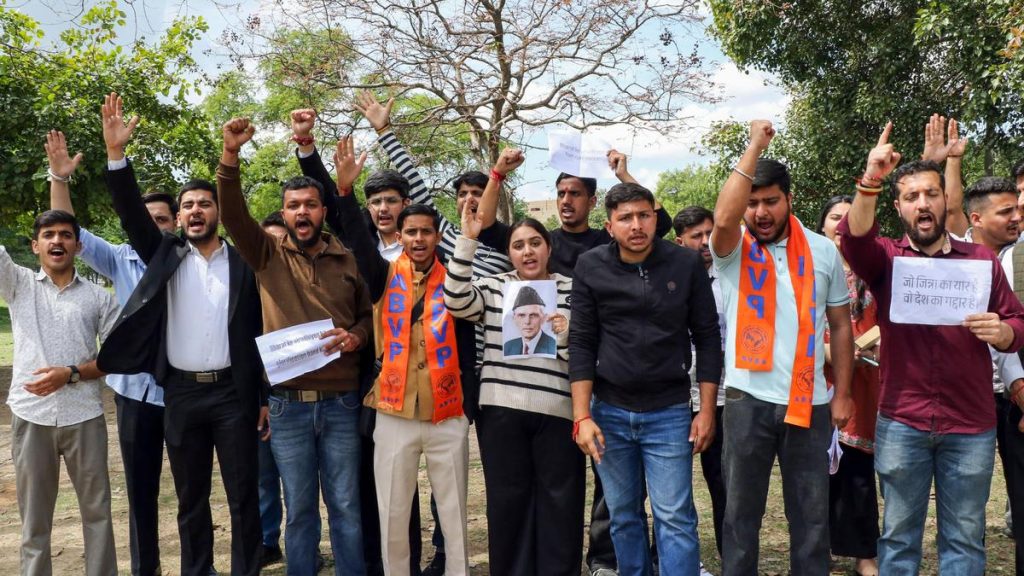
A controversy has erupted at Jammu University, where the administration is considering dropping Mohammad Ali Jinnah and Allama Iqbal from the syllabus, following protests by the Akhil Bharatiya Vidyarthi Parishad (ABVP). The ABVP, a prominent student organization, staged protests on Friday, demanding that a chapter on Jinnah be removed from the curriculum. In response, the university’s departmental affairs committee (DAC) convened a meeting on March 22 to discuss the issues raised regarding the syllabus.
The DAC meeting was chaired to deliberate on the concerns raised by the ABVP and to consider the possibility of modifying the curriculum. The move has sparked opposition from local political parties, including the National Conference (NC) and the People’s Democratic Party (PDP), which have expressed disagreement with the proposed changes. The controversy highlights the ongoing debates and tensions surrounding academic freedom and the representation of historical figures in educational curricula.
The ABVP has been vocal about its opposition to the inclusion of Jinnah and Iqbal in the syllabus, citing concerns about the historical context and the perceived impact on students. The organization’s protests on Friday were a manifestation of these concerns, which ultimately led to the DAC meeting. The university administration has not made any official statements about the potential changes to the curriculum, but the consideration of such modifications has already sparked a heated debate.
The opposition from NC and PDP is largely based on the argument that modifying the curriculum to appease a particular group’s demands could set a precedent for further interference in academic matters. The parties have emphasized the importance of maintaining academic freedom and ensuring that educational institutions remain apolitical. As the controversy unfolds, it remains to be seen how the university administration will navigate these complex issues and whether the proposed changes will be implemented.
The Jammu University controversy is not an isolated incident, as similar debates have been ongoing in other parts of the country. The role of historical figures like Jinnah and Iqbal in shaping the region’s history is a subject of much discussion and contention. The university’s decision will likely have implications beyond the campus, contributing to the broader discourse on academic freedom, historical representation, and the politics of education.
As the situation develops, the university community, including students, faculty, and administrators, will be closely watching the outcome of the DAC’s deliberations. The decision to modify the curriculum or maintain the status quo will have significant implications for the academic environment and the representation of diverse perspectives within the institution. The Jammu University controversy serves as a reminder of the complexities and challenges involved in shaping educational curricula, particularly in contexts where historical and political sensitivities are involved.