Europe warns of Russia’s hybrid attacks but struggles to counter them
  Former chief election commissioner calls SIR scheme illegal.
  A Corruption Scandal Is Reshaping Brazil’s Presidential Election
  US citizen injured in Illinois after ICE agents mistook him for fugitive, tried to arrest him
  At 10 years old, Smithsonian’s Black museum is undaunted amid pressure from Trump administration
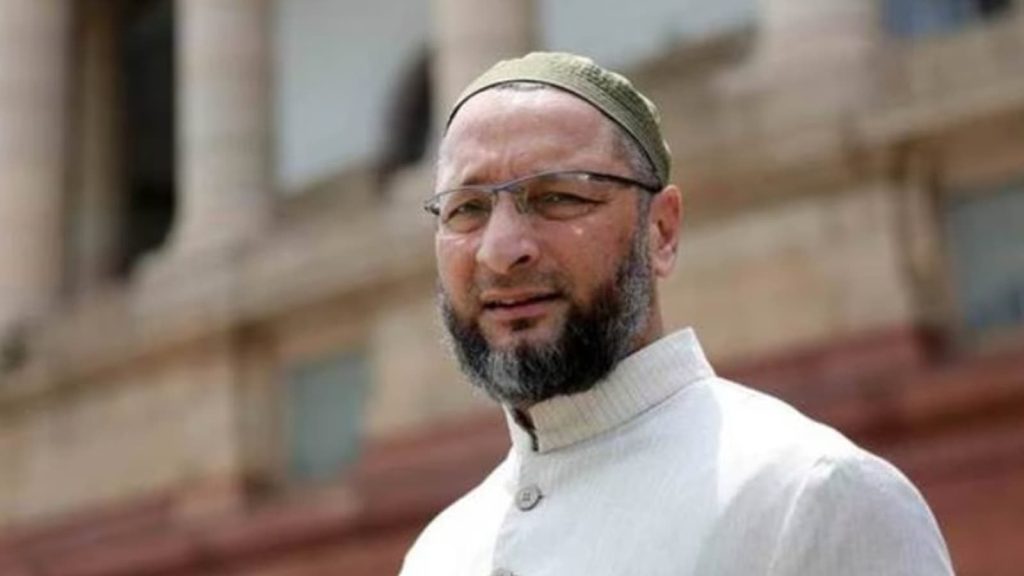
 Asaduddin Owaisi’s Bengal Entry and Alliance with Humayun Kabir Reshape Minority Vote Dynamics Ahead of Elections
asaduddin owaisis bengal entry:
Asaduddin Owaisi’s Bengal entry
The political landscape in West Bengal is witnessing a fresh wave of realignment as Asaduddin Owaisi, leader of the All India Majlis-e-Ittehad-ul-Muslimeen, makes a renewed push into the state. His strategic tie-up with Humayun Kabir has introduced a new variable in the already complex electoral arithmetic of minority-dominated constituencies.
This development is expected to significantly impact the political dynamics in several districts where minority votes play a decisive role, potentially altering the balance of power among key players such as the Trinamool Congress, Bharatiya Janata Party, and the Indian National Congress.
Owaisi’s Strategic Expansion into Bengal
Asaduddin Owaisi has been steadily expanding the footprint of AIMIM beyond its traditional strongholds in states like Telangana and Maharashtra. His foray into West Bengal is not entirely new, but this time, it appears more calculated and structured.
By aligning with Humayun Kabir, a leader with grassroots influence in parts of Bengal, Owaisi aims to consolidate sections of minority voters who may feel politically underrepresented or dissatisfied with existing parties.
Kabir’s local credibility, combined with AIMIM’s assertive minority-centric politics, is being viewed as a potentially potent combination that could disrupt traditional voting patterns.
Minority Vote: The Decisive Factor
Minority voters, particularly Muslims, constitute a significant proportion of the electorate in several constituencies across districts such as Murshidabad, Malda, Uttar Dinajpur, and North 24 Parganas.
Historically, these votes have largely consolidated behind the Trinamool Congress, led by Mamata Banerjee, especially after the decline of the Left and Congress in the state.
However, Owaisi’s entry introduces the possibility of vote fragmentation. Even a small shift in minority votes could have outsized effects in tightly contested seats, particularly in a first-past-the-post electoral system.
Impact on Trinamool Congress
For the Trinamool Congress, Owaisi’s move presents a new challenge. The party has built a strong support base among minority communities, often positioning itself as their primary political representative in Bengal.
The emergence of AIMIM, especially with a local ally like Kabir, could erode this base in select constituencies. Political analysts suggest that while AIMIM may not win a large number of seats, it could act as a “vote-cutter,” indirectly benefiting rival parties such as the BJP.
BJP’s Calculated Advantage
The Bharatiya Janata Party could potentially gain from this shifting dynamic. In constituencies where the opposition vote is divided, even a modest consolidation of majority votes could help BJP candidates secure victories.
This scenario has played out in other states where AIMIM has contested elections, leading to debates about whether the party’s presence inadvertently benefits the BJP by splitting anti-BJP votes.
Congress and Left: Struggling for Relevance
The Indian National Congress and Left parties, once dominant forces in Bengal, are also closely watching these developments. Both have been trying to regain lost ground, particularly in minority-heavy regions.
However, Owaisi’s assertive positioning and Kabir’s local influence may further complicate their efforts, as they compete for the same voter base.
Humayun Kabir’s Role in the Alliance
Humayun Kabir plays a crucial role in this new political equation. Known for his grassroots connect and regional influence, Kabir brings local organizational strength that AIMIM previously lacked in Bengal.
His association lends credibility to Owaisi’s campaign and could help mobilize voters at the ground level. This partnership is being seen as a tactical move to bridge the gap between AIMIM’s national ambitions and Bengal’s local political realities.
Ground-Level Sentiment and Voter Behavior
Initial reactions from the ground indicate a mixed response. While some voters see Owaisi as a strong voice for minority rights, others remain loyal to established parties like the Trinamool Congress.
There is also a section of voters who are cautious about splitting votes, especially in a politically polarized environment where electoral outcomes can hinge on narrow margins.
Broader Political Implications
Owaisi’s entry into Bengal is part of a larger strategy to position AIMIM as a pan-India political force representing minority interests. The party has already made inroads in states like Bihar and Uttar Pradesh, and Bengal represents another key battleground.
If successful, this expansion could redefine political alliances and voter alignments in multiple states.
Electoral Arithmetic: A New Variable
The introduction of AIMIM into Bengal’s political equation adds complexity to electoral calculations. Traditional vote banks are no longer guaranteed, and parties must now account for a multi-cornered contest in several constituencies.
Even a marginal shift in vote share could determine outcomes in closely fought seats, making Owaisi’s role disproportionately significant.