Europe warns of Russia’s hybrid attacks but struggles to counter them
  Former chief election commissioner calls SIR scheme illegal.
  A Corruption Scandal Is Reshaping Brazil’s Presidential Election
  US citizen injured in Illinois after ICE agents mistook him for fugitive, tried to arrest him
  At 10 years old, Smithsonian’s Black museum is undaunted amid pressure from Trump administration
 Manoj Sinha Sparks Debate: Ancient India’s Hidden Impact on Western Science Revealed
** “In a thought-provoking address, Lieutenant Governor Manoj Sinha sparked debate about the roots of human knowledge and innovation, claiming that ancient India had a profound impact on Western science and technology. Discover how his assertion is challenging our understanding of the development of science and technology.”
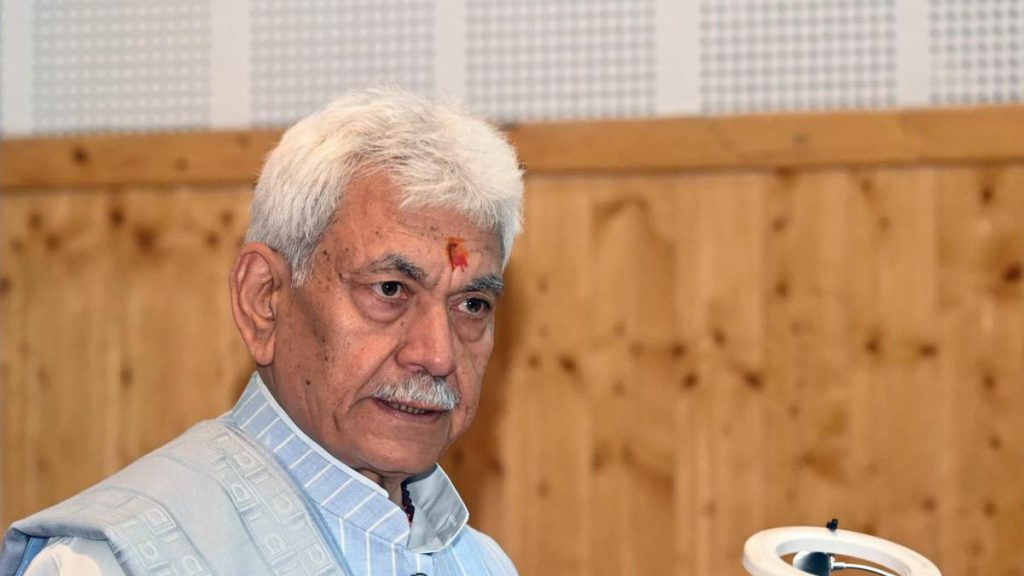
In a thought-provoking address, Lieutenant Governor of Jammu and Kashmir, Manoj Sinha, has sparked an intense debate about the roots of human knowledge and innovation.
Sinha asserted that ancient India had a profound impact on the development of science in Persia and the West, playing a pivotal role in bringing about the transition from the Stone Age to the modern era.
Updated: June 3, 2026
In a thought-provoking address, Lieutenant Governor of Jammu and Kashmir, Manoj Sinha, has sparked an intense debate about the roots of human knowledge and innovation. Sinha asserted that ancient India had a profound impact on the development of science in Persia and the West, playing a pivotal role in bringing about the transition from the Stone Age to the modern era.
During the third edition of the Kashmir Literature Festival in Srinagar, Sinha revealed that the scientific knowledge of ancient India extended far beyond the country’s borders, greatly influencing intellectual and cultural movements in Persia and the West. According to Sinha, Indian scholars made significant contributions to mathematics, physics, astronomy, and medicine, many of which were later adopted by Western societies.
Sinha’s remarks shed new light on the often-unsung achievements of ancient Indian scholars, who were instrumental in laying the foundation for modern scientific discoveries. This assertion stands in direct contrast to the prevailing narrative that ancient civilizations such as Greece and Egypt were the precursors to modern science. However, Indian scholars such as Aryabhata, who posited that the Earth rotates on its own axis, and Charaka, who described the concept of the humoral theory of medicine, demonstrate that the origins of human knowledge are far more complex than previously thought.
The implications of Sinha’s assertion are far-reaching, challenging our understanding of the trajectory of scientific progress and the role of ancient civilizations in shaping modern society. By highlighting the significant contributions of Indian scholars, Sinha underscores the importance of acknowledging and appreciating the diversity of human knowledge and innovation. This, in turn, underscores the need for a more nuanced understanding of the development of science and technology, one that takes into account the complex interplay of cultural and intellectual influences that have shaped modern society.
Sinha’s comments also come at a time when there is a growing recognition of the need to celebrate and preserve the rich cultural heritage of ancient civilizations, including that of ancient India. By challenging the conventional narrative around the origins of science, Sinha’s remarks serve as a powerful reminder of the importance of respecting and preserving the intellectual and cultural achievements of the past.
This newfound understanding of the significance of ancient Indian scientific knowledge has the potential to inspire new generations of scholars, scientists, and innovators. By recognizing the profound impact that ancient Indian scholars had on the development of science in the West, we can begin to appreciate the profound value of cross-cultural exchange and collaboration, a process that has been critical in driving human innovation and progress throughout history.
Furthermore, Sinha’s remarks also resonate with broader debates around the role of science in society, the impact of colonialism on the preservation of cultural heritage, and the complexities of intellectual property and ownership. By acknowledging the intellectual and cultural contributions of ancient Indian scholars, we can begin to address these complex issues and work towards a more inclusive and equitable understanding of the development of human knowledge.
While there is still much to be learned and discovered about the significance of ancient Indian scientific knowledge, Sinha’s assertion serves as a powerful reminder of the importance of respecting and preserving the intellectual and cultural achievements of the past. As we move forward in a rapidly changing world, where science and technology play an increasingly critical role in shaping our future, we would do well to remember the profound contributions that ancient Indian scholars made to the development of human knowledge.
Why this matters
Sinha’s assertion is significant on multiple levels, serving as a crucial reminder of the importance of acknowledging and appreciating the diversity of human knowledge and innovation. By challenging the conventional narrative around the origins of science, Sinha’s remarks underscore the need for a more nuanced understanding of the development of science and technology, one that takes into account the complex interplay of cultural and intellectual influences that have shaped modern society. Furthermore, this newfound understanding of the significance of ancient Indian scientific knowledge has the potential to inspire new generations of scholars, scientists, and innovators to work towards a more inclusive and equitable understanding of the development of human knowledge.
Future outlook
As we continue to grapple with the complexities of intellectual and cultural exchange, Sinha’s assertion serves as a powerful reminder of the importance of respecting and preserving the intellectual and cultural achievements of the past. With ongoing efforts to digitize and preserve ancient texts, manuscripts, and other cultural artifacts, there may be greater opportunities for scholars and researchers to uncover new evidence about the significance of ancient Indian scientific knowledge. Furthermore, as we move forward in a rapidly changing world, where science and technology play an increasingly critical role in shaping our future, it is essential that we recognize and celebrate the profound contributions that ancient Indian scholars made to the development of human knowledge.
Manoj Sinha's assertion challenges our understanding of the trajectory of scientific progress, suggesting that ancient India's contributions to mathematics, physics, and medicine may have been more significant than traditionally thought. This could fundamentally alter our approach to intercultural learning and innovation, encouraging a more inclusive and nuanced appreciation of human knowledge.