 Record Gold Prices Are Fueling Deadly Disease Outbreaks
 Former Vice-President Dhankhar to move to Tilak Marg apartment from Dec. 1 pending official accommodation
 Who Is Alberto Núñez Feijóo, Spain’s Conservative Opposition Leader?
 Delimitation Bill: Stalin rejects Rahul’s overture, as INDIA bloc delegation heads to Chennai
 Delimitation Bill: INDIA bloc leaders head to Chennai and Mumbai in last minute effort to convince DMK, NCP
It Took Her Years to Land a Government Job in India. Then It Got Canceled.
**
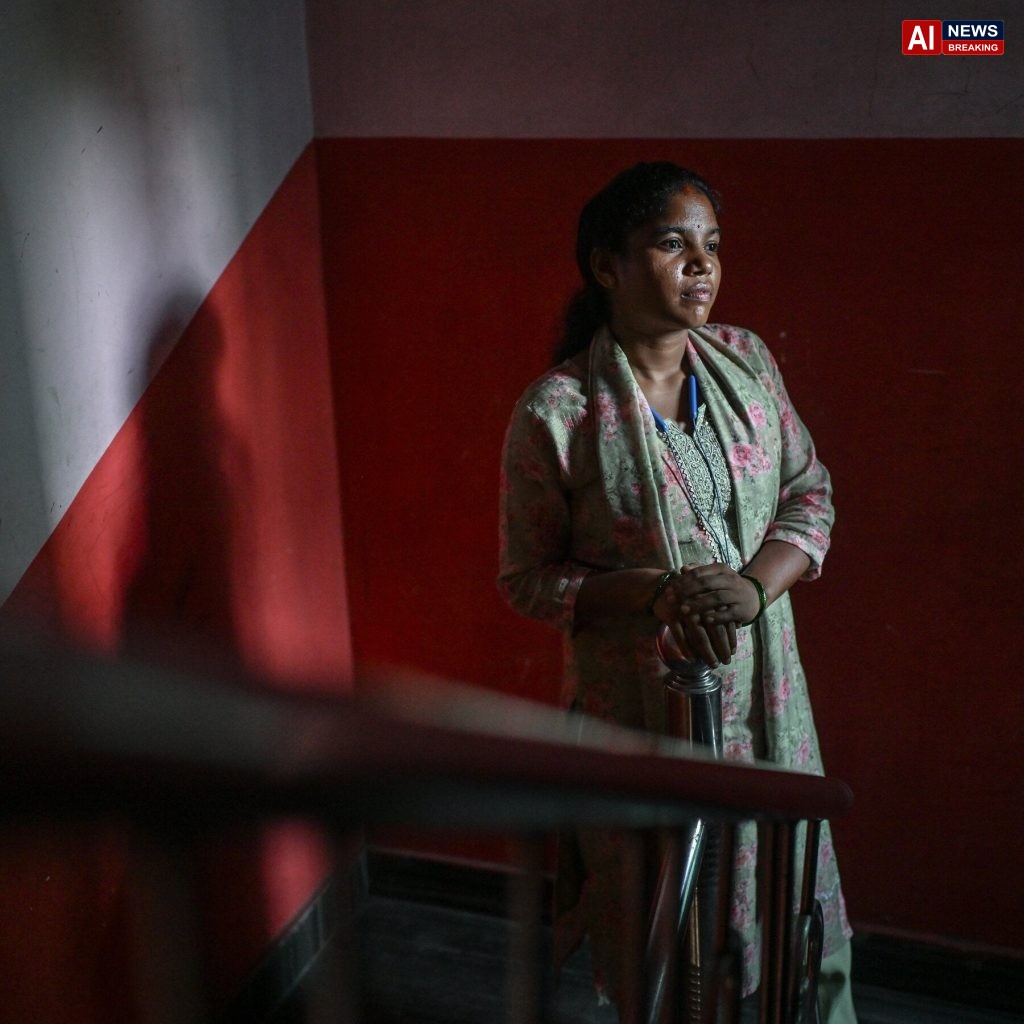
It Took Her Years to Land a Government Job in India. Then It Got Canceled. - AI News Breaking
took years land government:
Shivani Tirkey had spent more than a decade grinding through the competitive civil‑service examinations that promise entry into India’s prized government cadre. After countless mock tests, tutoring sessions and the inevitable setbacks that accompany the notoriously tough selection process, she finally secured a place in the final merit list for a senior administrative post in the state of Jharkhand. The achievement was celebrated not only by her family but also by a small community of aspirants who have long regarded such success as a beacon of upward mobility in a region still wrestling with poverty and limited infrastructure..
For Tirkey, the appointment represented the culmination of years of sacrifice, late‑night study sessions and the hope of contributing to the very system she had once critiqued from the outside.Her optimism, however, was abruptly shattered in early March when the Jharkhand Public Service Commission (JPSC) announced a suspension of the entire recruitment cycle. The decision followed a wave of protests and media scrutiny over alleged irregularities in the computer‑based aptitude tests that form the first stage of the selection process. According to the commission’s statement, a “technical glitch” had compromised the integrity of the test‑taking platform, prompting an internal audit that uncovered discrepancies in score calculations for thousands of candidates..
The commission said it would re‑examine the results, but the move effectively left the entire batch of successful applicants, including Tirkey, in limbo.The controversy erupted after a group of candidates filed a petition in the Jharkhand High Court, alleging that the test software had been tampered with to favor certain regional quotas. The petition was bolstered by a whistleblower from the software vendor, who claimed that the code had been altered just days before the examination to inflate the marks of a select group of applicants. While the vendor denied any wrongdoing, the court ordered an immediate freeze on the issuance of appointment letters until a thorough investigation could be completed..
The court’s intervention added a legal dimension to the already volatile situation, drawing attention from national media outlets and prompting the state government to set up an independent committee to oversee the probe.The independent committee, chaired by a former senior Indian Administrative Service officer, began its inquiry by reviewing server logs, interviewing examiners and cross‑checking the biometric data of candidates. Preliminary findings released last week indicated that the test platform had indeed experienced a “systemic error” that affected the scoring algorithm for a subset of users. The error, described as a “faulty weightage assignment” in the algorithm, had resulted in inflated scores for about 5 per cent of the examinees..
Although the committee stopped short of naming specific individuals, the implication was clear: the merit list, which had been hailed as a triumph for aspirants like Tirkey, could not be considered reliable.For Tirkey, the fallout has been both personal and professional. She had already resigned from her part‑time teaching job, expecting a seamless transition into the civil service. The uncertainty has left her without a stable income and with the prospect of a lengthy legal battle that could further delay any possible appointment..
“I have spent the last ten years preparing for this moment,” she told reporters outside her modest home in Ranchi. “Now I am forced to wait, not knowing whether my name will ever appear on the final list again.” Her words echo a broader sentiment among the 3,000 candidates whose futures are now tethered to the outcome of an investigation that could stretch months, if not years.The situation has also ignited a debate over the fairness of India’s recruitment processes, particularly in states where digital infrastructure is still developing. Critics argue that reliance on a single, centrally administered computer‑based test makes the system vulnerable to technical failures and opens avenues for manipulation..
They point to previous incidents in other states where similar glitches forced the postponement of exams, citing the need for a more robust, transparent mechanism that includes manual verification steps and third‑party oversight. Proponents of the digital model, however, contend that computer‑based testing is essential for handling the sheer volume of applicants and for standardising assessment criteria across diverse linguistic and geographical backgrounds.Political ramifications have not been far behind. The ruling Jharkhand Mukti Morcha (JMM) government, already under pressure for its handling of unemployment and rural development, faced renewed criticism from opposition parties that seized on the controversy to question the administration’s competence..
In the state assembly, the opposition Bharatiya Janata Party (BJP) demanded a parliamentary inquiry, accusing the JPSC of collusion with private contractors. The JMM, for its part, defended the commission’s autonomy while promising swift corrective action. “We cannot allow a technical lapse to undermine the aspirations of our youth,” said a senior JMM spokesperson, adding that the government would ensure that any affected candidates receive due compensation.Amid the political back‑and‑forth, civil‑society organisations have rallied to support the aggrieved candidates..
A coalition of NGOs, including the Centre for Social Justice and the National Association of Student Leaders, organized a peaceful march in Ranchi last weekend, calling for transparent proceedings and immediate relief for those whose livelihoods are at stake. The coalition’s manifesto urges the state to set up a fast‑track tribunal to adjudicate disputes arising from the test irregularities and to provide interim stipends to the affected aspirants. Their demands reflect a growing awareness that the stakes extend beyond individual careers to the broader credibility of India’s merit‑based recruitment ethos.Legal experts warn that the High Court’s involvement may set a precedent for future challenges to digital examinations across the country..
“If the court finds that the procedural safeguards were insufficient, it could compel all state commissions to overhaul their testing protocols,” said Meera Sinha, a constitutional law professor at the University of Delhi. “Such a ruling would have far‑reaching implications, potentially prompting the central government to issue uniform guidelines for electronic assessments.” The possibility of a nationwide overhaul has already spurred discussions among policymakers about establishing a central authority to certify examination software, akin to the regulatory frameworks governing banking or telecommunications.In the meantime, the JPSC has announced that it will conduct a re‑examination for the affected candidates, scheduled tentatively for early next year. The commission claims that the new test will be administered on a secured, offline platform to prevent any further technical manipulation..
While this move offers a glimmer of hope for aspirants like Tirkey, it also means that those who had already cleared the initial hurdle will have to endure another round of intense preparation, often while juggling financial constraints and familial responsibilities. “It feels like a second exam before we even get a chance to start working,” said another candidate, who asked to remain anonymous for fear of professional repercussions.The broader impact of the episode may linger in the public’s perception of the civil‑service recruitment.
Updated: November 29, 2026
After a decade of preparation, Shivani Tirkey’s entry into Jharkhand’s civil service was stalled when the state’s recruitment board halted the exam results over alleged software glitches that inflated scores for a fraction of candidates. A court‑ordered probe and plans for a fresh offline test have left thousands of aspirants in limbo, sparking political criticism and calls for overhauling digital exam safeguards.