 Record Gold Prices Are Fueling Deadly Disease Outbreaks
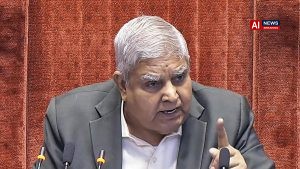
 Former Vice-President Dhankhar to move to Tilak Marg apartment from Dec. 1 pending official accommodation
 Who Is Alberto Núñez Feijóo, Spain’s Conservative Opposition Leader?
 Delimitation Bill: Stalin rejects Rahul’s overture, as INDIA bloc delegation heads to Chennai
 Delimitation Bill: INDIA bloc leaders head to Chennai and Mumbai in last minute effort to convince DMK, NCP
Former Vice-President Dhankhar to move to Tilak Marg apartment from Dec. 1 pending official accommodation
** Former Vice‑President Jagdeep Dhankhar will take up residence in the Tilak Marg official apartment on 1 December, the first instance of a former vice‑president receiving government‑owned housing after leaving office. The six‑month allocation, granted amid his health‑related resignation, highlights emerging policies on post‑service accommodation for senior Indian officials.
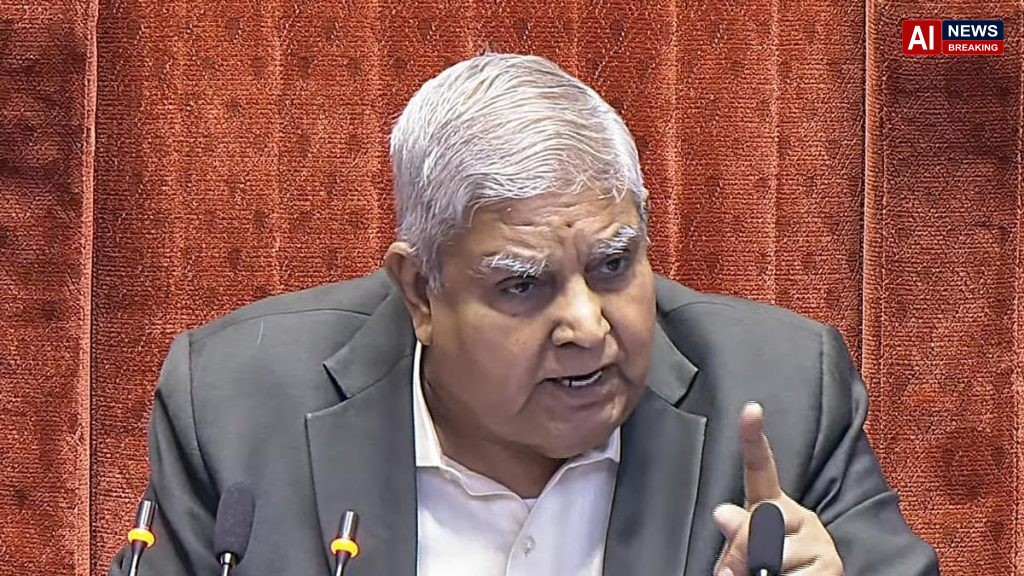
Former Vice-President Dhankhar to move to Tilak Marg apartment from Dec. 1 pending official accommodation - AI News Breaking
former vicepresident dhankhar move:
Former Vice‑President Jagdeep Dhankhar is set to take up residence in the official apartment on Tilak Marg from 1 December, the Ministry of Housing and Urban Affairs confirmed on Thursday. The move marks the first time a former holder of the nation’s second‑highest constitutional office has been allocated a government‑owned dwelling after leaving office. Sources within the ministry said the decision was taken in line with existing protocols that provide former vice‑presidents with temporary accommodation while a permanent residence is arranged, should they not have suitable private housing..
The allocation, they added, will be for a period of six months, after which the former vice‑president may request an extension.Dhankhar stepped down from the vice‑presidency on 21 July 2025, citing serious health concerns that required him to follow medical advice and reduce the demanding schedule associated with the role. His resignation, the first by a vice‑president in over three decades, prompted a flurry of political commentary and raised questions about the support structures available to senior office‑holders facing health challenges. In his resignation letter, Dhankhar highlighted the need for “a focused recovery period away from the pressures of public office,” and expressed confidence that his successor would uphold the dignity of the office.The temporary residence at Tilak Marg, situated in the heart of New Delhi’s diplomatic enclave, has traditionally housed serving vice‑presidents and, on occasion, senior ministers awaiting permanent postings..
The apartment, a three‑bedroom flat spanning approximately 3,200 square feet, is fully furnished and equipped with security installations, a private garden, and a dedicated staff complement. While the property remains under the jurisdiction of the Ministry of Housing, it is maintained by a team of civil servants who ensure that occupants receive uninterrupted utilities and housekeeping services.Analysts note that the allocation of the Tilak Marg flat to a former office‑holder underscores a broader trend in Indian governance to provide dignified post‑service arrangements for high‑ranking officials. “There is an emerging recognition that the welfare of former leaders, especially those who leave office due to health reasons, is a matter of national interest,” said Dr..
Meera Singh, a senior fellow at the Institute of Public Administration. “Ensuring they have suitable accommodation reflects a commitment to uphold the esteem of the constitutional offices they once occupied.”Critics, however, argue that the use of premium government housing for a former vice‑president may set a precedent that could strain public resources if applied indiscriminately. A petition filed last month by a coalition of civil society groups called for greater transparency in the allocation process, demanding that the criteria for such accommodations be publicly disclosed..
The petitioners contend that the public should be assured that the decision is not driven by political patronage but by genuine necessity. The Ministry responded that the allocation was made after a routine review of Dhankhar’s medical reports and his expressed need for a stable, secure environment conducive to recovery.Health experts have welcomed the move, emphasizing the importance of a conducive living environment for individuals recovering from serious ailments. “A calm, well‑maintained residence can significantly aid in the recuperation process, especially for conditions that require regular monitoring and limited exposure to external stressors,” explained Dr..
Anil Kapoor, a cardiologist at the All India Institute of Medical Sciences. “Given the vice‑president’s previous schedule, which involved extensive travel and public engagements, a stable home base is essential for adherence to treatment protocols.”The decision also carries symbolic weight, as Tilak Marg has been associated with the nation’s highest echelons of power since the early post‑independence era. The address has housed former presidents, prime ministers, and senior diplomats, embedding it within the collective imagination as a site of authority and continuity..
By moving into this enclave, Dhankhar will remain within the orbit of the capital’s political landscape, albeit in a reduced, non‑official capacity. Observers suggest that the proximity may facilitate informal interactions with current officials, allowing him to contribute his experience to ongoing policy discussions if he chooses.In the days following the announcement, the Vice‑President’s office issued a brief statement affirming Dhankhar’s gratitude for the support extended by the government. “I appreciate the Ministry’s swift action in ensuring a dignified living arrangement during my recovery,” the statement read..
“My focus remains on regaining health, and I look forward to serving the nation in any capacity that my condition permits.” The statement stopped short of indicating any future political ambitions, a point that has fueled speculation among commentators about a possible advisory role or involvement in charitable initiatives.The broader political context cannot be ignored. Dhankhar’s resignation came at a time of heightened partisan tensions, with the ruling coalition facing criticism over its handling of public health crises and economic reforms. While his departure was officially framed as a personal health decision, opposition leaders seized the moment to question the adequacy of support provided to senior officials, urging the government to institutionalize more robust health and welfare schemes..
The allocation of the Tilak Marg residence may be viewed as a tangible response to such criticisms, signaling a willingness to address the welfare of former office‑holders.As 1 December approaches, preparations are underway to ready the apartment for Dhankhar’s arrival. Security protocols are being updated, and a small team of aides has been assigned to oversee the transition. The Ministry of Housing has indicated that the move will be low‑key, with no public ceremonies, respecting the former vice‑president’s desire for privacy during his convalescence..
Whether this episode will set a lasting precedent for post‑service accommodation remains to be seen, but it highlights the evolving intersection of health, governance, and the symbolic spaces that house India’s senior leaders..
Updated: November 29, 2026
By turning a premier diplomatic residence into a recovery sanctuary, India signals that elite health is now a matter of statecraft, blurring the line between personal convalescence and political capital.
If this precedent sticks, future exits from high office may be judged as much by the comfort of their post‑service housing as