Europe warns of Russia’s hybrid attacks but struggles to counter them
  Former chief election commissioner calls SIR scheme illegal.
  A Corruption Scandal Is Reshaping Brazil’s Presidential Election
  US citizen injured in Illinois after ICE agents mistook him for fugitive, tried to arrest him
  At 10 years old, Smithsonian’s Black museum is undaunted amid pressure from Trump administration
 Noida Workers Demand Increased Minimum Wage, Sparking Protests in Uttar Pradesh
** Noida, a major industrial hub in Uttar Pradesh, has witnessed widespread protests from workers demanding higher minimum wages, sparking a broader conversation about the need for more transparent and fair wage fixation policies in the state. The workers’ key demands center around a substantial increase in the minimum wage, ranging from 25,000 to 30,000 rupees per month, to ensure they can afford basic necessities.
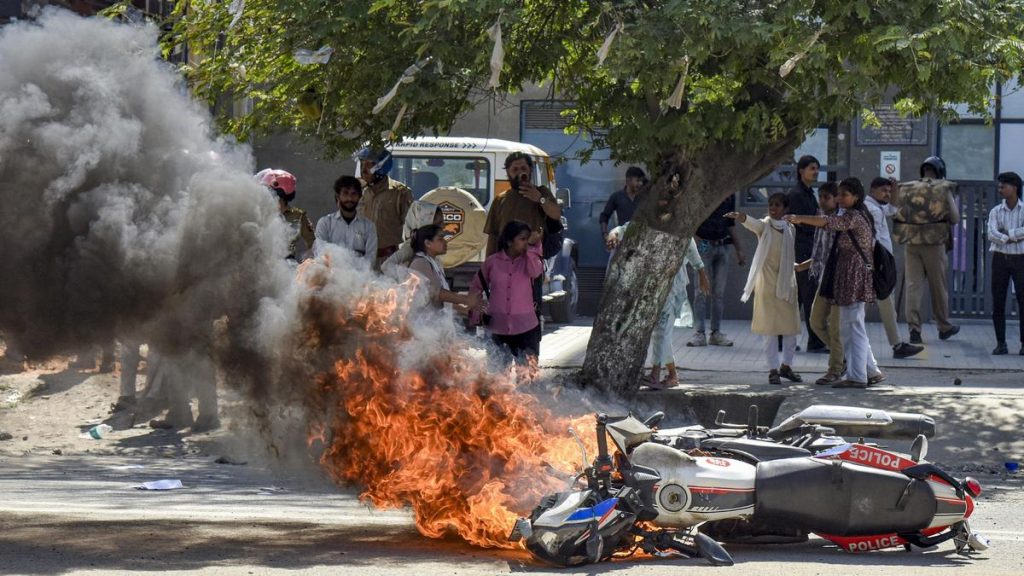
Noida, a major industrial hub in Uttar Pradesh, India, witnessed widespread protests from workers demanding higher minimum wages. The unprecedented display of collective discontent is rooted in a sense of frustration and dissatisfaction with the current wage rates, which are considered woefully inadequate by the workers.
According to workers, the current minimum wage of approximately 17,000 rupees per month is insufficient to cover basic living expenses. As a result, many workers are struggling to make ends meet, sparking calls for a significant wage hike. In response to these demands, trade unionists and workers representatives have organized protests, sit-ins, and rallies across Noida, drawing attention to their plight and seeking redress from the authorities.
The Noida workers’ key demands center around a substantial increase in the minimum wage, ranging from 25,000 to 30,000 rupees per month. They argue that this higher wage rate is essential to ensure that workers can afford basic necessities, including housing, food, and healthcare. Workers have also expressed their discontent with the existing wage fixation mechanism, which they believe is flawed and ineffective.
In Uttar Pradesh, the minimum wage is determined by the State Minimum Wages Advisory Board, comprising representatives from various stakeholders, including trade unions and employers. However, workers argue that the current wage rates fail to account for the rising cost of living, leaving many workers vulnerable and impoverished. In response to the protests, the Uttar Pradesh government has promised to take steps to address workers’ concerns and improve the state’s wage fixation mechanism.
Government officials have acknowledged the workers’ demands and promised to consider their suggestions. A meeting has been convened between government representatives and workers’ representatives to discuss the proposed wage hike and its implications. In a bid to address workers’ grievances, the government has also announced plans to re-examine the minimum wage fixation mechanism to ensure it accurately reflects the changing economic landscape of the region.
As tensions continue to simmer, workers are determined to press their demands until they are met. While a resolution has yet to be reached, the protests have sparked a broader conversation about the need for more transparent and fair wage fixation policies in Uttar Pradesh. As the state government grapples with the workers’ demands, a resolution that balances competing interests is eagerly awaited by stakeholders and workers affected by the minimum wage disputes.
The dispute highlights the pressing need to review and revise wage fixation policies in Uttar Pradesh to ensure they reflect
This is a developing story. More updates will follow as new information becomes available.
This is a developing story. More updates will follow as new information becomes available.