Europe warns of Russia’s hybrid attacks but struggles to counter them
  Former chief election commissioner calls SIR scheme illegal.
  A Corruption Scandal Is Reshaping Brazil’s Presidential Election
  US citizen injured in Illinois after ICE agents mistook him for fugitive, tried to arrest him
  At 10 years old, Smithsonian’s Black museum is undaunted amid pressure from Trump administration
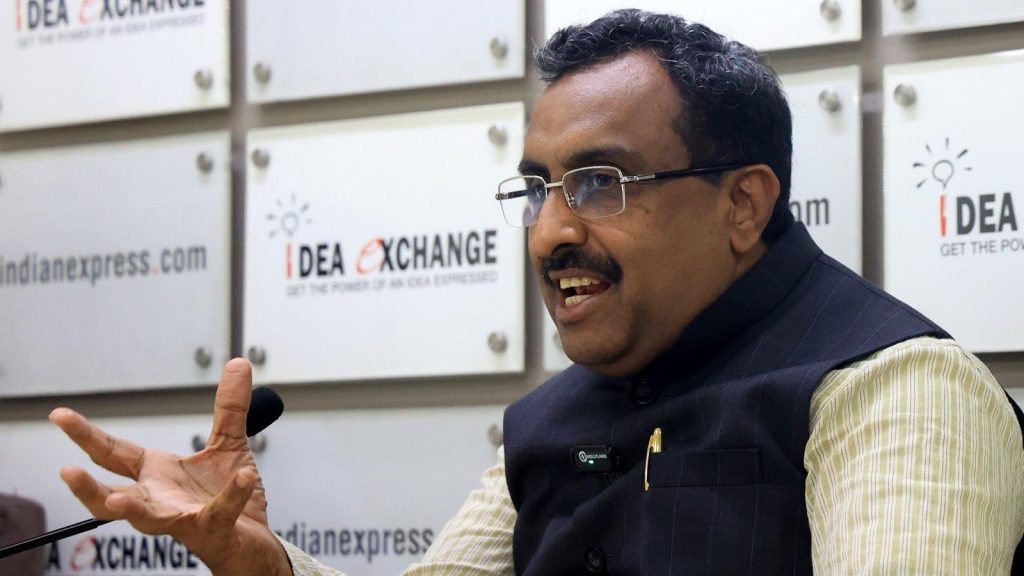
 Ram Madhav Questions India-US Ties: ‘We Agreed to Stop Iran Oil, Faced Pressure on RussiaSo Where Are We Falling Short’
madhav questions indiaus ties:
The recent remarks by RSS leader and former BJP general secretary Ram Madhav during a policy discussion in Washington have sparked a fresh debate over the evolving dynamics of India–United States relations. His statement—suggesting that India had made significant concessions to align with U.S. expectations, including stopping oil imports from Iran and facing pressure over Russian crude—has brought into focus the growing strain between the two strategic partners.
Speaking at the Hudson Institute during the “New India Conference,” Madhav expressed surprise that despite what he described as India’s efforts to accommodate U.S. demands on trade, energy, and geopolitics, the bilateral relationship appears to be under stress. His comments come at a time when both nations are navigating complex global challenges, including the ongoing West Asia conflict, shifting energy markets, and disagreements over trade policies.
Madhav’s Remarks: A Question of Reciprocity
Ram Madhav’s central argument was straightforward yet politically significant: India, he said, has made multiple concessions in its dealings with the United States, but these efforts do not seem to have translated into smoother ties.
“We agreed to stop buying oil from Iran… We agreed to stop buying oil from Russia despite criticism… We agreed to tariffs,” he said, questioning what more India was expected to do.
His remarks reflect a broader sentiment within sections of India’s strategic community—that New Delhi has shown flexibility in accommodating U.S. concerns, yet continues to face criticism and pressure, particularly on economic and geopolitical fronts.
However, the statement also triggered immediate controversy. Within a day, Madhav issued a clarification, acknowledging that his claim regarding stopping Russian oil imports was “factually incorrect” and that India had not agreed to halt such purchases.
This clarification is critical, as India continues to be one of the largest buyers of Russian crude, driven by energy security considerations and favorable pricing.
The Iran Oil Factor: Strategic Compliance
India’s decision to stop importing oil from Iran dates back to earlier phases of U.S. sanctions, when Washington pushed allies to cut economic ties with Tehran. Unlike Russia, where India has maintained significant imports, New Delhi did reduce its Iranian oil purchases significantly in response to American pressure.
Madhav’s reference to Iran highlights a key example often cited by policymakers to demonstrate India’s willingness to align with U.S. strategic objectives when necessary. The move, however, came with economic costs, as Iran had been a major supplier offering favorable terms, including extended credit periods and discounted rates.
The Iran issue remains relevant today due to ongoing geopolitical tensions in the region. The conflict involving Iran and disruptions in the Strait of Hormuz—a critical oil transit route—have once again underscored the importance of stable energy supply chains for India.
Russia Oil Imports: Reality vs. Perception
While Madhav initially suggested that India had stopped buying Russian oil, the ground reality tells a different story. India has, in fact, increased its dependence on Russian crude in recent years, especially after Western sanctions on Moscow created opportunities for discounted purchases.
Recent data shows that Russia accounts for a significant share of India’s oil imports, at times contributing nearly half of total crude supplies.
This policy has been a point of contention with the United States, which has repeatedly urged India to reduce its reliance on Russian energy. However, New Delhi has defended its stance, emphasizing that its primary responsibility is to ensure affordable energy for its population.
Madhav’s clarification reinforces this position: India never formally agreed to stop Russian oil imports and has consistently prioritized national interest over external pressure.
Trade Tensions and Tariff Disputes
Beyond energy, Madhav also pointed to trade issues as a source of friction. He referenced tariffs imposed by the United States—reportedly as high as 50% on certain goods—and India’s willingness to negotiate within this framework.
The ongoing trade negotiations between the two countries are expected to result in a new agreement, potentially involving revised tariff structures. Madhav noted that India has even agreed to higher tariff levels in some cases, raising questions about the balance of concessions.
Trade has long been a contentious area in India–US relations, with disagreements over market access, digital trade rules, and protectionist policies on both sides. While both countries have expressed a commitment to strengthening economic ties, progress has often been slow and uneven.
Three Pillars Under Stress
Madhav outlined three key pillars of the India–US relationship that he believes are currently under strain:
- Geostrategic Alignment
Traditionally, India and the United States have found common ground on issues such as countering China’s influence and addressing global terrorism. However, Madhav suggested that this alignment is now less clear.
He noted that not only India but also U.S. allies like NATO and QUAD partners appear uncertain about Washington’s current strategic priorities. - Economic Relations
Trade disputes, tariff tensions, and fluctuations in investment flows have created friction in the economic dimension of the partnership. Madhav highlighted concerns about declining U.S. investment and the overall health of bilateral trade ties. - People-to-People Ties
Perhaps the most sensitive aspect raised by Madhav was the growing anxiety among the Indian diaspora in the United States. He pointed to recent controversial remarks about immigrants, which have caused concern within the community.
The diaspora has historically played a crucial role in strengthening India–US relations, particularly during key moments such as the civil nuclear deal negotiations. Any erosion of this connection could have long-term implications.
Political Reactions in India
Madhav’s comments quickly became a political flashpoint in India. Opposition parties seized on his initial statement to argue that the government had compromised national interests to align with U.S. demands.
Critics claimed that the remarks amounted to an admission of excessive concessions, particularly in areas like energy policy and trade. The subsequent clarification by Madhav helped defuse some of the immediate controversy but did not fully quell the political debate.
For the ruling establishment, the challenge lies in balancing strategic partnership with the United States while maintaining India’s long-standing policy of strategic autonomy.
Strategic Autonomy vs. Alignment
One of the underlying themes in Madhav’s remarks is the tension between alignment and autonomy. India has traditionally pursued a “multi-alignment” strategy—engaging with multiple global powers without becoming overly dependent on any single partner.
Madhav himself referenced this approach, noting that India’s emphasis on strategic autonomy had previously been criticized but is now mirrored by the United States’ own flexible alliances.
This perspective highlights a broader shift in global geopolitics, where rigid alliances are giving way to more fluid and interest-based partnerships.
The Energy Security Imperative
At the heart of the debate is India’s energy security. As one of the world’s largest importers of crude oil, India’s economic stability depends heavily on access to affordable and reliable energy sources.
The decision to continue importing Russian oil, despite Western sanctions, is driven by this imperative. Similarly, the earlier reduction in Iranian imports was influenced by a combination of geopolitical pressure and evolving market conditions.
Experts argue that expecting India to align fully with U.S. energy policies is unrealistic, given its domestic needs and economic priorities.
Global Context: War, Sanctions, and Shifting Alliances
The strain in India–US relations cannot be viewed in isolation. It is part of a broader global context marked by:
- Ongoing conflicts in West Asia, particularly involving Iran
- Continued tensions between Russia and Western nations
- Shifts in global trade patterns and supply chains
These factors have created a complex environment where countries must constantly recalibrate their policies.
For India, this means navigating a delicate balance between maintaining strong ties with the United States and preserving relationships with other key partners like Russia.
What Lies Ahead
Despite the current tensions, both India and the United States have strong incentives to maintain their partnership. The two countries share common interests in areas such as:
- Indo-Pacific security
- Counterterrorism
- Technology and innovation
- Climate change and energy transition
The ongoing trade negotiations are seen as a potential opportunity to reset the relationship and address some of the existing grievances.
Madhav’s remarks, while controversial, may also serve as a reminder of the need for greater mutual understanding and respect in the partnership.
AI Insight
Ram Madhav’s comments have brought into sharp focus the complexities of India–US relations in an increasingly uncertain world. While his initial statement on Russian oil imports required correction, the broader मुद्दा he raised—about the perceived imbalance in expectations—resonates with ongoing debates in policy circles.
The India–US partnership remains one of the most important bilateral relationships globally, but it is not without its challenges. As both countries navigate shifting geopolitical realities, the key will be finding a balance that respects each other’s priorities while advancing shared interests.
In the end, the question posed by Madhav—“Where exactly is India falling short?”—may not have a simple answer. But it underscores the need for continuous dialogue, mutual sensitivity, and a realistic assessment of what each side can expect from the other.