
 Europe warns of Russia’s hybrid attacks but struggles to counter them
  Former chief election commissioner calls SIR scheme illegal.
  A Corruption Scandal Is Reshaping Brazil’s Presidential Election
  US citizen injured in Illinois after ICE agents mistook him for fugitive, tried to arrest him
  At 10 years old, Smithsonian’s Black museum is undaunted amid pressure from Trump administration
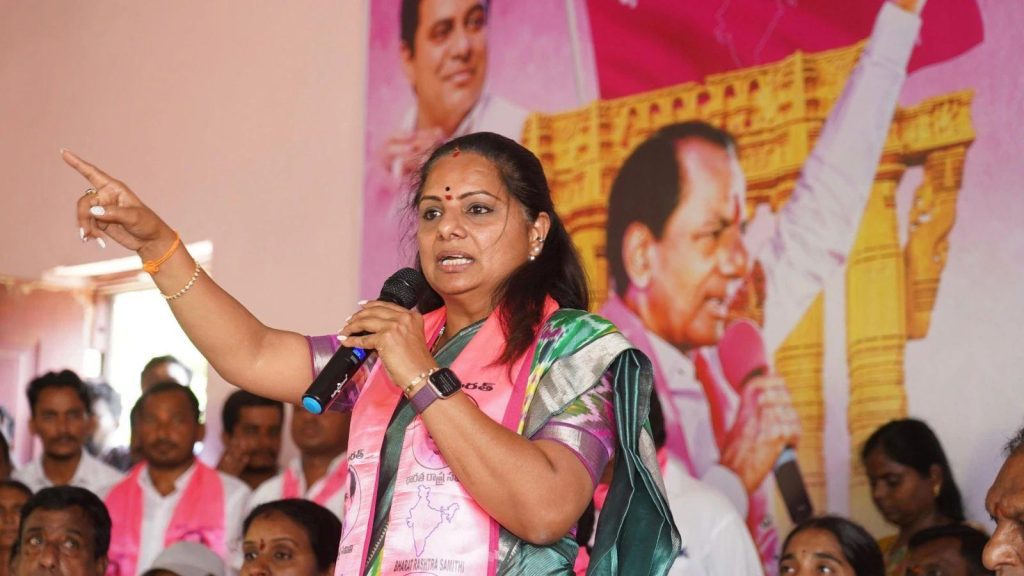
 Kavitha’s New Party Targets KCR and KTR: What the Split Means for BRS and Congress in Telangana
kavithas party targets what:
Telangana’s political landscape appears to be entering a volatile new phase with reports of MLC K. Kavitha preparing to launch her own political outfit—an unexpected move that could reshape alliances, voter equations, and the balance of power between the Bharat Rashtra Samithi (BRS) and the Congress. With Telangana Chief Minister K. Chandrashekar Rao (KCR) and his son K.T. Rama Rao (KTR) seemingly in her crosshairs, Kavitha’s political shift has triggered intense speculation about internal fissures within the BRS and its wider electoral implications.
A Political Earthquake in the Making
Kavitha, a prominent political figure and daughter of KCR, has long been considered a key pillar of the BRS. Her influence, particularly among women and youth, and her role in shaping the party’s outreach strategies have been widely acknowledged. However, recent developments suggest that her relationship with the party’s top leadership may have deteriorated significantly.
Sources indicate that Kavitha’s decision to float a new party stems from growing dissatisfaction with the current leadership structure within the BRS. Reports of internal disagreements—particularly involving KTR, who is widely seen as KCR’s political successor—have added fuel to the speculation.
If these reports materialize into a formal political launch, it would mark one of the most dramatic splits in Telangana politics in recent years.
KCR vs Kavitha: A Family Rift Goes Political?
At the heart of the unfolding drama lies a potential family rift that has now taken on political dimensions. KCR, the founding leader of BRS and a dominant force in Telangana politics, has maintained tight control over the party since its inception.
Kavitha’s reported move to challenge this authority signals a significant departure from the party’s traditional structure. While differences within political families are not uncommon, a public split of this nature could have far-reaching consequences.
Observers note that Kavitha’s positioning appears to be both ideological and strategic. By targeting KCR’s leadership style and KTR’s growing influence, she may be attempting to carve out a distinct political identity that appeals to sections of the electorate dissatisfied with the current regime.
KTR in Focus: The Succession Question
K.T. Rama Rao, often referred to as KTR, has been widely projected as the heir apparent to KCR. His administrative experience, public visibility, and role in key policy decisions have strengthened his position within the party.
However, Kavitha’s move could complicate this succession narrative. By directly or indirectly challenging KTR’s leadership, she introduces an element of uncertainty that could weaken the party’s internal cohesion.
For BRS, which has relied heavily on centralized leadership, any disruption in the succession plan could create confusion among party workers and supporters. It may also embolden other leaders who feel marginalized within the existing hierarchy.
Impact on BRS: Fragmentation Risks
The potential formation of a new party by Kavitha poses a serious challenge to the BRS. Political fragmentation is one of the biggest risks facing any dominant regional party, and even a small split can have disproportionate effects in closely contested elections.
Key concerns for BRS include:
- Vote Division: Kavitha’s new party could split the BRS vote base, particularly among women, youth, and certain caste groups where she has influence.
- Cadre Confusion: Party workers may find themselves torn between loyalty to KCR and support for Kavitha.
- Leadership Crisis: Questions about succession and internal democracy could weaken the party’s public image.
In a state where electoral margins can be narrow, even a marginal erosion of support could have significant consequences.
Congress: The Silent Beneficiary?
While the BRS grapples with internal challenges, the Congress stands to gain from the situation. As the primary opposition force in Telangana, Congress has been working to rebuild its base and position itself as a viable alternative.
A split within the BRS could create an opportunity for Congress to consolidate anti-incumbency sentiment and attract disillusioned voters. Additionally, the emergence of a third player in the form of Kavitha’s party could further fragment the vote, indirectly benefiting Congress.
However, the extent of this advantage will depend on how effectively Congress capitalizes on the situation. Simply relying on BRS’s internal issues may not be sufficient; the party will need to present a strong and coherent alternative to voters.
Kavitha’s Potential Voter Base
One of the key questions surrounding Kavitha’s new party is its potential voter base. Her political career has been marked by strong engagement with women’s issues, cultural initiatives, and grassroots mobilization.
If she positions her party around themes such as women’s empowerment, social justice, and regional identity, she could attract a distinct segment of voters. Her appeal may be particularly strong among:
- Women voters influenced by her advocacy and outreach programs
- Youth seeking new leadership alternatives
- Sections of rural and semi-urban populations dissatisfied with existing parties
However, translating personal popularity into electoral success is a complex process that requires organizational strength, resources, and a clear political vision.
Challenges Ahead for Kavitha
Launching a new political party is a formidable task, especially in a state with established players like BRS and Congress. Kavitha will face several challenges, including:
- Building Organizational Structure: Creating a robust party network across constituencies
- Securing Resources: Funding and logistical support for campaigns
- Establishing Credibility: Convincing voters that her party represents a viable alternative
- Managing Perception: Addressing narratives around family conflict and political opportunism
Additionally, she will need to navigate the complexities of Telangana’s caste and community dynamics, which play a crucial role in electoral outcomes.
Broader Political Implications
The potential emergence of Kavitha’s party reflects a broader trend in Indian politics, where internal party dynamics and leadership disputes can lead to the creation of new political formations.
Such developments often reshape electoral landscapes by introducing new alliances, altering voter behavior, and changing campaign narratives. In Telangana, this could lead to a more fragmented and competitive political environment.
For voters, the entry of a new player may provide additional choices but also complicate decision-making. For political parties, it represents both a challenge and an opportunity to adapt their strategies.
What Lies Ahead
As of now, Kavitha has not officially announced the formation of her party, and much of the discussion is based on reports and political speculation. However, the intensity of these discussions suggests that the possibility cannot be dismissed.
If the party is launched, the coming months will be crucial in determining its trajectory. Key factors to watch include:
- The party’s ideological positioning and manifesto
- Its ability to attract prominent नेताओं and grassroots workers
- Public response and initial electoral performance
For BRS and Congress, the focus will be on recalibrating their strategies to address the changing political landscape.
AI Insights
K. Kavitha’s reported move to launch a new political party has the potential to significantly alter Telangana’s political dynamics. By challenging both KCR and KTR, she is not only reshaping internal party equations but also introducing a new dimension to the state’s electoral contest.
For the BRS, the development poses risks of fragmentation and leadership uncertainty. For Congress, it offers an opportunity to strengthen its position as the primary opposition.
Ultimately, the impact of this political shift will depend on how events unfold in the coming weeks. Whether Kavitha’s party emerges as a major force or remains a marginal player, its very existence could redefine the contours of Telangana politics.




