Europe warns of Russia’s hybrid attacks but struggles to counter them
  Former chief election commissioner calls SIR scheme illegal.
  A Corruption Scandal Is Reshaping Brazil’s Presidential Election
  US citizen injured in Illinois after ICE agents mistook him for fugitive, tried to arrest him
  At 10 years old, Smithsonian’s Black museum is undaunted amid pressure from Trump administration
 Amit Shah Confirms Suvendu Adhikari as West Bengal’s New Chief Minister
West Bengal Power Shift: Economic and Geopolitical Repercussions
Summary: A significant shift in West Bengal’s politics has begun, with Suvendu Adhikari, a former TMC stalwart, set to take the reins as the new Chief Minister, post-election victories for the BJP.
This development will have far-reaching consequences for the state’s economy and its role within the larger geopolitical landscape.
Updated: May 8, 2026
West Bengal Power Shift: Economic and Geopolitical Repercussions
A significant shift in West Bengal’s politics has begun, with Suvendu Adhikari, a former TMC stalwart, set to take the reins as the new Chief Minister, post-election victories for the BJP. This development will have far-reaching consequences for the state’s economy and its role within the larger geopolitical landscape.
Core News: Union Home Minister Amit Shah has confirmed the election of Suvendu Adhikari as the new Chief Minister of West Bengal, marking a significant milestone for the BJP’s expansion in the state. Adhikari’s oath-taking ceremony is scheduled for May 9.
Impact Analysis: Suvendu Adhikari’s ascension to the top post will inevitably alter the state’s economic trajectory. A key challenge Adhikari will face is navigating the complex web of regional economic interests, potentially recalibrating the state’s stance on key issues like land acquisition and industrial development. This shift, coupled with the BJP’s federalist ideology, may prompt greater economic engagement between West Bengal and the Centre.
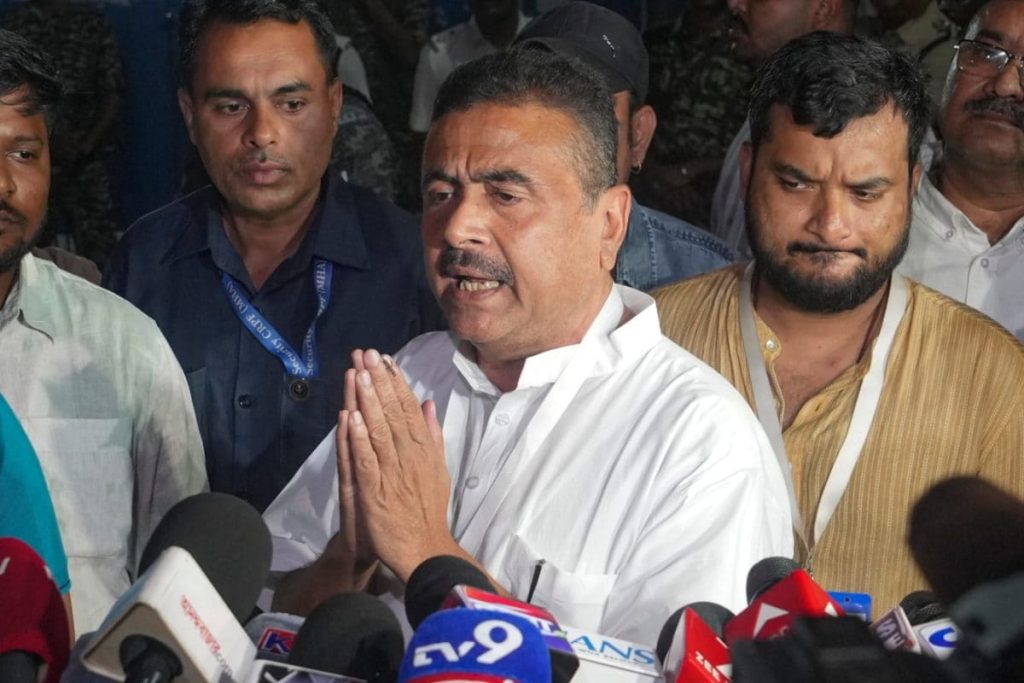
Moreover, this development has significant ramifications for the larger South Asian geopolitical framework. The consolidation of the BJP in West Bengal paves the way for an intensification of New Delhi’s influence in the region. The TMC’s reduced power base will weaken the voice of West Bengal in the regional and national arena, leaving space for the BJP to consolidate its dominance.
Broader Implications: In the short term, the power shift in West Bengal will test the state’s social cohesion, particularly among the Bengali middle class. The new government’s ability to address pressing issues such as unemployment and economic inequality will be closely watched. Furthermore, this development may embolden other opposition parties in India’s northeastern regions, potentially fostering a renewed wave of regionalism across the country.
From a forward-looking perspective, the ascension of Suvendu Adhikari heralds the arrival of a new era in West Bengal’s politics, one marked by an enhanced role for the BJP and a diminished footprint of the TMC. This change may have far-reaching implications for regional politics, compelling opposition parties to reassess their stance on the Indian electoral landscape.
In conclusion, the impact of Suvendu Adhikari’s ascension to the Chief Minister’s chair will resonate significantly across West Bengal, India’s South Asian region, and beyond. As the new government charts its course, we will continue to monitor and analyze the complex repercussions of this pivotal shift in the state’s politics.
Suvendu Adhikari's rise to power in West Bengal sets the stage for a broader power imbalance in the region, potentially disrupting the long-standing equilibrium between regional forces and central authority. As the BJP solidifies its grip on the state, the Centre's influence will likely seep into the very fabric of local politics, leading to a redefinition of regional identity and autonomy.
This is a developing story. More updates will follow as new information becomes available.