Europe warns of Russia’s hybrid attacks but struggles to counter them
  Former chief election commissioner calls SIR scheme illegal.
  A Corruption Scandal Is Reshaping Brazil’s Presidential Election
  US citizen injured in Illinois after ICE agents mistook him for fugitive, tried to arrest him
  At 10 years old, Smithsonian’s Black museum is undaunted amid pressure from Trump administration
 Rahul Gandhi Accuses RSS-BJP of Creating ‘System to Steal Polls’, Warns of Public Backlash
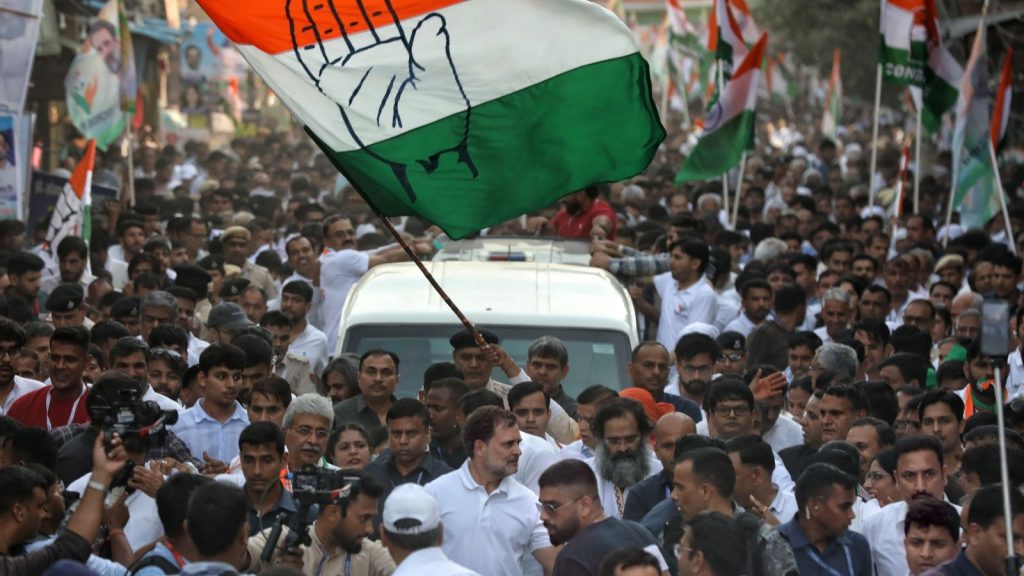
rahul gandhi accuses rssbjp:
Congress leader Rahul Gandhi on Friday launched a sharp attack on the RSS and the BJP, alleging that the ruling alliance has created a “system to steal elections” in the country. Addressing party workers and supporters during a political event, Gandhi claimed that democratic institutions were being weakened and manipulated for electoral gains.
Congress leader Rahul Gandhi intensified his attack on the Bharatiya Janata Party (BJP) and the Rashtriya Swayamsevak Sangh (RSS), accusing them of creating a “system to steal polls” and warning that the ruling establishment would eventually face the anger of the people. His remarks, delivered during a political gathering attended by party workers and supporters, have once again sparked a fierce debate over the state of democracy, electoral transparency, and institutional independence in India.
The statement comes at a politically crucial moment as the country prepares for a series of important elections, with both the ruling National Democratic Alliance (NDA) and the opposition INDIA bloc sharpening their campaigns. Rahul Gandhi’s comments reflect the Congress party’s broader narrative that democratic institutions are under pressure and that electoral processes are increasingly tilted in favor of the ruling party.
Rahul Gandhi’s Strong Allegations Against BJP and RSS
While addressing party workers, Rahul Gandhi claimed that the BJP and RSS have established mechanisms that allegedly influence electoral outcomes. According to him, the opposition is not merely fighting a political contest but defending the Constitution and the democratic framework of the country.
“The RSS and BJP have created a system to steal polls. But the people of this country understand what is happening, and they will respond,” Gandhi reportedly said during his speech.
The Congress leader alleged that institutions meant to function independently are facing interference and pressure. He argued that agencies, administrative machinery, and sections of the media are being used to weaken opposition parties and suppress dissenting voices.
Rahul Gandhi’s speech was met with loud cheers from Congress workers, many of whom see him as the central figure in the party’s effort to challenge Prime Minister Narendra Modi and the BJP’s political dominance.
Congress Intensifies Attack Ahead of Elections
The Congress party has increasingly focused its campaign on allegations related to democratic backsliding, institutional capture, and misuse of power. Rahul Gandhi has repeatedly raised concerns about the Election Commission, investigative agencies, and what he describes as a shrinking space for opposition politics.
Over the past few years, Gandhi has accused the central government of targeting opposition leaders through central agencies such as the Enforcement Directorate (ED), Central Bureau of Investigation (CBI), and Income Tax Department. Congress leaders argue that such actions are politically motivated and designed to intimidate opposition parties before elections.
The BJP, however, has strongly denied these allegations, insisting that agencies function independently and that action is taken strictly according to the law.
Political analysts believe Rahul Gandhi’s latest remarks are part of a larger strategy to mobilize opposition supporters by framing the upcoming elections as a battle to protect democracy and constitutional values.
BJP Rejects Rahul Gandhi’s Claims
The BJP was quick to respond to Rahul Gandhi’s allegations, accusing the Congress leader of undermining democratic institutions whenever his party faces electoral setbacks.
Senior BJP leaders stated that India’s elections are conducted in a transparent and constitutional manner under the supervision of the Election Commission of India. They accused the Congress of trying to discredit democratic processes because of repeated defeats at the polls.
A BJP spokesperson said that Rahul Gandhi’s remarks were “irresponsible” and aimed at misleading the public. The ruling party maintained that the Congress has failed to accept the political reality of losing public support across many states.
The BJP also pointed out that the Congress itself ruled India for decades and conducted numerous elections under the same constitutional framework it now criticizes.
The Larger Political Context
Rahul Gandhi’s remarks come amid intensifying political competition between the BJP-led NDA and the opposition INDIA alliance. Over the last decade, the BJP has emerged as the dominant political force in India, winning multiple national and state elections under the leadership of Prime Minister Narendra Modi.
The Congress, once India’s most powerful political party, has struggled to regain lost ground after consecutive defeats in Lok Sabha elections. Rahul Gandhi has attempted to revive the party through aggressive campaigns focused on unemployment, inflation, social justice, caste census, and constitutional protection.
His Bharat Jodo Yatra and subsequent political outreach programs helped re-establish his visibility among party workers and sections of the electorate. Congress leaders believe these campaigns have improved Rahul Gandhi’s image as a leader willing to directly challenge the ruling establishment.
However, critics argue that the Congress still lacks a cohesive electoral strategy and strong regional organization in several key states.
Opposition’s Concerns About Democratic Institutions
One of the major themes in Rahul Gandhi’s political speeches has been the alleged weakening of democratic institutions. Opposition parties have repeatedly expressed concerns over issues such as:
- Alleged misuse of investigative agencies
- Media bias in favor of the ruling party
- Defections engineered through political pressure
- Use of money power in elections
- Lack of transparency in electoral funding
- Centralization of political authority
The Congress and other opposition parties have also criticized the electoral bonds scheme, arguing that it allowed anonymous political donations and disproportionately benefited the ruling party.
Rahul Gandhi has frequently claimed that institutions that are supposed to remain neutral are increasingly being influenced politically. According to the Congress, this creates an uneven playing field during elections.
The BJP rejects these accusations and argues that opposition parties raise institutional concerns only after suffering political defeats.
Rahul Gandhi’s Political Messaging
Political observers note that Rahul Gandhi’s language has become sharper and more direct in recent years. Unlike earlier phases of his political career, he is now positioning himself as one of the most vocal critics of the BJP-RSS ideological framework.
His speeches often focus on themes such as:
- Protection of the Constitution
- Economic inequality
- Social harmony
- Federalism
- Youth unemployment
- Farmers’ concerns
- Democratic freedoms
By accusing the BJP and RSS of creating a “system to steal polls,” Gandhi is attempting to rally opposition voters who fear democratic institutions are under stress.
Analysts believe this rhetoric is aimed not only at Congress supporters but also at regional parties and undecided voters who may be concerned about the concentration of political power.
Electoral Challenges for Congress
Despite Rahul Gandhi’s aggressive campaigning, the Congress continues to face significant political challenges. The party remains dependent on alliances in several states and struggles against strong regional players.
In many parts of India, opposition unity remains fragile, with seat-sharing disagreements and leadership conflicts affecting coordination. While the INDIA bloc was formed to challenge the BJP collectively, maintaining cohesion among diverse regional parties has proven difficult.
The BJP, on the other hand, continues to project itself as a stable and nationally dominant force centered around Prime Minister Narendra Modi’s leadership.
Political experts say that for Congress to effectively challenge the BJP, it will need not only strong rhetoric but also organizational strength, grassroots mobilization, and strategic alliances.
Public Response and Political Polarization
Rahul Gandhi’s comments have triggered intense reactions on social media and across political circles. Congress supporters praised his speech as a bold stand against what they see as growing authoritarian tendencies.
BJP supporters, however, accused him of disrespecting democratic institutions and attempting to create doubt about India’s electoral credibility.
The sharp divide in reactions reflects the increasing political polarization in the country. Public discourse around elections, governance, and institutions has become highly contentious, with both sides accusing each other of damaging democratic values.
Political commentators believe such confrontational rhetoric will become more common as election campaigns intensify in the coming months.
The Role of RSS in Political Debate
The RSS has frequently been at the center of opposition criticism due to its ideological association with the BJP. Rahul Gandhi and other opposition leaders often accuse the RSS of promoting divisive politics and exerting influence over government institutions.
The RSS, however, maintains that it is a cultural organization dedicated to nation-building and social service. BJP leaders also reject attempts to portray the RSS as a threat to democracy.
Rahul Gandhi has repeatedly targeted the ideological foundations of the BJP-RSS combine, arguing that their vision is incompatible with the inclusive and pluralistic values enshrined in the Constitution.
This ideological battle has become one of the defining features of modern Indian politics.
Congress Strategy Moving Forward
The Congress appears determined to frame future elections around constitutional values and democratic accountability. Rahul Gandhi’s speeches increasingly emphasize the need to “save democracy” and protect institutions from alleged political interference.
Party leaders believe this messaging could resonate with sections of the middle class, youth, minorities, farmers, and civil society groups concerned about democratic governance.
At the same time, Congress is attempting to strengthen its regional alliances and improve grassroots organization ahead of major electoral battles.
Whether Rahul Gandhi’s aggressive political positioning translates into electoral gains remains uncertain, but it has undeniably energized parts of the opposition base.
Growing Intensity in Indian Politics
As India moves closer to crucial elections, the political atmosphere is becoming increasingly combative. Allegations, counter-allegations, and ideological clashes are dominating public debate.
Rahul Gandhi’s accusation that the RSS-BJP created a “system to steal polls” is likely to remain a major talking point in political discussions. The BJP’s forceful rejection of these claims ensures that the issue will continue to generate controversy.
For voters, the coming months are expected to witness intense campaigning focused not only on governance and development but also on larger questions concerning democracy, institutions, and the future direction of Indian politics.
With both the ruling alliance and opposition sharpening their narratives, the political battle ahead promises to be one of the most closely watched contests in recent Indian history.
AI Insights:
Rahul Gandhi’s remarks highlight the Congress party’s strategy of positioning the upcoming elections as a battle to protect democratic institutions and constitutional values. By accusing the RSS-BJP combine of creating a “system to steal polls,” the Congress leader is attempting to consolidate opposition support and mobilize voters who are concerned about institutional independence and political centralization.
The BJP, however, continues to rely on its strong organizational network, Prime Minister Narendra Modi’s popularity, and its development-focused narrative to counter such allegations. The sharp exchange between the two sides reflects the growing polarization in Indian politics, where elections are increasingly shaped not only by governance issues but also by debates over democracy, transparency, and the role of institutions.
Political analysts believe that rhetoric around electoral fairness and constitutional protection will become even more prominent as national and state elections approach. The effectiveness of Rahul Gandhi’s messaging will ultimately depend on whether the opposition can translate public sentiment into electoral unity and grassroots mobilization.