Europe warns of Russia’s hybrid attacks but struggles to counter them
  Former chief election commissioner calls SIR scheme illegal.
  A Corruption Scandal Is Reshaping Brazil’s Presidential Election
  US citizen injured in Illinois after ICE agents mistook him for fugitive, tried to arrest him
  At 10 years old, Smithsonian’s Black museum is undaunted amid pressure from Trump administration
 West Bengal’s Land Policy Hurdles Delay Critical Border Fencing Amid National Security Threats
**
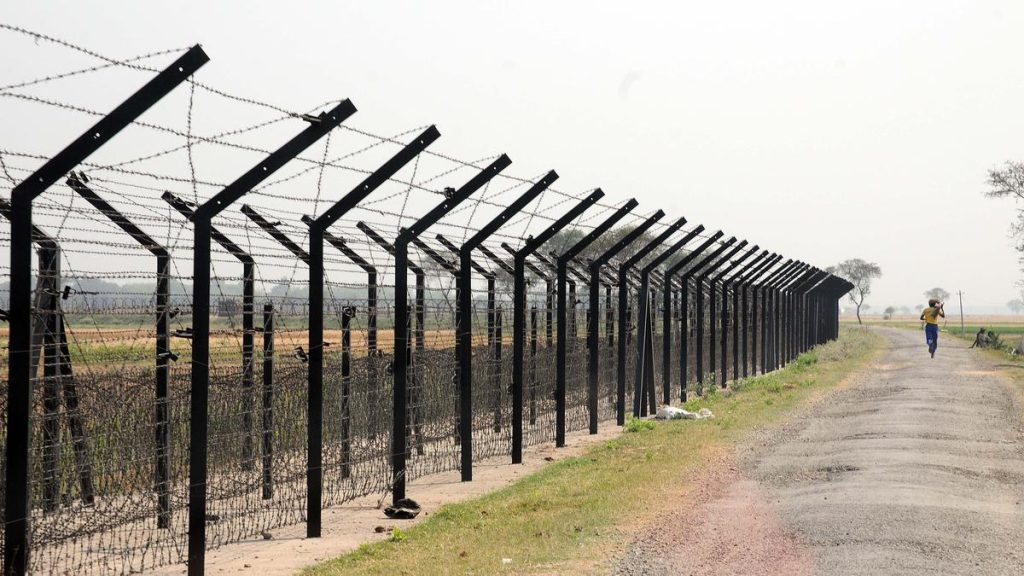
west bengals land policy:
Delayed Fencing: A Threat to National Security and Economic Stability
Summary:
The Ministry of Home Affairs’ recent affidavit to the Supreme Court has revealed that West Bengal’s land policy has been a significant obstacle to border fencing initiatives, citing the state’s failure to adopt the Land Acquisition, Rehabilitation and Resettlement Act (LARR) 2013.
This development poses severe economic, political, and national security risks, not only for India but also its neighbors.
Updated: May 12, 2026
Delayed Fencing: A Threat to National Security and Economic Stability
The Ministry of Home Affairs’ recent affidavit to the Supreme Court has revealed that West Bengal’s land policy has been a significant obstacle to border fencing initiatives, citing the state’s failure to adopt the Land Acquisition, Rehabilitation and Resettlement Act (LARR) 2013. This development poses severe economic, political, and national security risks, not only for India but also its neighbors.
Core News
The Ministry of Home Affairs’ affidavit, submitted on December 11, 2023, exposed the West Bengal government’s inadequate land policy as the primary reason for the delay in border fencing along the state’s border with Bangladesh. The LARR Act 2013, designed to facilitate land acquisition for public purposes, has been ignored by the state government, creating a major hurdle in implementing critical infrastructure projects, including border fencing.
Impact Analysis
The delayed border fencing poses significant economic risks, including:
1. Increased security threats: The unguarded border creates a conduit for potential terrorist activities, smuggling, and illegal immigration, posing a direct threat to national security and economic stability.
2. Disruption of trade: Unfenced borders hinder legitimate trade activities, resulting in significant losses for local businesses, industries, and the national economy.
3. Loss of foreign investment: Uncertainty surrounding border security and policy stability will discourage foreign investors from entering the region, leading to a decline in economic growth and development.
The delayed border fencing also has far-reaching political implications:
1. Weakened federal-state relations: The West Bengal government’s inaction on land policy has damaged relationships with the central government, potentially leading to further disputes and governance challenges.
2. Impact on electoral prospects: The issue may significantly affect the Trinamool Congress’s electoral fortunes, particularly if the central government chooses to capitalize on the controversy.
3. Stability in the region: The prolonged delay in border fencing may fuel instability in the already sensitive region, potentially straining relations with neighboring countries.
Broader Implications
The West Bengal government’s refusal to adopt the LARR Act 2013 has broader implications for India’s economic and national security:
1. Regional fragmentation: If left unchecked, this development may exacerbate regional divisions, potentially weakening India’s national fabric.
2. Increased regional competition: As neighboring countries progress with their infrastructure and border security initiatives, India will face increased competition for regional influence, exacerbating existing rivalries.
3. Global implications: The prolonged delay in border fencing and land policy disputes may undermine India’s global reputation as a rapidly growing economy, potentially affecting foreign investment, trade, and global influence.
As the situation unfolds, it remains to be seen how the central government will address this critical issue and what long-term consequences the state government’s inaction will have on national security, economic stability, and governance in India.
India's border fencing deadlock is a ticking time bomb, not just for national security, but also for its economic reputation internationally. If left unaddressed, the West Bengal government's intransigence on the LARR Act will have far-reaching repercussions, testing the country's ability to maintain its position as a regional power.