Europe warns of Russia’s hybrid attacks but struggles to counter them
  Former chief election commissioner calls SIR scheme illegal.
  A Corruption Scandal Is Reshaping Brazil’s Presidential Election
  US citizen injured in Illinois after ICE agents mistook him for fugitive, tried to arrest him
  At 10 years old, Smithsonian’s Black museum is undaunted amid pressure from Trump administration
 Indian Parliament Witnesses Heated Debates as Opposition Demands Fair Representation
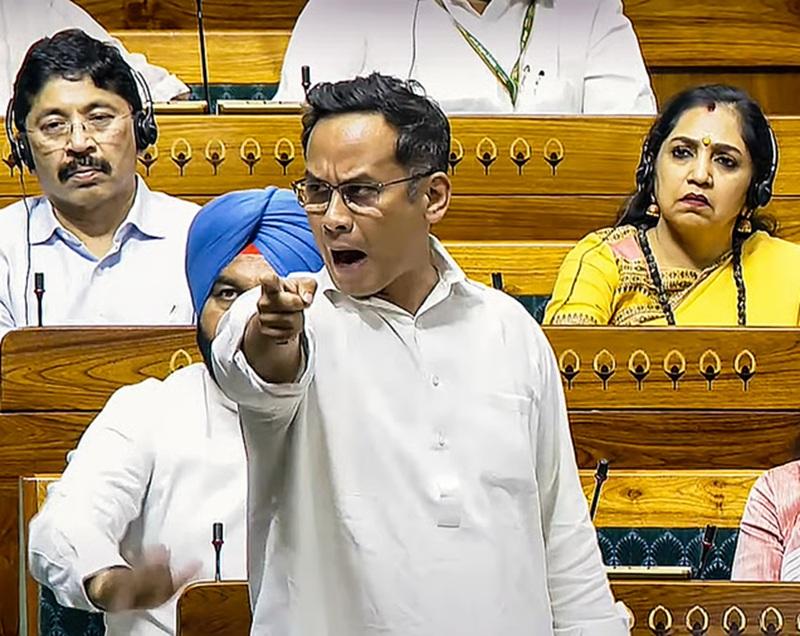
The Indian Parliament’s budget session has been marred by intense controversy, with the Opposition parties alleging that their voices are being stifled. The Lok Sabha has been at the center of the storm, with Congress MP Gaurav Gogoi claiming that the Opposition, particularly the Leader of the Opposition Rahul Gandhi, is being deliberately disallowed from speaking. This move has sparked widespread outrage among the Opposition ranks, with many accusing the ruling party of attempting to muzzle dissenting voices.
In a dramatic turn of events, Congress MP Mohammed Jawed moved a resolution to remove the Speaker, which was agreed upon by the House. The resolution has been scheduled for a 10-hour debate, during which the Opposition is expected to fiercely argue their case. The resolution is seen as a scathing indictment of the Speaker’s alleged bias towards the ruling party, with the Opposition claiming that they have been denied adequate opportunities to express their views.
Meanwhile, in the Rajya Sabha, the Leader of the Opposition Mallikarjun Kharge launched a scathing attack on the government’s Special Intensive Revision of electoral rolls in several states. Kharge described the process as a “fraud” and accused the government of attempting to manipulate the electoral system to its advantage. The Opposition has long been critical of the government’s handling of electoral reforms, and Kharge’s statement is seen as a reflection of the deep-seated mistrust between the two sides.
The ongoing controversy in the Parliament has significant implications for Indian democracy, with many analysts warning that the erosion of trust between the ruling party and the Opposition could have far-reaching consequences. The Opposition’s allegations of being disallowed to speak have sparked concerns about the health of India’s democratic institutions, with many calling for greater transparency and accountability in the functioning of the Parliament.
As the debate over the resolution to remove the Speaker gathers steam, the Indian Parliament is likely to witness more heated exchanges between the ruling party and the Opposition. The outcome of the debate will be closely watched, with many seeing it as a test of the government’s commitment to democratic values. The Opposition, on the other hand, is determined to press its case, with many MPs vowing to fight for their right to be heard.
In the midst of this chaos, the Indian public is left wondering about the future of the country’s democratic institutions. The ongoing controversy has raised important questions about the role of the Opposition in a democratic system and the need for greater accountability in the functioning of the Parliament. As the debate rages on, one thing is clear – the Indian Parliament will continue to be a hotbed of political activity, with the Opposition determined to hold the government to account for its actions. The coming days will be crucial in determining the course of Indian democracy, and the world will be watching with bated breath as the drama unfolds in the Indian Parliament.