 CSD urges govt to drop Gram Sabha consent rule for projects
  NATS glitch causes major Heathrow flight delays and cancellations
  Yemen Tilts Toward Full-Scale War as Saudi-Houthi Clashes Escalate
  Syrian weapons depot explosion kills 14 in Idlib
 India reviews Teesta water sharing policy
The Indian Ministry of External Affairs has announced that it will take into account all relevant developments while considering the ongoing issue regarding the Teesta River water sharing with Bangladesh, following Bangladesh PM Tarique Rahman’s visit to China.
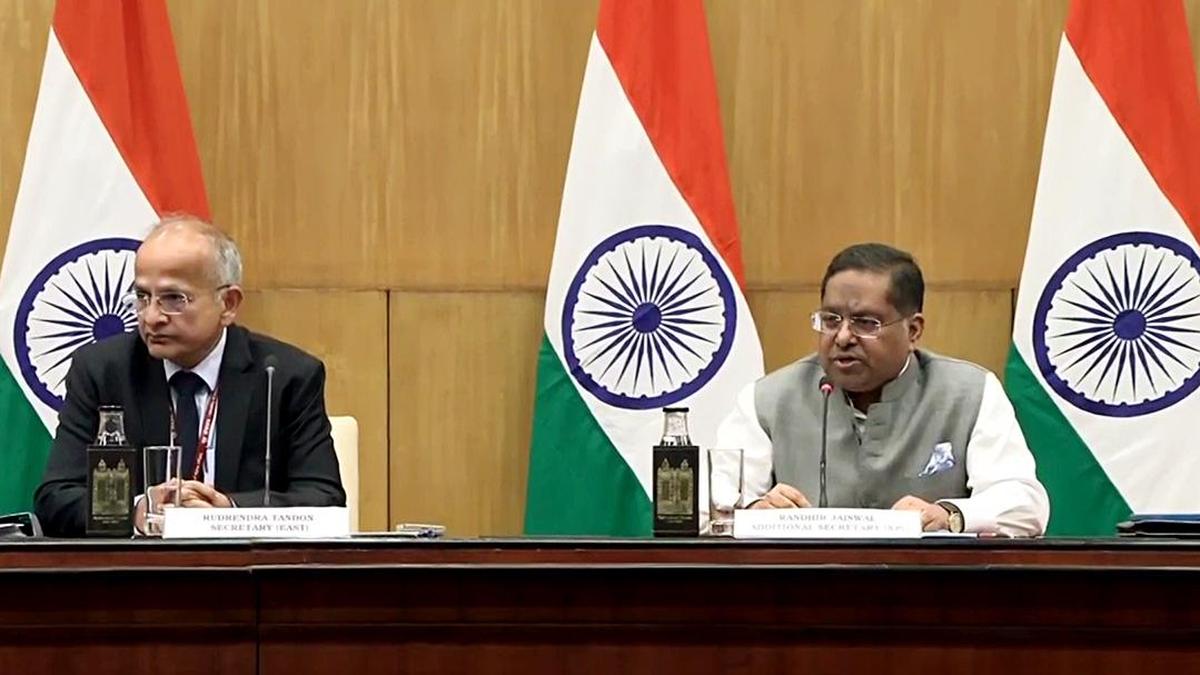
We will factor all related developments in overall approach to Teesta issue: MEA The Indian Ministry of External Affairs has announced that they will take into account all relevant developments while considering the ongoing issue regarding the Teesta River water sharing with Bangladesh. This statement was made in response to recent comments from Bangladesh Prime Minister Tarique Rahman, who expressed hopes that India would consider revisiting its stance on the matter during his recent visit to China. Bangladesh PM Tarique Rahman’s maiden visit to China has generated significant interest in the region, with many analysts speculating that the trip may have set the stage for a renewed push on various bilateral issues, including border disputes and water sharing..
The comments from the Indian Ministry of External Affairs suggest that India is keeping a close eye on the situation and is willing to adapt its approach to Teesta River water sharing as circumstances evolve. In a statement, a spokesperson for the Indian Ministry of External Affairs emphasized that India’s development assistance to various projects in Bangladesh is guided by a mutually agreed-upon roadmap. This roadmap is a product of ongoing negotiations between the two countries and is regularly reviewed to ensure that both parties are on the same page..
The comments from the Indian Ministry of External Affairs seem to suggest that India is open to revising its stance on the Teesta River water sharing issue in light of recent developments, but are unwilling to make any major concessions without a clear consensus on the matter. Sources close to the Indian government indicate that the ministry is keen to avoid any actions that may be seen as undermining the delicate balance of power in the region. Bangladesh Prime Minister Tarique Rahman’s visit to China has been widely seen as an important milestone in Bangladesh-China relations, with several major deals and agreements signed during the trip..
Among the highlights of the visit were agreements on infrastructure development, energy cooperation, and trade facilitation, which are expected to significantly boost economic ties between the two countries. India has long been wary of China’s growing influence in the region, and has taken steps to strengthen bilateral ties with Bangladesh in recent years. The comments from the Indian Ministry of External Affairs suggest that India is eager to maintain its position as a key partner for Bangladesh, and is willing to go the extra mile to build trust and cooperation..
The Teesta River water sharing issue has been a major source of contention between India and Bangladesh for many years, with both countries having competing claims on the waterways. The issue has been exacerbated by a lack of clear legal agreements governing the use of the river, which has led to tensions and disputes. In recent years, efforts have been made to break the impasse through dialogue and diplomacy..
A joint committee was established to oversee negotiations on water sharing, but progress has been slow due to differences over the allocation of water resources. The Indian Ministry of External Affairs has acknowledged that the issue remains a pressing concern for both countries, but has emphasized the need for a more nuanced approach. India has taken steps to address concerns from Bangladesh on water sharing, including the launch of a number of initiatives aimed at improving access to water for communities in the region..
However, these efforts have been seen as insufficient by many in Bangladesh, who feel that more needs to be done to address the issue. Bangladesh PM Tarique Rahman’s visit to China was widely covered in the Indian media, with many outlets speculating about the potential implications for India-Bangladesh relations. Several Indian experts have expressed concern that China’s growing influence in the region may create new challenges for India, which has traditionally been the dominant player in the region..
The comments from the Indian Ministry of External Affairs suggest that India is keen to maintain the momentum of recent efforts to strengthen bilateral ties with Bangladesh. The ministry has emphasized the importance of a collaborative approach to addressing common challenges, including the issue of Teesta River water sharing. In recent years, there have been several high-profile visits between Indian and Bangladeshi leaders, including a visit by Indian Prime Minister Narendra Modi to Bangladesh in 2015..
These visits have helped to build trust and cooperation between the two countries, but the issue of Teesta River water sharing remains a major challenge. The joint committee established to oversee negotiations on Teesta River water sharing has been criticized for its slow progress, with many arguing that more needs to be done to address the issue. The Indian Ministry of External Affairs has acknowledged these concerns, but has emphasized the need for a more comprehensive approach to tackling the issue..
India and Bangladesh have made significant progress in recent years in strengthening bilateral ties, including agreements on energy cooperation and trade facilitation. However, the issue of Teesta River water sharing remains a major sticking point, and will require sustained efforts from both countries to resolve..
Updated: July 3, 2026
Summary: India’s response to Bangladesh’s call to revisit the Teesta River water sharing issue will take into account all relevant developments, including the recent visit to China by Bangladesh’s Prime Minister Tarique Rahman. The Indian Ministry of External Affairs has expressed its willingness to adapt its approach, while emphasizing the need for a clear consensus on the matter and a delicate balance of power in the region.
India’s willingness to adapt its approach to the Teesta River issue may be a strategic move to counterbalance China’s growing influence in the region. By showing flexibility, India aims to strengthen its partnership with Bangladesh and prevent China from gaining a foothold in the country’s water management and infrastructure development.