Europe warns of Russia’s hybrid attacks but struggles to counter them
  Former chief election commissioner calls SIR scheme illegal.
  A Corruption Scandal Is Reshaping Brazil’s Presidential Election
  US citizen injured in Illinois after ICE agents mistook him for fugitive, tried to arrest him
  At 10 years old, Smithsonian’s Black museum is undaunted amid pressure from Trump administration
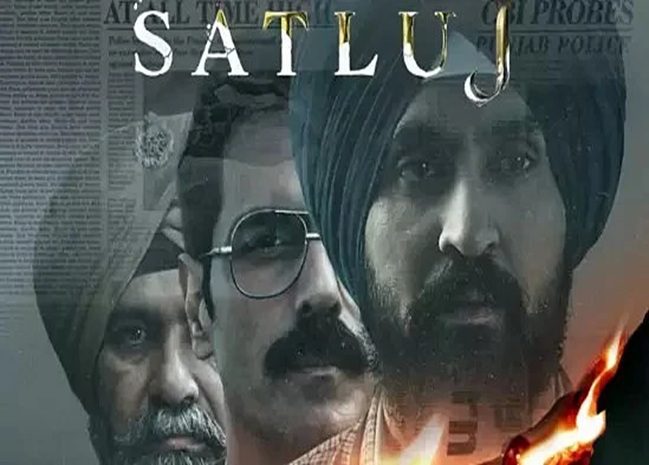
 ‘Satluj’ Controversy Rocks Punjab Politics: How Diljit Dosanjh’s Film Has Reignited Identity, Free Speech and Election-Year Fault Lines
The “Satluj” controversy has rapidly evolved from an entertainment issue to a major political flashpoint in Punjab, exposing ideological divisions and reigniting debates on identity, free speech, and cultural representation, with political parties struggling to navigate the complex issue ahead of elections.
satluj controversy rocks punjab:
The controversy surrounding Diljit Dosanjh’s film Satluj has rapidly evolved from an entertainment issue into a major political flashpoint in Punjab. With political parties taking cautious and often conflicting positions, the episode has exposed ideological divisions, intensified election-year calculations, and reopened debates over Punjabi identity, freedom of expression, and cultural representation.
‘Satluj’ Controversy Pushes Punjab’s Politics Into Uncomfortable Territory : Punjab’s political landscape has entered turbulent waters after the controversy surrounding actor and singer Diljit Dosanjh’s film Satluj. What initially appeared to be a dispute over a film’s content and its digital release has quickly transformed into one of the state’s most politically sensitive issues, drawing reactions from political parties, civil society, diaspora groups, and the entertainment industry.
Within days, the controversy expanded beyond cinema to become a test of how Punjab’s major political parties navigate questions of regional identity, nationalism, artistic freedom, and electoral strategy. The debate has also intersected with internal political developments, particularly within the Congress, where factional differences have once again come into focus ahead of future electoral contests.
The episode demonstrates how cultural issues in Punjab increasingly carry political significance, especially in an era where social media campaigns, diaspora activism, and digital streaming platforms amplify public debates far beyond the state’s borders.
From Film to Political Flashpoint: The controversy escalated after objections were raised over Satluj, with criticism emerging from different quarters regarding the film’s themes, messaging, and perceived political implications. Reports that the title was taken down from an OTT platform within 48 hours further intensified the debate and prompted questions about censorship, platform decisions, and public pressure.
Supporters of the film argued that creative works should be judged on artistic merit and protected under the principle of free expression. Critics, however, contended that cultural products dealing with sensitive historical or political subjects must be handled responsibly and should not contribute to polarisation.
As the debate spread across television, social media, and public forums, it increasingly became a political issue rather than merely an entertainment story.
Why Punjab’s Political Parties Find Themselves in a Difficult Position
For every major political party in Punjab, the controversy presents competing political considerations.
Aam Aadmi Party (AAP)
As the ruling party in Punjab, AAP must balance maintaining public order with avoiding perceptions of curbing artistic freedom. Any administrative action—or lack of it—is likely to be scrutinised both by supporters of free speech and by those demanding stricter oversight of cultural content.
Congress
The Congress faces a dual challenge. Externally, it must articulate a position on the controversy that resonates with diverse voter groups. Internally, reports of renewed factional tensions have highlighted questions over leadership, strategy, and organisational cohesion, potentially complicating its political messaging.
Shiromani Akali Dal (SAD)
For the SAD, issues relating to Punjabi identity, Sikh concerns, and regional autonomy have long been central to its political narrative. The party is likely to seek to reinforce its traditional support base while responding carefully to a debate that spans cultural and political sensitivities.
Bharatiya Janata Party (BJP)
The BJP must navigate the controversy while balancing its national political messaging with Punjab’s distinct social and political dynamics. The party has sought to expand its presence in the state in recent years, making its approach to such issues particularly significant.
Identity Politics Returns to the Fore: Punjab has historically witnessed political debates where questions of identity, language, religion, and regional pride intersect. The Satluj controversy has revived many of these themes.
For some observers, the debate reflects concerns about preserving Punjabi cultural identity in an increasingly globalised media environment. Others argue that cultural expression should remain open to interpretation and debate without becoming a political battleground.
The involvement of the Punjabi diaspora has further broadened the conversation, with opinions circulating internationally through digital platforms and social media.
The Role of Social Media: Unlike controversies of previous decades, the Satluj debate has unfolded largely in the digital sphere.
Hashtags, short-form videos, opinion pieces, and influencer commentary have shaped public perception in real time. Supporters and critics alike have used online platforms to mobilise opinion, making it difficult for political leaders to remain neutral.
This rapid circulation of viewpoints has also increased pressure on streaming platforms and public figures to respond quickly, sometimes before a broader public consensus has emerged.
Freedom of Expression vs Public Sensitivity
One of the central questions raised by the controversy is how to balance artistic freedom with concerns about social harmony.
Advocates of free expression argue that films and creative works often explore complex themes and should not be restricted solely because they provoke debate. They emphasise that democratic societies benefit from open discussion and diverse viewpoints.
Those advocating greater caution contend that works addressing politically or socially sensitive issues should be mindful of their potential impact on public sentiment, particularly in regions with complex historical experiences.
The discussion reflects a broader national and global debate about the responsibilities of artists, audiences, and digital platforms.
Congress Faces Internal Challenges: The controversy has emerged at a time when the Punjab Congress is also confronting reports of renewed factional differences. Political observers note that internal disagreements over leadership and organisational direction could complicate the party’s ability to present a unified response on major public issues.
Historical rivalries and competing leadership ambitions have periodically affected the Congress in Punjab, and analysts suggest that maintaining cohesion will be an important factor as the party prepares for future electoral contests.
Elections and Political Calculations: Although the controversy originated in the cultural sphere, its timing gives it electoral significance.
Political parties are aware that issues involving identity, regional pride, and public sentiment can influence voter perceptions. As a result, statements from political leaders have generally been measured, reflecting an effort to avoid alienating different sections of the electorate.
The debate illustrates how cultural controversies can quickly become part of broader political narratives during periods of heightened electoral activity.
Diljit Dosanjh at the Centre of the Debate: Diljit Dosanjh remains one of Punjab’s most recognisable cultural figures, with a substantial following in India and internationally. His work often attracts attention beyond entertainment because of his influence across music, cinema, and social media.
The Satluj controversy has once again highlighted the challenges faced by public figures whose artistic projects become entangled in wider political discussions. Reactions to the film have varied considerably, underscoring the diversity of opinion within Punjab and among the global Punjabi community.
OTT Platforms Under Renewed Scrutiny: The reported removal of Satluj from an OTT platform within a short period has also focused attention on the role of digital streaming services.
Questions have been raised about how such platforms make decisions regarding content, whether commercial considerations outweigh artistic independence, and how they respond to public criticism or organised campaigns.
As streaming services continue to expand their influence, similar debates are likely to arise over future productions dealing with politically or culturally sensitive themes.
A Broader Reflection on Punjab’s Political Climate: The Satluj controversy reveals that in Punjab, cultural narratives and political discourse are increasingly interconnected. Issues involving films, music, and public personalities now have the potential to shape wider debates about identity, governance, and democratic values.
For political parties, the challenge lies in responding to public concerns while maintaining consistency with their broader ideological positions. For artists, the episode highlights the growing scrutiny that accompanies creative work in an age of instant digital communication.
The controversy surrounding Satluj has become more than a dispute over a film. It has emerged as a reflection of Punjab’s evolving political landscape, where questions of identity, culture, freedom of expression, and electoral strategy intersect. Whether the debate has a lasting impact on the state’s politics will depend on how political parties, cultural institutions, and the public navigate the competing demands of artistic freedom, social sensitivity, and democratic dialogue. Regardless of its eventual resolution, the episode demonstrates the increasing influence of cultural issues on political discourse in contemporary Punjab.
The Satluj controversy illustrates a broader global trend in which entertainment, digital media, and politics increasingly overlap. Films and cultural productions now influence public discourse far beyond the screen, particularly through social media and streaming platforms. For democratic societies, the challenge is to uphold artistic freedom while fostering respectful dialogue on sensitive issues. In Punjab, where history, identity, and culture remain deeply intertwined with politics, such debates are likely to continue shaping public opinion and electoral narratives in the years ahead.