Europe warns of Russia’s hybrid attacks but struggles to counter them
  Former chief election commissioner calls SIR scheme illegal.
  A Corruption Scandal Is Reshaping Brazil’s Presidential Election
  US citizen injured in Illinois after ICE agents mistook him for fugitive, tried to arrest him
  At 10 years old, Smithsonian’s Black museum is undaunted amid pressure from Trump administration
 Supreme Court Directs Temporary Muslim Prayer Space at Bhojshala Complex
** The Supreme Court of India has intervened in a long-standing dispute over the Bhojshala complex in Madhya Pradesh, ordering a temporary Muslim prayer space until the case is resolved. The decision brings relief to the Muslim community, which had been seeking permission to perform prayers at the complex. The court’s order also directs the Archaeological Survey of India not to make any structural alterations to the disputed structure without its permission.
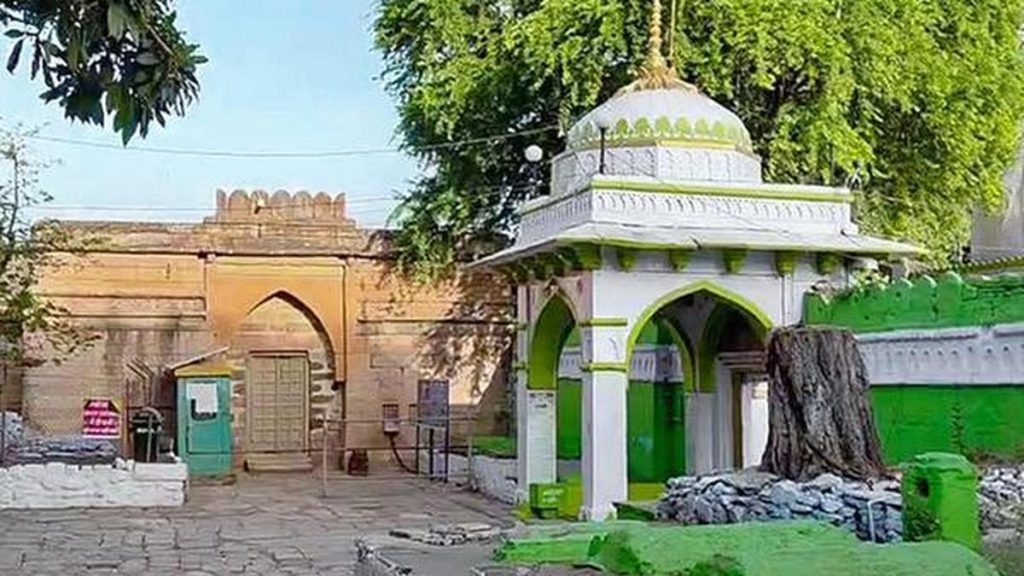
Supreme Court Directs Temporary Muslim Prayer Space at Bhojshala Complex - AI News Breaking
Madhya Pradesh Bhojshala Complex: Supreme Court Suggests Temporary Prayer Space for Muslims Until Case Decided The Supreme Court of India has intervened in a long-standing dispute over the Madhya Pradesh Bhojshala complex, suggesting that a temporary prayer space be created for Muslims until the case is resolved. The complex in Dhar district, Madhya Pradesh, is disputed by Hindus and Muslims, who claim it as their place of worship. The apex court’s decision has brought relief to the Muslim community..
The Supreme Court’s suggestion comes after a petition was filed by the All India Muslim Personal Law Board (AIMPLB) seeking permission to perform congregational prayers at the complex during the month of Ramzan (Ramadan). The court directed that the Archaeological Survey of India (ASI) would not make any structural alterations to the disputed structure without its leave. This order is seen as a significant development in the ongoing dispute..
The Bhojshala complex is a ancient temple and Islamic madrasa, which has been a source of contention between Hindus and Muslims for decades. The site is believed to be the remains of a 11th-century temple dedicated to Lord Vishnu. Muslims, however, claim that the site was converted into a madrasa in the 16th century..
The dispute has left the complex in a state of disrepair, with both communities having made unauthorized alterations. The Supreme Court’s order is a welcome respite for the Muslim community, which had been seeking permission to perform prayers at the complex. Shahnawaz Hussain, said that the court’s decision was a positive step towards resolving the long-standing dispute..
Hussain explained that the Muslim community had been denied permission to perform prayers at the site for over 20 years, leading to immense disappointment and frustration. The Archaeological Survey of India (ASI) expressed satisfaction with the Supreme Court’s order, stating that it would respect the court’s directive and refrain from making any structural alterations to the complex. ASI officials clarified that the agency would work closely with the court to ensure that the complex was preserved for future generations..
A lawyer representing the Hindu community, Anil Jain, said that the court’s decision was an interim one and did not settle the main issue. However, Jain acknowledged that the Supreme Court’s order would allow both communities to coexist at the complex until the case is resolved. The Supreme Court’s intervention has brought hope to both parties, but the road ahead will be long and complicated..
Lawyers involved in the case say that it may take several years for the court to deliver a final verdict. However, the temporary accommodation for Muslims has given them a much-needed reprieve. The dispute over the Bhojshala complex has significant implications for the broader debate over religious freedom and secularism in India..
The case highlights the country’s complex history, where multiple cultures and faiths have blended over centuries, leading to conflicts and contradictions. Despite the challenges ahead, the Supreme Court’s order has given a new lease of life to the complex, which has lain unused for years. Efforts to preserve the site’s historical significance will now focus on maintaining the status quo until the case is resolved..
In a surprising turn of events, the Madhya Pradesh government has announced a plan to restore the complex, with the Archaeological Survey of India (ASI) and local authorities working together to preserve the site. This initiative is seen as a positive step towards promoting communal harmony. While the long-term outcome of the case remains uncertain, the Supreme Court’s order has shown that the judiciary can play a crucial role in resolving interfaith disputes..
In a divided society like India, where multiple faiths and ideologies coexist, the court’s intervention has brought hope to those seeking a peaceful resolution. Lawyers involved in the case say that the Supreme Court’s order will not set a precedent for future court cases, but rather, it is an exceptional measure born out of the unique circumstances of this dispute. However, experts argue that the court’s decision may be seen as a model for other interfaith disputes in the country..
As the case continues to unfold, one thing is clear: the Madhya Pradesh Bhojshala complex will remain a symbol of India’s complex history and its ongoing struggle to resolve interfaith disputes. The Supreme Court’s order has brought a much-needed reprieve to the Muslim community, but the road ahead will be long and arduous. The Supreme Court’s intervention in the Madhya Pradesh Bhojshala complex dispute has brought a sense of relief to the Muslim community..
The court’s order has allowed a temporary prayer space to be created for Muslims, while the Archaeological Survey of India is directed not to make any structural alterations to the disputed structure without the apex court’s permission. As the case continues to unfold, observers will be watching the development with great interest. The fate of the Bhojshala complex hangs in the balance, and the Supreme Court’s order will have significant implications for the broader debate over religious freedom and secularism in India..
In its decision, the Supreme Court has shown a nuanced understanding of the complexities involved in the Madhya Pradesh Bhojshala complex dispute. By allowing a temporary prayer space for Muslims and directing the Archaeological Survey of India to refrain from making any structural alterations, the court has given both parties a much-needed respite until the case is resolved. The implications of the Supreme Court’s order will be far-reaching, with significant consequences for the broader debate over interfaith disputes in India..
Here’s a 2-line insight with interpretation:
This temporary solution to the Bhojshala complex dispute may serve as a stopgap for the Muslim community, but it also buys time for both sides to reflect on more comprehensive solutions that balance religious freedom and preservation of historical sites, underscoring the need for nuanced policy-making in India’s complex secular landscape. Ultimately, this decision is a reminder