Europe warns of Russia’s hybrid attacks but struggles to counter them
  Former chief election commissioner calls SIR scheme illegal.
  A Corruption Scandal Is Reshaping Brazil’s Presidential Election
  US citizen injured in Illinois after ICE agents mistook him for fugitive, tried to arrest him
  At 10 years old, Smithsonian’s Black museum is undaunted amid pressure from Trump administration
 Pakistan Seeks Canada’s Help to Restore Indus Waters Treaty Suspended by India
Pakistan has sought Canada’s help to restore the Indus Waters Treaty, which was suspended by India, in a bid to manage the sharing of the Indus River’s waters between the two nations, with Pakistan relying heavily on the river for irrigation, drinking water, and hydroelectric power.
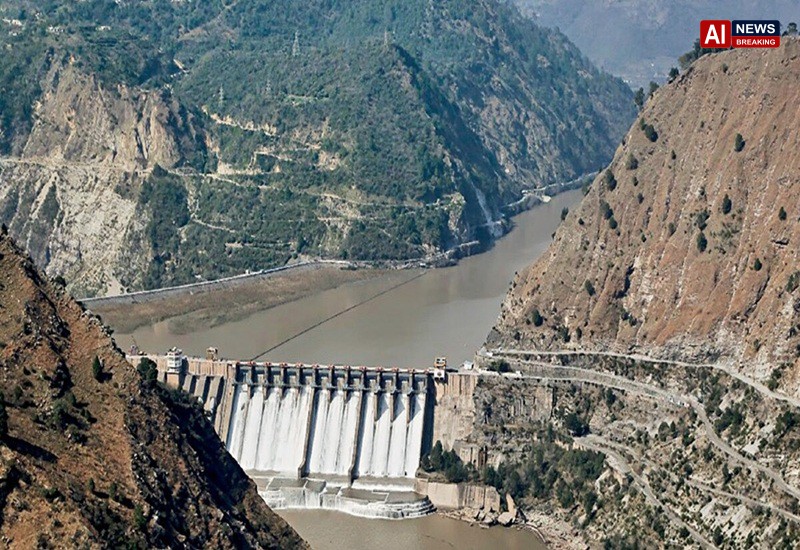
Pakistan Seeks Canada's Help to Restore Indus Waters Treaty Suspended by India - AI News Breaking
pakistan seeks canadas help:
Weaponisation of water’: Pak seeks Canada’s help to revive Indus Waters Treaty with India Pakistan’s Deputy Prime Minister Ishaq Dar travelled to Ottawa to request Canadian support for the Indus Waters Treaty, which has been suspended by India. The agreement, signed in 1960, regulates the sharing of the Indus River’s waters between the two nations. Dar stated that India’s decision to suspend the treaty has added a new dynamic to the security situation in the region.
Key Highlights
- Pakistan has sought Canada’s support to revive the Indus Waters Treaty.
- Ishaq Dar accused India of “weaponising water” by suspending the treaty.
- India maintains the treaty will remain suspended over cross-border terrorism concerns.
- The 1960 World Bank-brokered agreement governs water sharing between India and Pakistan.
- Pakistan considers the Indus River system critical to its economy and national security.
- Canada has not publicly indicated any mediation role in the dispute.
The Indus Waters Treaty is significant for both countries, providing a framework for managing a vital resource that is crucial for their economy and agriculture. Pakistan relies heavily on the Indus River for irrigation, drinking water, and hydroelectric power. India, on the other hand, has significant hydroelectric resources on the Indus, which it has been exploring to generate electricity..
Dar urged Canada to use its influence to persuade India to end its suspension of the treaty. He highlighted the importance of upholding international law and respecting the sovereignty of other nations in managing shared resources. Canada has traditionally played a neutral role in regional disputes, and its support could be crucial in resolving this issue..
Despite India’s position that the treaty remains in abeyance due to cross-border terrorism, Pakistan views the Indus as a lifeline. Islamabad is wary of any attempts to compromise the treaty, which it believes is critical to its economic and national security. Pakistan has maintained that its sovereignty and control over the Indus River are non-negotiable..
India has suspended the Indus Waters Treaty citing concerns over terrorism emanating from Pakistani territory. However, Pakistan has consistently denied any involvement in the recent uptick in tensions and has maintained that it has made significant progress in cracking down on militant groups. The international community has called for both nations to engage in dialogue to resolve their differences.
Why Did India Suspend the Treaty?
India’s decision to suspend participation in the treaty followed heightened security concerns and its longstanding position regarding cross-border terrorism emanating from Pakistan.
The Indian government has repeatedly stated that meaningful engagement under the treaty cannot continue unless Pakistan provides credible and irreversible assurances that it has ceased supporting cross-border terrorism. India has maintained that the treaty will remain suspended until such conditions are met.
Indian officials have also argued that significant changes have occurred since 1960, including:
- Climate change and altered river flows.
- Increased population and water demand.
- Advancements in hydroelectric technology.
- India’s developmental and energy requirements.
- Persistent security concerns in the region.
New Delhi has consistently maintained that the original framework requires reconsideration in light of contemporary realities.
Dar’s visit to Canada is seen as an attempt to internationalize the issue and put pressure on India to revisit its stance. Pakistan has been engaged in diplomatic efforts to persuade India to resume talks on the treaty, but with little success. The country is now counting on Canada’s support to revive the agreement..
The visit comes as Pakistan grapples with a looming water crisis. The country’s water resources are under intense strain, with a growing population and increasing demands from agriculture and industry. Pakistan’s water crisis has the potential to destabilize the economy and undermine national security.
Why the Indus Waters Treaty Matters to Pakistan
The Indus River system is central to Pakistan’s economy and food security.
Pakistan relies heavily on the western rivers for:
- Irrigation of agricultural lands.
- Drinking water supplies.
- Hydroelectric power generation.
- Industrial water usage.
- Rural livelihoods and food production.
Agriculture contributes significantly to Pakistan’s economy and employs a substantial portion of its workforce. Any uncertainty surrounding water availability therefore carries significant economic and strategic implications.
Pakistani officials have described the Indus River system as the country’s “lifeline” and warned that disruptions could affect millions of people dependent on river waters.
In a statement, Dar emphasized that Pakistan’s request for Canadian support is not aimed at undermining India’s sovereignty. Rather, it seeks to ensure that the Indus Waters Treaty is upheld and respected by all parties involved. Dar also acknowledged that the treaty has been instrumental in preventing a broader conflict between the two nations.
Pakistan Calls India’s Move ‘Weaponisation of Water’
Pakistan has strongly opposed India’s decision and described the suspension of the treaty as a violation of international obligations.
Ishaq Dar stated that shared water resources should never be used as political instruments and warned that attempts to undermine the treaty could have serious implications for regional peace and stability.
According to Pakistan:
- The treaty remains legally binding.
- Shared rivers cannot be unilaterally weaponised.
- Water security is directly linked to national security.
- International law must be upheld.
- Treaty mechanisms should continue functioning irrespective of political tensions.
Pakistan has repeatedly raised the matter at international forums, including the United Nations Security Council and various diplomatic platforms.
Canada’s approach to this issue is expected to be critical in resolving the standoff between India and Pakistan. Ottawa has traditionally prioritized diplomatic engagement and international law in resolving disputes between nations. If Canada decides to provide support to Pakistan, it could persuade India to reconsider its position and revisit talks on the treaty..
Pundits say that Dar’s visit is timed to coincide with the upcoming UN Human Rights Council session in Geneva. Pakistan is expected to raise the issue of the Indus Waters Treaty at the council and seek international support for its stance. The visit has also been seen as an attempt to capitalize on the recent shift in global politics..
With the increasing focus on environmental issues and renewable energy, the Indus Waters Treaty has become a pressing concern for countries across the world. Pakistan’s Deputy Prime Minister Ishaq Dar’s visit to Canada has sent a clear signal that Islamabad is serious about reviving the Indus Waters Treaty. The outcome of Dar’s visit will have significant implications for the region and its people..
The diplomatic efforts come as Pakistan and India engage in renewed tensions. The dispute over the Indus Waters Treaty has the potential to escalate into a full-blown conflict. The international community is urging both nations to engage in dialogue and resolve their differences peacefully..
The Canadian government has yet to respond officially to Pakistan’s request for support. Analysts will be watching closely to see whether Ottawa will provide the much-needed support to revive the treaty. Pakistan’s Deputy Prime Minister Ishaq Dar is confident that Canada will provide the necessary backing for the Indus Waters Treaty..
Dar said that Pakistan was counting on Canada to persuade India to respect the treaty. The diplomatic efforts are expected to take several months to produce results. However, the stakes are high, and the outcome will have far-reaching implications for the entire region..
Pakistan’s Deputy Prime Minister Ishaq Dar is urging India to end its suspension of the Indus Waters Treaty. The treaty has been the cornerstone of peace between the two nations..
Updated: July 20, 2026
The involvement of a neutral third party like Canada could be a game-changer in resolving the Indus Waters Treaty dispute, as it may prompt India to reconsider its stance and revisit negotiations with Pakistan. Ultimately, the success of Pakistan’s diplomatic efforts will depend on its ability to convince the international community that India’s suspension of the treaty poses a significant threat to regional stability and global environmental concerns.